Madeleine Floors

Categories
Vinyl Flooring

Hidden Costs to Consider Before Buying Vinyl Flooring in India
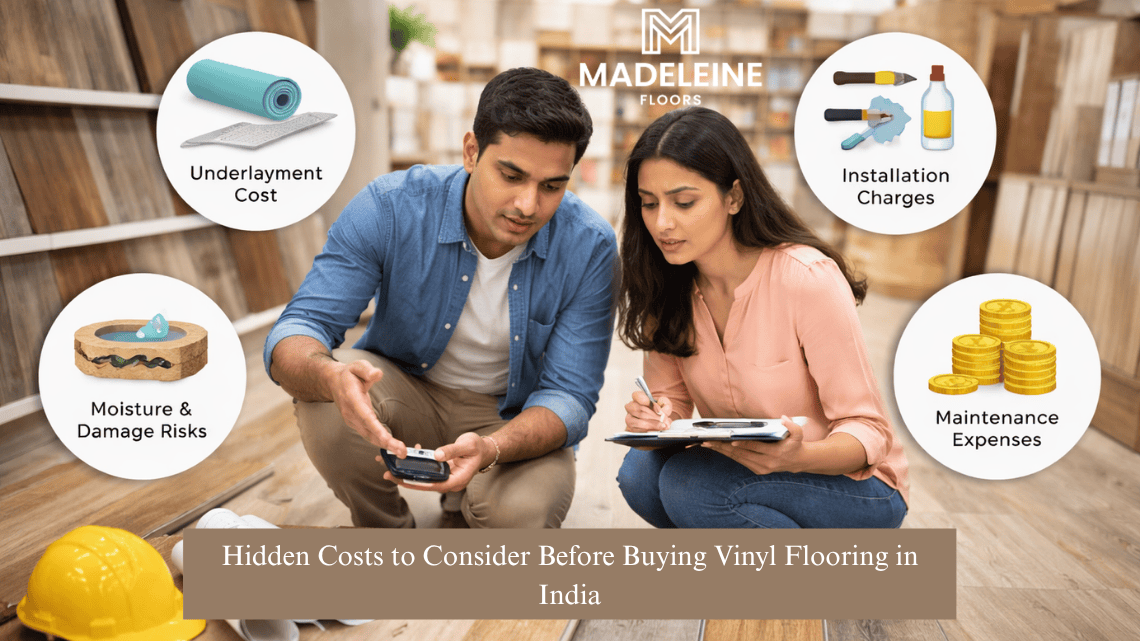
Hidden Costs to Consider Before Buying Vinyl Flooring in India

Hidden Costs to Consider Before Buying Vinyl Flooring in India

The price tag on a flooring sample often tells only half the story. At first glance, vinyl flooring India looks budget-friendly. It’s got the stylish finish, it’s water-resistant, and it’s quick to install. No wonder so many homeowners in India put it at the top of their list when renovating their space. 

But before you lock in your choice, the price you see on the sample is rarely the price you end up paying. Behind that affordable tag, there are extra hidden costs that can quietly increase your final budget.

Vinyl flooring is the best investment if you’re aware of all these costs. You just need to know what actually drives up the total cost, beyond what you pay per square foot. 

If you’re comparing options or speaking with vinyl floor suppliers, a little homework will help you ask better questions before you buy.

The Base Vinyl Flooring Price Is Only the Starting Point

Most people start by looking at the basic price. In India, here’s what you usually see:

  • Vinyl sheets: approximately ₹30–₹70 per sq. ft.
  • Vinyl tiles: around ₹50–₹90 per sq. ft.
  • Vinyl planks: around ₹70–₹130 per sq. ft.
  • Luxury vinyl tile/plank: ₹100–₹200+ per sq. ft. and above

It all seems pretty clear until you realize that material cost is just one part of the total project cost. There’s more to the story.

1. Surface Preparation Can Add More Than Expected

Vinyl flooring only works well on a clean, smooth, and level subfloor. That extra preparation work? Many Indian residents overlook it.

If your current floor has cracks, bumps, loose tiles, damp patches, or leftover adhesive stuck on, you can’t just slap down vinyl and call it a day. In older Indian apartments, especially, the surface below is often anything but perfect. Because vinyl is softer than stone or ceramic, any flaws underneath show through over time and even damage the top surface.

A good installer or experienced vinyl floor supplier usually checks the site before quoting you a final price. Still, don’t be surprised if fixing the subfloor adds a chunk to your budget.

2. Underlayment or Backing Layer May Be Extra

Some vinyl products include attached foam or acoustic backing. Others don’t, and adding that layer costs extra. You might need it for:

– Soundproofing (really important in flats)

– Better comfort

– Fixing small subfloor issues

– Stopping moisture from coming up

If you’re doing an upper-storey room or a space where footsteps echo, underlayment makes a huge difference, and it also drives up the price.

3. Installation Method Changes the Final Cost

People often get tripped up here. Different types of vinyl use different installation methods, and the price can swing by quite a bit.

The main types are:

– Glue-down vinyl (messier, more work)

– Peel-and-stick (DIY-friendly, not always durable)

– Loose lay (quick install, but only in smaller rooms)

– Click-lock planks (the quickest, but pricier per square foot)

Adhesives, labor, and the skill needed to cut around corners and furniture; these all matter. Large vinyl sheets can look cheap at first, but fitting them properly, especially in rooms with lots of nooks or weird angles, takes real expertise.

If you are speaking with vinyl floor suppliers, ask whether the quote includes:

– Adhesive

– All labor

– Wastage from cutting

– Edging and finishing touches

– Furniture shifting

Many times, they’re not included, and that’s where the budget starts to slip.

So if you’re thinking about vinyl flooring, don’t just look at the sticker price. Dig deeper, ask about these extras, and you’ll avoid surprises later.

4. Wastage and Extra Material Are Rarely Included in Budget Calculations

No one uses just the exact amount of vinyl flooring that matches the room’s size. 

You always need extra material for:

  • Edge cutting 
  • Pattern matching 
  • Room shape adjustments 
  • Future repairs

Most professionals recommend ordering at least 5–10% more material than your actual room needs, and if you’re working with planks or tiles, it’s even more important. 

That extra bit? It can increase the total project cost more than expected, especially in designer patterns or premium finishes.

5. Lower Wear Layer Can Cost More in the Long Run

Here’s a hidden cost that catches people off guard. Two vinyl flooring products can look the same when you see them in a store, but their technical performance can be very different.

The wear layer is that shield that keeps away scratches, stains, and damage from all that daily walking around. Go for a thin wear layer to save money at first, and it won’t last long in busy spaces like living rooms, hallways, or offices. 

When your floor wears out sooner than you expected, that’s when the real cost hits while “replacing it”. It’s always smart to compare the wear layer thickness before making your choice.

6. Sunlight, Furniture, and Usage Can Affect Maintenance Cost

Vinyl floors are low-maintenance, sure, but it still needs correct use.

Over the years, you’ll likely spend a bit on: 

  • Felt pads for furniture legs 
  • Some curtains or blinds to block the harsh sun
  • Few replacement planks or tiles for damaged sections  
  • Gentle floor cleaners suitable for vinyl floors

Dragging heavy sofas or using strong chemicals can wear down your floor faster than you think. None of these are big expenses individually; they just stack up over time.

7. Cheap Product Can Mean Higher Replacement Risk

There’s no shortage of budget vinyl flooring out there, online and in stores. They might look appealing at first, but they perform poorly after installation.

The problems show up over time: 

  • Edges lifting
  • Fading
  • Curling at the corners
  • Denting 
  • Weak click-lock joints

That’s why picking vinyl floor suppliers matters as much as picking the look you want. A lower initial quote can become expensive if the floor fails early or needs partial replacement.

8. Warranty and After-Sales Support 

Flooring isn’t just about how great it looks on day one. It’s about how well it holds up after it performs after one year, three years, or five years. Always look:

  • Product warranty duration 
  • Wear layer warranty 
  • Installation support 
  • Availability of matching replacement stock 

These things really matter, especially for family homes, rentals, and businesses where you want the floor looking good for years.

Final Thoughts

Vinyl flooring makes sense for Indian homes due to its durability and functionality features. It is tough against water, easy to keep clean, and you get endless choices (from rustic wood to sleek stone looks).

The best decisions always come when you look at more than the initial cost of the vinyl. Consider preparation, installation, quality, and long-term durability as they all play a part in the real cost. That’s why choosing both the right product and the right supplier matters.

If we talk about vinyl floor suppliers, Madeleine Floors helps you see beyond the samples and pick flooring you’ll feel good about for years.

See our options for vinyl flooring and find something that brings both style and substance to your space. Make the smart choice now, and you won’t have to worry about your floors tomorrow.
Categories
SPC Flooring Vinyl Flooring

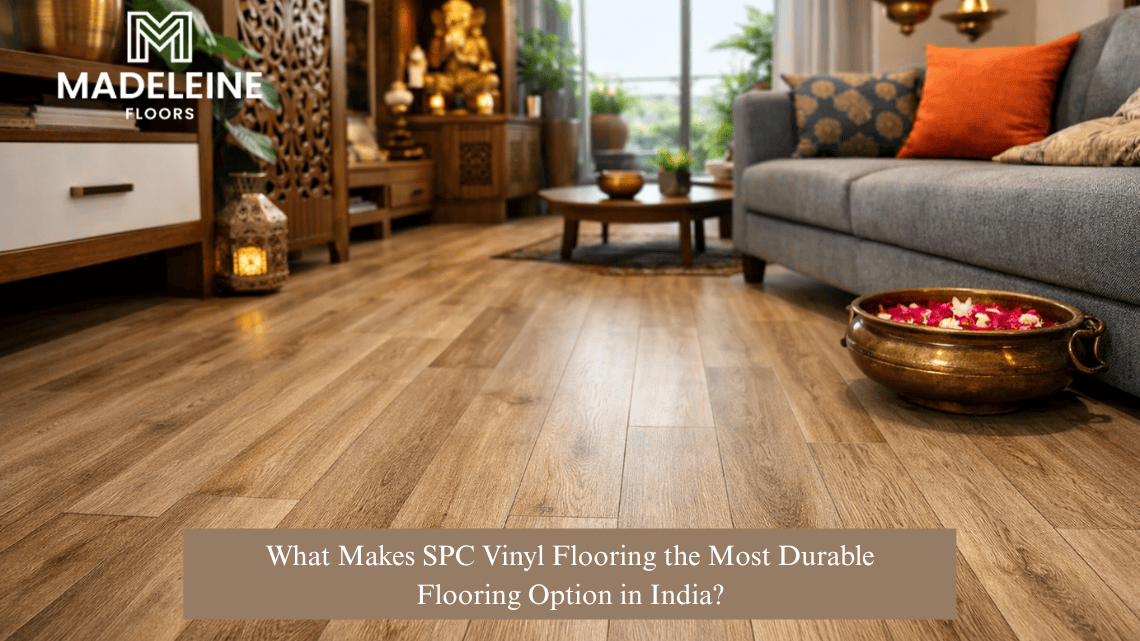
What Makes SPC Vinyl Flooring the Most Durable Flooring Option in India?

What Makes SPC Vinyl Flooring the Most Durable Flooring Option in India?

What Makes SPC Vinyl Flooring the Most Durable Flooring Option in India

Floors in India go through a lot than just people walking around. Think about it: you have humid monsoons, endless dust in the air, changes in temperature, heavy furniture dragging back and forth, daily spills, and general rough use. 

And yet, after all that, the floor’s supposed to look good and not give up. 

That is exactly why SPC vinyl flooring has become one of the smartest flooring choices in India today. SPC vinyl flooring actually solves problems that traditional flooring haven’t managed to handle.

It is not popular only because it looks stylish. It stands out because it survives things that wreck other floors. If you want something that really lasts and handles day-to-day life in India, than start for SPC vinyl floor supplier right now.

Below are the reasons why you should choose vinyl flooring.

The Core Science Behind SPC Vinyl Flooring

SPC stands for Stone Plastic Composite. Basically, it’s a strong mix of limestone powder, PVC, and stabilizers, all pressed together into a solid, super-dense core. That’s where its toughness comes from.

What’s in one of these planks? You get:

– A top UV layer that keeps stains and fading away

– A hard-wearing layer to stop scratches and scuffs

– A printed layer with realistic wood or stone looks

– The SPC core that keeps everything sturdy and in shape

– An optional IXPE or EVA underlayer for sound reduction and comfort

All this layered build is what separates SPC a notch above regular vinyl or basic laminate. It handles pressure, strong appearance, and doesn’t need a ton of work to keep clean. 

What Actually Makes SPC Vinyl Flooring So Durable?

1. It Is Fully Waterproof

Honestly, SPC flooring’s waterproof core is a game-changer for Indian homes. The material doesn’t absorb water, so even after spills or humidity, it stays flat and doesn’t warp. 

That’s why you’ll see it everywhere like 

  • Kitchens 
  • Living rooms 
  • Entryways 
  • Utility spaces 
  • Offices and retail interiors  

In places where wet shoes, unexpected spills, and muggy weather are part of daily life, SPC flooring just makes sense.

2. It Handles Temperature Changes Better

In Indian weather, flooring expands and contracts more than people realize. From scorching sun to sudden temperature drops, change in temperature can affect the stability of many materials.

But SPC’s stone polymer core keeps high dimensional stability. The floor doesn’t freak out over heat waves or chilly mornings; it stays locked in and looks good.

3. It Resists Dents, Scratches, and Daily Impact

Floors take a beating like chairs scraping, kids running around, luggage wheels rolling, you name it. SPC flooring is built to handle it. 

The rigid core resists dents and marks, while the wear layer protects the top surface from visible scratching and abrasion. That’s fueling the demand for SPC across homes and businesses as everyone appreciates a floor that actually lasts.

4. It Is Termite Resistant

You don’t have to worry about termites sneaking into SPC like you do with wood flooring. In places where pest problems matter, that makes SPC a go-to choice for staying hassle-free over time.

5. It Lasts Longer with Less Maintenance

SPC flooring requires minimal maintenance because its design purposes this function. Daily dust can be removed with sweeping or vacuuming. Regular cleaning requires only a damp mop. The surface needs no polishing, no special sealing and no dedicated maintenance procedures.

For Indian households that need flooring to stay neat with minimal effort, this is one of the strongest reasons people choose it.

Why Homeowners and Commercial Buyers Are Choosing It

SPC vinyl flooring has expanded beyond high-end interior spaces. The material has become popular and used by:

  • Apartment owners who replace their existing tile flooring 
  • Families who need flooring solutions which can withstand their pet and child activities 
  • Architects who create contemporary residential building designs 
  • Office owners who need flooring solutions which require minimal upkeep 
  • Retail stores and showrooms which experience continuous footfall 
  • Builders who develop residential properties that meet future design standards

The process of selecting an appropriate SPC vinyl floor supplier has become essential for buyers who need dependable technical performance and attractive design standards.

The Design Advantage That Comes with Strength

Durability alone is not enough. SPC offers loads of design choices such as wood grains, stone looks, matte finishes, even premium patterns that fit both modern and classic spaces. Whether you’re after a cozy oak for the bedroom or a cool stone vibe for an office, a trusted SPC vinyl floor supplier can deliver style without sacrificing strength.

Final Thoughts

The most durable flooring option in India is the one that performs well in real conditions, not only in brochures. The SPC vinyl flooring system provides this requirement through its ability to deliver waterproof performance, structural integrity, resistant to daily wear and designed for the way Indian spaces function today.

Madeleine Floors takes pride of being the leading SPC vinyl floor supplier in India. We believe that flooring should function as well as it exhibits its aesthetic appeal. Our SPC vinyl flooring collection allows you to create SPC floors for your home with confidence, comfort and enduring strength. 

Explore flooring materials that maintain their strength every season and still look stunning every day.

Categories
Vinyl Flooring

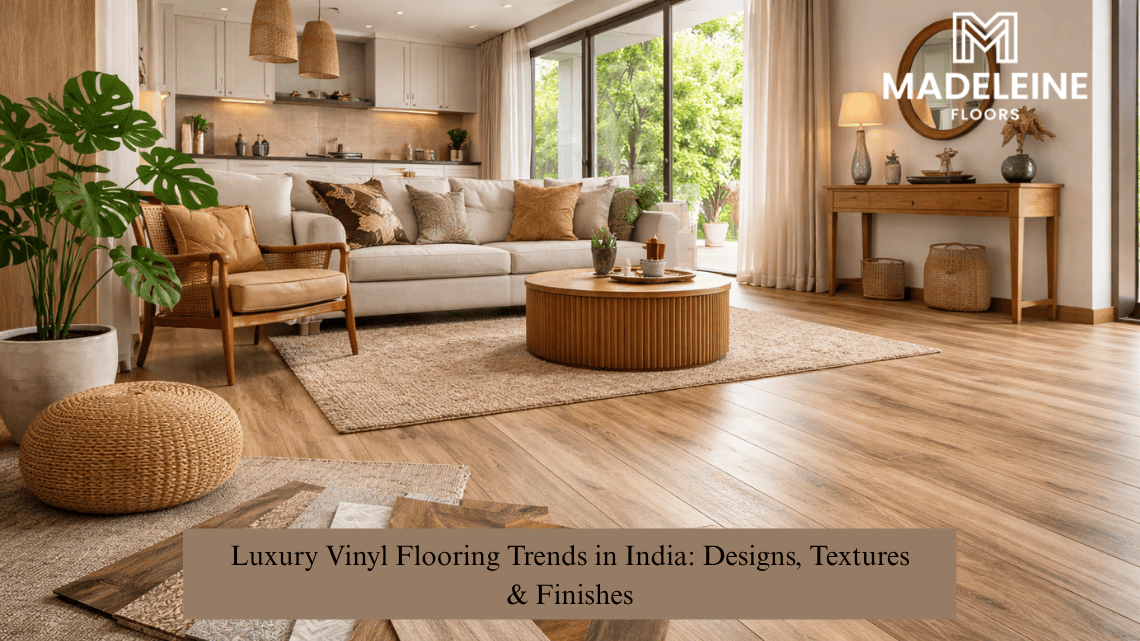
Luxury Vinyl Flooring Trends in India: Designs, Textures & Finishes

Luxury Vinyl Flooring Trends in India: Designs, Textures & Finishes

Luxury Vinyl Flooring Trends in India Designs, Textures & Finishes

If you’re planning to upgrade your flooring, you’ve probably noticed one thing — luxury vinyl flooring is everywhere in India right now.

From modern apartments in Ahmedabad to luxury villas in Mumbai, people are moving away from traditional tiles and marble. Why? Because vinyl flooring gives you premium looks at a much more affordable cost.

At Madeleine Floors, one of the trusted vinyl flooring manufacturing companies, we’ve seen a huge shift in demand — and it’s only growing. Let’s explore the latest trends so you can choose the right design for your space.

1. Introduction: Rise of Luxury Vinyl Flooring in India

The Indian flooring market is evolving fast. According to industry data, vinyl flooring demand in India is growing at 10–12% annually.

Why the shift?

  • Easy installation (50% faster than tiles)
  • Waterproof & termite-proof
  • Budget-friendly luxury alternative

Plus, when people search for luxury vinyl flooring cost India, they realise it’s far more affordable than marble or wooden flooring.

2. What is Luxury Vinyl Flooring?

Luxury vinyl flooring is a multi-layer flooring solution designed to look like wood, stone, or tile.

Types in India

  • LVP (Luxury Vinyl Plank) – Wood look
  • LVT (Luxury Vinyl Tile) – Tile & stone look
  • SPC Flooring – Rigid core, most durable
  • WPC Flooring – Softer feel

SPC flooring is currently the most popular in India due to its strength and heat resistance.

3. Latest Luxury Vinyl Flooring Trends in India

Natural Wood Look Flooring

Wood-style flooring is still the #1 trend.

  • Oak, walnut, teak finishes
  • Wide planks for premium look
  • Rustic textures for villas

👉 Around 60% of Indian buyers prefer wooden finish vinyl flooring.

Marble & Stone Look Vinyl

If you love marble but not the cost, this is perfect.

  • Italian marble look
  • Concrete finish for modern homes
  • Granite textures

Gives luxury feel at almost 40–60% lower cost than real marble.

Herringbone & Chevron Patterns

These patterns are trending in premium interiors.

  • Ideal for living rooms
  • Adds a designer touch
  • Popular in luxury apartments

Matte Finish Flooring

Glossy tiles are going out. Matte is in.

  • Natural look
  • Anti-slip surface
  • Less visible scratches

Textured & Embossed Flooring

Flat surfaces are outdated. Now people want texture.

  • Wood grain feel
  • Embossed-in-register (EIR)
  • Realistic finish

Light vs Dark Flooring Trends

  • Light colours → small rooms look bigger
  • Dark colours → premium, bold interiors

Neutral Colour Flooring

Grey, beige, and ash tones are dominating.

  • Matches modern furniture
  • Works in almost every room

4. Popular Vinyl Flooring Designs in India

Wooden Finish Designs

  • Teak wood
  • Oak planks
  • Natural grain patterns

Stone & Tile Look Designs

  • Marble finish
  • Cement finish
  • Industrial style flooring

Designer Patterns

  • Herringbone
  • Chevron
  • Geometric layouts

Custom Designs

Commercial spaces now use:

  • Brand-specific designs
  • Custom prints

5. Vinyl Flooring Textures Explained

Smooth Finish

  • Clean and modern
  • Easy to maintain

Embossed Texture

  • Slightly rough surface
  • Better grip

Hand-Scraped Texture

  • Rustic feel
  • Premium look

EIR Texture

  • Matches design and texture perfectly
  • High-end option

6. Vinyl Flooring Finishes: Which One is Right?

Matte Finish

  • Most popular in India
  • Anti-glare

Glossy Finish

  • Reflective look
  • Used in luxury spaces

Satin Finish

  • Balanced look
  • Not too shiny

UV Coated Finish

  • Scratch resistant
  • Long-lasting

7. SPC vs LVP vs LVT: What’s Trending?

  • SPC Flooring – Most durable (top choice in India)
  • LVP – Best for wood look
  • LVT – Ideal for tile designs

👉 Over 70% of new installations in India are SPC-based vinyl flooring.

8. Best Flooring for Different Spaces

Living Room

  • Wooden finish
  • Warm tones

Bedroom

  • Soft textures
  • Neutral colours

Kitchen

  • Waterproof vinyl flooring
  • Anti-slip surface

Offices

  • Durable SPC flooring
  • Professional look

9. Colour Trends in India

Top trending colours:

  • Grey flooring
  • Beige tones
  • Dark walnut
  • Whitewashed wood

These colours match modern Indian interiors.

10. Thickness & Performance Trends

Common thickness:

  • 5mm – Budget
  • 6mm–7mm – Most popular
  • 8mm – Premium

Wear layer:

  • 0.3mm – Residential
  • 0.5mm – Commercial

Thicker flooring improves durability by 20–30%.

11. Luxury Vinyl Flooring Cost India

Average cost:

  • ₹90–₹180 per sq ft (material)
  • ₹30–₹50 per sq ft (installation)

Compared to marble:

  • Vinyl is 50–70% cheaper
  • Maintenance cost is much lower

That’s why people searching for luxury vinyl flooring cost India are shifting towards SPC solutions.

12. Benefits Driving These Trends

  • Waterproof flooring
  • Termite resistance
  • Easy installation
  • Low maintenance
  • Long lifespan (15–20 years)

13. Sustainability Trends

Modern buyers prefer:

  • Low-VOC flooring
  • Eco-friendly materials
  • Health-safe interiors

14. Common Mistakes to Avoid

  • Choosing dark colour for small rooms
  • Ignoring lighting
  • Not matching furniture
  • Skipping texture selection

15. Expert Tips

  • Choose light shades for small spaces
  • Use textured flooring for better grip
  • Match flooring with wall colours
  • Always check samples

16. Future Trends in India

  • Anti-bacterial flooring
  • Smart flooring tech
  • Custom digital prints
  • Premium textures

India’s flooring industry is moving towards more customised and premium solutions.

FAQs – Luxury Vinyl Flooring India

  1. What is luxury vinyl flooring cost India?
    ₹120–₹200 per sq ft including installation.
  2. Which vinyl flooring is best in India?
    SPC flooring is the most durable and popular option.
  3. Are vinyl flooring manufacturing companies in India reliable?
    Yes, many companies like Madeleine Floors provide high-quality products matching global standards.
  4. Which colour flooring is best?
    Grey and beige are most popular in modern homes.
  5. Is vinyl flooring better than tiles?
    Yes, it is more comfortable, easier to install, and low maintenance.

Final Thoughts

Luxury vinyl flooring is no longer just an alternative — it’s becoming the first choice for modern Indian homes and offices.

With stylish designs, realistic textures, and affordable pricing, it offers everything today’s buyers want.

At Madeleine Floors, we combine design, durability, and value as one of the trusted vinyl flooring manufacturing companies in India.

👉 Want to explore trending designs? Get in touch with us today and request a sample!

Categories
SPC Flooring

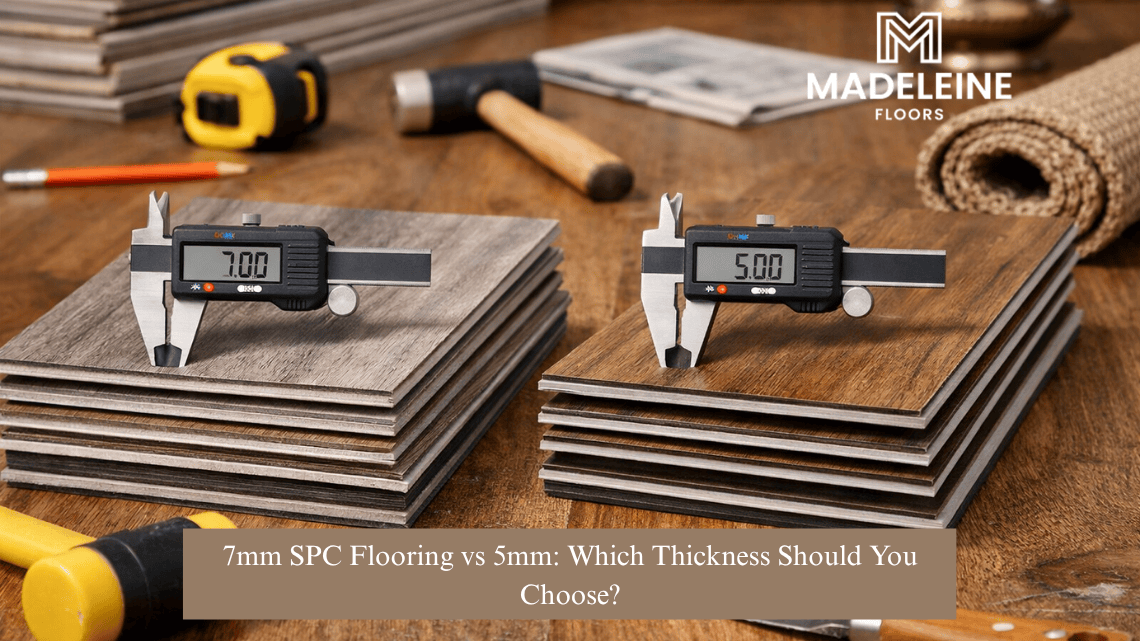
7mm SPC Flooring vs 5mm: Which Thickness Should You Choose?

7mm SPC Flooring vs 5mm: Which Thickness Should You Choose?

7mm SPC Flooring vs 5mm Which Thickness Should You Choose

If you’re planning to upgrade your flooring, you’ve probably come across this common confusion:

👉 Should I go for 5mm SPC flooring or 7mm SPC flooring?

At Madeleine Floors, one of the best vinyl plank flooring manufacturers, we hear this question almost every day. And honestly, the answer depends on how and where you plan to use it.

Let’s simplify everything for you in a practical, easy-to-understand way.

1. Introduction: Why Thickness Matters in SPC Flooring

SPC flooring is known for durability, but thickness plays a big role in:

  • Strength
  • Comfort
  • Sound insulation
  • Lifespan

In India, flooring has to handle:

  • Extreme heat (up to 45–50°C)
  • High humidity
  • Daily wear & tear

That’s why choosing the right thickness is important. A small difference like 5mm vs 7mm can impact performance by 20–30% in real-life usage.

2. What is SPC Flooring? (Quick Overview)

SPC stands for Stone Plastic Composite — a rigid core vinyl flooring made from limestone and PVC.

It consists of:

  • UV coating
  • Wear layer (0.3mm–0.5mm)
  • Printed design layer
  • SPC core
  • Underlayment

Compared to traditional flooring:

  • 100% waterproof
  • Termite-proof
  • Easy installation
  • Lifespan up to 15–20 years

No wonder SPC flooring demand in India is growing at over 12% annually.

3. Understanding SPC Flooring Thickness

What Does 5mm and 7mm Mean?

It refers to the total thickness of the plank, including the core and base layer.

Common Thickness in India

  • 5mm – Entry-level
  • 6mm – Mid-range
  • 7mm – Premium residential
  • 8mm – Heavy commercial

Among these, 7mm SPC flooring is currently the most preferred choice for Indian homes.

4. 5mm SPC Flooring Overview

Features

  • Lightweight
  • Budget-friendly
  • Basic durability

Advantages

  • Lower cost (₹90–₹120 per sq ft)
  • Easy to transport and install
  • Good for low-traffic areas

Limitations

  • Less impact resistance
  • Lower sound insulation
  • Needs perfectly level subfloor

5. 7mm SPC Flooring Overview

Features

  • Thicker rigid core
  • Better strength and stability
  • Enhanced comfort

Advantages

  • Handles moderate to high traffic
  • Better noise reduction
  • More durable in Indian conditions

Limitations

  • Slightly higher cost
  • Not necessary for very low usage areas

6. 7mm SPC Flooring vs 5mm: Key Differences

Durability

  • 5mm: 8–12 years lifespan
  • 7mm: 15–20 years lifespan

👉 7mm performs better for long-term use.

Strength & Load Capacity

  • 5mm may dent under heavy furniture
  • 7mm can handle sofas, beds, office setups

Sound Insulation

  • 7mm reduces noise by up to 25–30% more than 5mm
  • Ideal for apartments and flats

Comfort Underfoot

  • 5mm feels slightly harder
  • 7mm offers better cushioning

Installation

  • 5mm requires perfect subfloor
  • 7mm is more forgiving

Price Comparison in India

Thickness

Price (₹/sq ft)

5mm

₹90–₹120

7mm

₹110–₹150

👉 Difference is small, but performance gap is big.

7. Which is Better for Indian Homes?

Apartments

Go for 7mm SPC flooring for better sound control and comfort.

Villas

7mm works best due to heavy furniture load.

Rental Properties

5mm is okay if budget is tight.

8. Which is Better for Commercial Spaces?

Offices & Clinics

7mm is recommended for durability.

Shops & Showrooms

7mm handles foot traffic better.

Heavy Traffic Areas

Avoid 5mm — it may wear out quickly.

9. Indian Climate Considerations

India’s weather is tough on flooring:

  • Heat expansion
  • Moisture damage
  • Dust & wear

7mm SPC flooring offers better dimensional stability, making it more reliable in Indian conditions.

10. Load Bearing & Impact Resistance

7mm SPC flooring can handle:

  • 400–500 kg distributed load
  • Office chairs
  • Heavy furniture

5mm may struggle in such situations.

11. Pros & Cons Summary

5mm SPC Flooring

Pros:
✔ Budget-friendly
✔ Easy installation

Cons:
❌ Lower durability
❌ Less sound insulation

7mm SPC Flooring

Pros:
✔ Strong and durable
✔ Better comfort
✔ Ideal for Indian homes

Cons:
❌ Slightly higher cost

12. When Should You Choose 5mm?

  • Low traffic rooms
  • Temporary setups
  • Tight budget

13. When Should You Choose 7mm SPC Flooring?

  • Long-term investment
  • Daily-use areas
  • Offices or shops
  • Premium interiors

14. Expert Recommendation

From our experience at Madeleine Floors, here’s a simple rule:

👉 If you want durability + comfort + long life → go for 7mm SPC flooring
👉 If budget is your main concern → 5mm can work

In India, over 70% of homeowners now prefer 6mm–7mm SPC flooring for better value.

15. Buying Guide

Before buying:

  • Check wear layer (minimum 0.3mm)
  • Choose trusted suppliers
  • Compare warranty (10–20 years)
  • Test samples physically

Always buy from best vinyl plank flooring manufacturers to ensure quality.

16. Common Mistakes to Avoid

  • Choosing only based on price
  • Ignoring wear layer thickness
  • Not checking subfloor condition
  • Skipping sample testing

FAQs – 7mm SPC Flooring vs 5mm

  1. Which is better, 5mm or 7mm SPC flooring?
    7mm is better for durability, comfort, and long-term use.
  2. Is 5mm SPC flooring durable enough?
    Yes, but only for low-traffic areas.
  3. How long does 7mm SPC flooring last?
    Up to 15–20 years with proper care.
  4. Does thickness affect waterproofing?
    No, all SPC flooring is waterproof.
  5. Which thickness is best for Indian homes?
    7mm is ideal for most homes.

Final Verdict

If you’re looking for a balance of price, durability, and performance, 7mm SPC flooring is the clear winner.

It works perfectly for Indian conditions, offers better comfort, and lasts longer — making it a smart investment.

At Madeleine Floors, we provide premium SPC solutions as one of the best vinyl plank flooring manufacturers in India.

👉 Want help choosing the right flooring? Get in touch with us today and request a sample!