Madeleine Floors

Categories
Vinyl Flooring

The Evolution of Luxury Vinyl Flooring: From Wood Textures to Stone Finishes
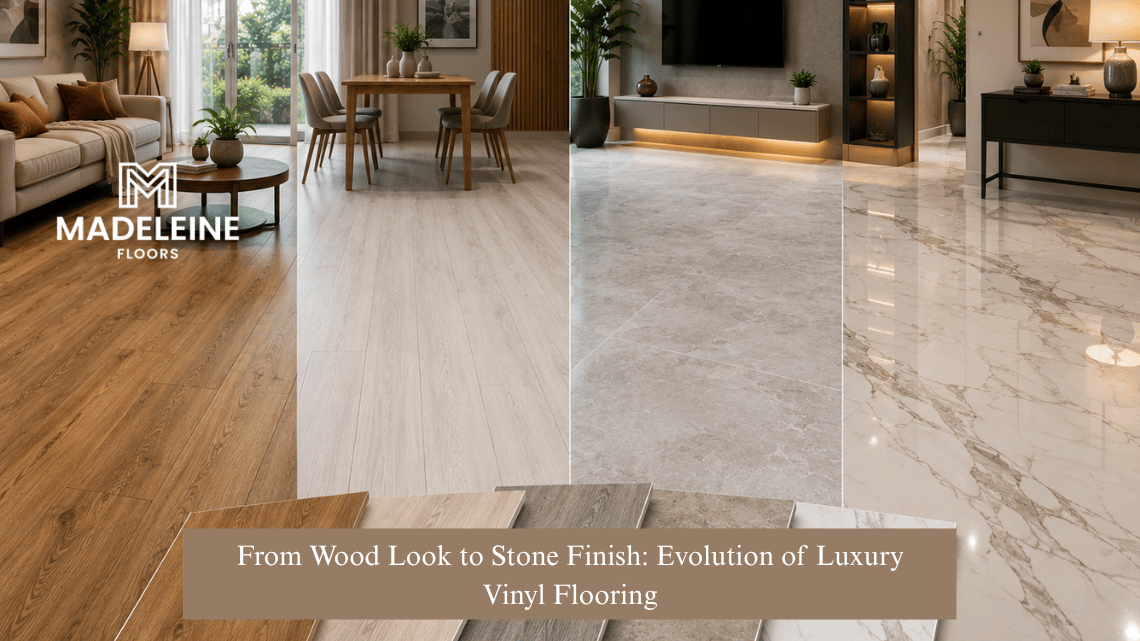
The Evolution of Luxury Vinyl Flooring: From Wood Textures to Stone Finishes

The Evolution of Luxury Vinyl Flooring: From Wood Textures to Stone Finishes

Walk into any modern home or commercial space today, and the floors often stop you mid-step. Lifelike wood grains, textured stone finishes, and even concrete-look surfaces that feel surprisingly solid underfoot. What you’re looking at is most likely SPC luxury vinyl flooring, and it’s quietly become one of the most talked-about choices among homeowners, architects, and interior designers across India.

Over the past decade, LVF has gone from being a “budget substitute” to a genuinely preferred flooring choice for architects, interior designers, and homeowners who want beauty without the baggage that comes with natural materials. The story of how this happened is worth understanding before you make any flooring decision.

How Luxury Vinyl Flooring Went From Basic to Beautiful

The earliest vinyl floors looked plasticky, felt hollow underfoot, and were clearly unconvincing. Nobody was proud of them. Fast-forward to today, and the situation has completely flipped.

The turning point came when manufacturers began investing seriously in embossing and printing technology. Modern luxury vinyl now carries micro-textured surfaces that mimic the feel of authentic wood grain or the cool smoothness of natural stone. 

  • Wood looks evolved first — oak, walnut, teak, and reclaimed barn wood designs became incredibly popular because they delivered warmth and character without the maintenance headaches of natural hardwood.
  • Stone and tile looks followed — marble, slate, travertine, and cement finishes brought the luxury of stone into spaces where the original material would be impractical or too heavy.
  • Concrete and industrial finishes emerged — catering to the minimalist and urban loft aesthetic that started dominating interior design globally.

How SPC Flooring Technology Changed Everything

When looking into floorings these days, chances are that you’ve heard about the technology known as “SPC,” and it stands for “Stone Plastic Composite.” This is where things got genuinely interesting.

SPC luxury vinyl flooring has a strong and solid inner layer made by combining limestone powder, PVC, and stabilizers. This construction makes the plank incredibly dense, dimensionally stable, and resistant to temperature changes. Unlike older vinyl, it doesn’t expand and contract with humidity. It doesn’t warp near a bathroom or buckle in a hot room.

For Indian homes, where humidity swings are significant and monsoon seasons are brutal—this matters a great deal. SPC flooring essentially solved a problem that made vinyl flooring unreliable in tropical climates.

Some SPC luxury vinyl flooring manufacturers have also started offering products with improved underlays, anti-microbial coatings, and click-lock installation systems that make fitting faster and cleaner. 

What’s Making Luxury Vinyl Flooring Popular in India 

Flooring preferences in India have changed a lot in recent years. The rise of apartment culture, the growth of retail chains, hospitality, and a broader shift in aesthetic awareness among homeowners have pushed demand for premium yet practical flooring options.

Here’s what’s changing on the ground:

  • Builders and developers are specifying LVF for affordable housing projects because it cuts construction time and looks far more premium than the price suggests.
  • Homeowners doing renovations are choosing it because it can be installed directly over existing tile or concrete without demolition.
  • Commercial spaces — especially retail showrooms, clinics, and offices — prefer it for the combination of durability and design variety.
  • Pet owners and families with children have discovered it as one of the most practical floor surfaces available, given its scratch resistance and easy cleaning.

Understanding Luxury Vinyl Flooring Cost in India

One of the most common questions people ask before making a decision is about luxury vinyl flooring cost in India. The honest answer is it varies, but understanding this helps you make a smarter choice.

Entry-level LVF products  begin at ₹45–₹70 per square foot. It is relatively thin, with basic surface designs and a simple locking system. The material serves well for low-traffic areas.

Mid-range products are the sweet spot for most residential and light commercial projects that fall between ₹80–₹150 per square foot. This price range offers better wear layers (0.3 mm – 0.5 mm), natural-looking embossing, and acoustic backing.

Premium and imported SPC products, especially from good SPC luxury vinyl flooring manufacturers, can go from ₹160 to ₹300+ per square foot. These come with thicker wear layers (0.5 mm and above) and premium finishes that are genuinely difficult to distinguish from natural materials. Installation typically adds ₹15–₹30 per square foot on top of material costs, depending on subfloor preparation and region.

Why Homeowners Prefer it for Long-Term

Beyond looks and cost, luxury vinyl flooring wins on day-to-day practicality, and that’s what keeps people satisfied years after installation.

  • Easy cleaning — a damp mop is all it takes. No special products, no fuss.
  • No polishing or sealing required — unlike natural stone or hardwood, it needs no annual upkeep treatments.
  • Water resistant throughout —  no damage from spillages, splashings, or high humidity levels, making it perfect for kitchen, bathroom, and balcony installations.
  • Low long-term maintenance costs — the savings on maintenance costs in 5 to 10 years may cover the entire cost of installation.
  • Easy installation —click-lock systems reduce installation time during renovations, which matters when you’re living in the space.

Whether it comes to busy homes or high-traffic areas, this is definitely an unbeatable combination.

What to Actually Look For Before You Buy

Shopping for luxury vinyl flooring has many options today. A few things worth paying attention to:

  • Wear layer thickness — this is the most important spec. Anything below 0.3mm is only suitable for very light use. For families, pets, and commercial use, go for 0.5 mm or more.
  • AC rating — a rating of AC3 or AC4 suggests that the floor can handle regular to heavy foot traffic.
  • Core type — The SPC core is denser and stronger than that of WPC (wood plastic composite), which makes it more suitable for Indian climatic conditions.
  • Brand and manufacturer credibility — a warranty of 10 years or more is usually a good sign that the manufacturer stands behind their product.
  • Surface texture — run your fingers across it. If it feels flat and printed, it’ll look flat in your home too. Embossed-in-register (EIR) textures align with the printed grain and feel noticeably more authentic.

The Bottom Line

Luxury vinyl flooring has earned its place in modern Indian homes, not just because it’s cost-effective but because it’s genuinely well-made now. From natural-looking wood grain textures to stone-like finishes, the technology that goes into making today’s SPC luxury vinyl flooring manufacturers can be seen in each board.

When it comes to comparing your choices, knowing about the luxury vinyl flooring cost in India along with indicators of quality such as layer thickness and core construction is key. With this segment continuing to evolve, Madeleine Floors stands out as one of the top luxury vinyl flooring brands in India.

FAQs

1. Is SPC luxury vinyl flooring waterproof?

Yes, SPC flooring is highly waterproof, making it suitable for kitchens, bathrooms, and humid climates.

2. What is the average luxury vinyl flooring cost in India?

In India, luxury vinyl flooring ranges from ₹45 to ₹300+ per sq ft. depending on quality, thickness, and brand.

3. How long does luxury vinyl flooring last?

High-quality SPC luxury vinyl flooring can last 15–25 years with proper maintenance.
Categories
Vinyl Flooring

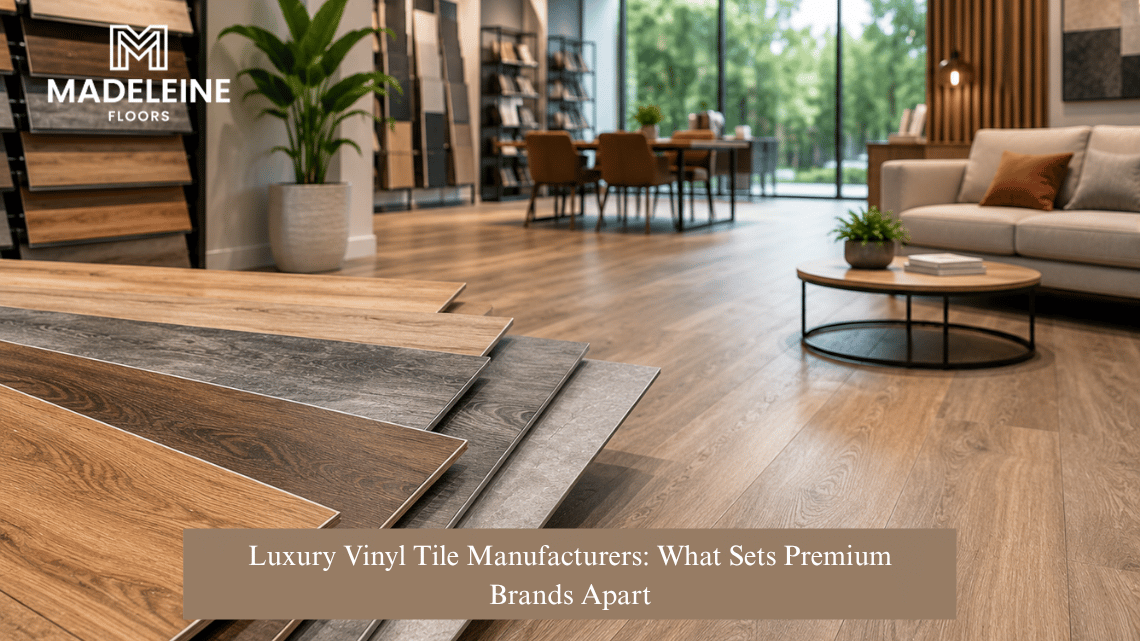
Luxury Vinyl Tile Manufacturers: What Sets Premium Brands Apart

Luxury Vinyl Tile Manufacturers: What Sets Premium Brands Apart

Luxury Vinyl Tile Manufacturers What Sets Premium Brands Apart

Walk into any modern apartment, luxury villa, office, or retail showroom today, and one thing stands out immediately: the flooring.

People are no longer satisfied with basic tiles or outdated flooring designs. They want something stylish, durable, waterproof, and easy to maintain. That’s exactly why the demand for Luxury Vinyl Tile Manufacturers is growing rapidly in India.

But here’s the real question:

What actually separates a premium luxury vinyl tile brand from an average one?

At Madeleine Floors, we believe flooring is not just about covering the floor it’s about creating an experience. Let’s explore what truly makes premium LVT brands worth the investment.

1. Why Buyers Are Moving Towards Premium Luxury Vinyl Tile Brands

India’s flooring market is evolving fast. According to industry reports, the luxury vinyl flooring segment is growing at over 12% CAGR due to increasing demand in:

  • Apartments
  • Villas
  • Offices
  • Hotels
  • Retail spaces

Why are buyers upgrading?

Because premium LVT flooring offers:

✔ Luxury appearance
✔ Waterproof performance
✔ Better durability
✔ Low maintenance

And honestly, people today want flooring that looks expensive without spending a fortune on marble or hardwood.

2. What is Luxury Vinyl Tile (LVT) Flooring?

Luxury Vinyl Tile (LVT) is a modern flooring solution designed to replicate:

  • Wood
  • Marble
  • Stone
  • Concrete textures

It is made with multiple layers, including:

  • UV coating
  • Wear layer
  • Printed design layer
  • Rigid or flexible core

Unlike traditional flooring, LVT is:

  • Waterproof
  • Scratch-resistant
  • Comfortable underfoot

That’s why many Indian homeowners are switching from tiles to LVT.

3. Why Premium Luxury Vinyl Tile Manufacturers Matter

Not all vinyl flooring is the same.

Cheap flooring may look attractive initially, but within a few years, problems start appearing:

  • Peeling edges
  • Colour fading
  • Weak locking systems
  • Surface scratches

Studies show that low-quality flooring can require replacement 40–50% earlier than premium-grade products.

Premium brands focus on long-term performance, not just low pricing.

4. Top Qualities That Set Premium Luxury Vinyl Tile Manufacturers Apart

Superior Core Strength & Stability

Premium brands use high-density SPC or rigid cores that provide:

  • Better strength
  • Dent resistance
  • Stability in the Indian heat

This matters because Indian temperatures often reach 45°C+ during the summer.

Advanced Wear Layer Technology

The wear layer protects the surface from scratches and damage.

Premium manufacturers offer:

  • 0.3mm wear layer for homes
  • 0.5mm for commercial spaces

This improves durability significantly.

Realistic Designs & Premium Visual Appeal

One major difference you notice instantly?

The design quality.

Premium LVT flooring includes:

  • Realistic wood grains
  • Natural marble textures
  • Embossed-in-register (EIR) finish

Some modern designs are so realistic that many people can’t differentiate them from real wood.

Better Waterproof Performance

India’s monsoon season can damage traditional flooring.

Premium LVT brands offer:

✔ 100% waterproof flooring
✔ Moisture resistance
✔ Better edge protection

Perfect for kitchens, living rooms, and apartments.

High-Quality Locking Systems

A weak locking system can ruin flooring performance.

Premium manufacturers use advanced click-lock technology that:

  • Makes installation easier
  • Prevents gaps
  • Improves stability

Good locking systems can improve flooring lifespan by 20–30%.

Better Acoustic & Walking Comfort

Nobody likes noisy flooring.

Premium LVT flooring provides:

  • Better sound insulation
  • Softer walking feel
  • Comfortable experience for families and offices

This is especially important in apartments.

5. Design Innovation: How Premium LVT Brands Lead Trends

Today’s buyers want flooring that matches modern interiors.

Trending designs in India include:

  • Oak wood finish
  • Walnut shades
  • Matte textures
  • Herringbone patterns
  • Neutral colours like grey and beige

Premium manufacturers constantly introduce new collections to stay ahead of trends.

6. Manufacturing Standards That Separate Premium Brands

Reliable luxury vinyl tile manufacturers follow strict quality standards.

Look for:

  • ISO certification
  • CE certification
  • Low-VOC compliance
  • Fire resistance ratings

Premium brands also conduct:

  • Scratch testing
  • Water resistance tests
  • Load-bearing tests

This ensures consistent quality.

7. Thickness & Performance: Why Specifications Matter

Common LVT thickness options:

  • 5mm
  • 6mm
  • 7mm
  • 8mm

For Indian homes, 6mm–7mm flooring is usually ideal.

Thicker flooring offers:

  • Better comfort
  • Better sound absorption
  • Higher durability

8. Premium LVT Flooring vs Cheap Alternatives

Feature

Premium LVT

Cheap Flooring

Lifespan

15–20 years

5–8 years

Waterproof

Excellent

Average

Design Quality

Realistic

Artificial look

Locking Strength

Strong

Weak

Maintenance

Low

Frequent repairs

Initially, cheap flooring may save money, but long-term replacement costs are much higher.

9. How Premium LVT Flooring Enhances Property Value

Premium flooring creates a strong first impression.

In India:

  • Properties with modern flooring sell faster
  • Rental demand increases
  • Interior aesthetics improve significantly

Experts estimate that flooring upgrades can increase perceived property value by 5–8%.

10. Best LVT Flooring for Different Spaces

Residential Spaces

  • Bedrooms
  • Living rooms
  • Kitchens

Commercial Spaces

  • Offices
  • Showrooms
  • Hotels

High-Traffic Areas

  • Clinics
  • Retail stores
  • Educational spaces

Premium flooring handles all these environments effectively.

11. Questions to Ask Before Buying

Before finalizing a supplier, ask:

  • What is the wear layer thickness?
  • Is the flooring waterproof?
  • What certifications do you provide?
  • What warranty is included?
  • Do you offer installation support?

A premium manufacturer will always provide transparent answers.

12. Common Mistakes Buyers Make

  • Choosing only based on price
  • Ignoring the wear layer quality
  • Not checking the warranty
  • Buying without testing samples

These mistakes often lead to poor long-term performance.

13. Future Trends in Luxury Vinyl Tile Flooring

India’s flooring industry is moving towards:

  • Eco-friendly flooring
  • Low-VOC products
  • Anti-bacterial coatings
  • Hyper-realistic textures

The future of flooring is smarter, safer, and more design-focused.

FAQs – Luxury Vinyl Tile Manufacturers

1. What makes premium luxury vinyl tile manufacturers different?

Premium manufacturers offer better durability, realistic designs, stronger locking systems, and longer lifespans.

2. Is luxury vinyl tile flooring waterproof?

Yes, premium LVT flooring is 100% waterproof.

3. How long does LVT flooring last?

Good quality LVT flooring can last 15–20 years.

4. Which thickness is best for Indian homes?

6mm–7mm is ideal for most residential spaces.

5. Is premium LVT flooring worth the investment?

Yes, it offers better ROI, lower maintenance, and higher durability.

Final Thoughts

Choosing the right flooring is not just about style it’s about long-term value.

Premium Luxury Vinyl Tile Manufacturers focus on:

 ✔ Quality
✔ Durability
✔ Comfort
✔ Modern design

At Madeleine Floors, we combine premium aesthetics with reliable performance to create flooring solutions designed for Indian homes and commercial spaces.

Looking for premium LVT flooring? Contact Madeleine Floors today and explore modern designs that truly stand apart.

Categories
SPC Flooring

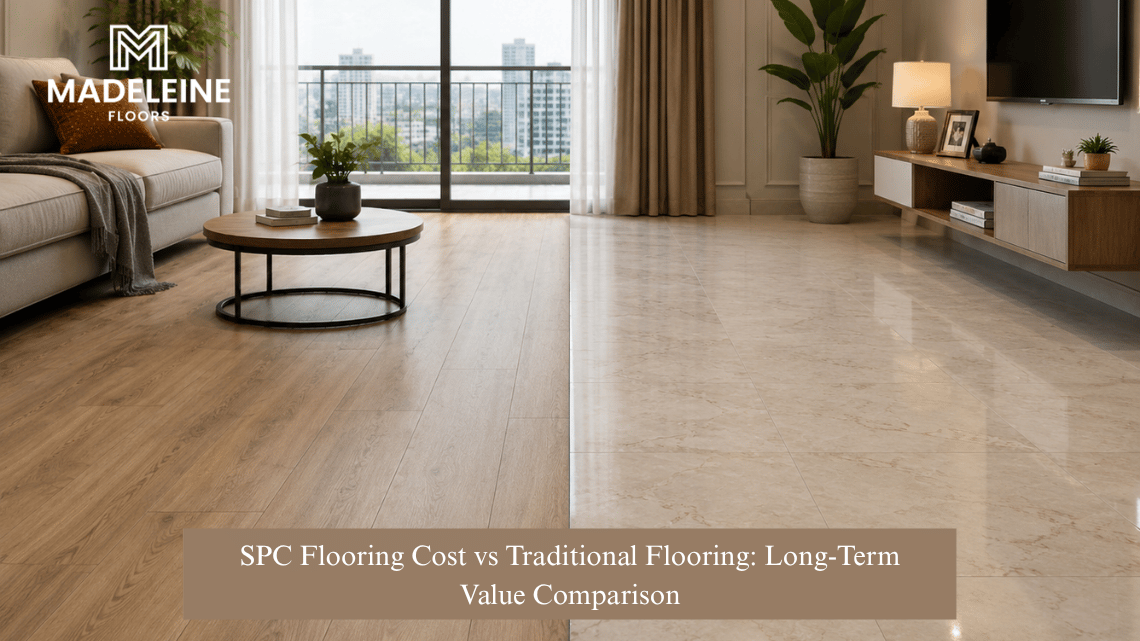
SPC Flooring Cost vs Traditional Flooring: Long-Term Value Comparison

SPC Flooring Cost vs Traditional Flooring: Long-Term Value Comparison

SPC Flooring Cost vs Traditional Flooring Long-Term Value Comparison

When people choose flooring, most of them look at just one thing first: the price per square foot.

But here’s the truth:

👉 Cheap flooring is not always affordable in the long run.

In India, homeowners, builders, and architects are now focusing more on long-term value instead of just initial cost. That’s why SPC flooring is becoming one of the fastest-growing flooring solutions.

At Madeleine Floors, we regularly help customers compare SPC flooring with tiles, marble, wood, and laminate flooring. And honestly, the results surprise many people.

Let’s break it down practically and easily.

1. Why Flooring Cost Is More Than Just Price Per Sq Ft

Imagine this:

You save ₹20–₹30 per sq ft today by choosing cheaper flooring.

But after 3–5 years, you spend money again on:

  • Repairs
  • Polishing
  • Crack replacement
  • Water damage

That’s where long-term flooring value becomes important.

Industry reports show that maintenance and repair costs can increase flooring ownership expenses by 25–40% over 10 years.

That’s why more buyers are turning towards SPC flooring.

2. Understanding SPC Flooring Before Comparing Costs

SPC stands for Stone Plastic Composite.

It is a rigid core flooring made using:

  • Limestone powder
  • PVC
  • Stabilizers

It includes multiple layers:

  • UV coating
  • Wear layer
  • Printed design
  • SPC rigid core

Why is it becoming popular in India?

Because it is:

✔ Waterproof
✔ Termite-resistant
✔ Scratch-resistant
✔ Easy to maintain

And unlike traditional flooring, SPC works very well in Indian climate conditions.

3. The Real Cost of Flooring Most Buyers Ignore

Initial Purchase Cost

Here’s an average flooring cost comparison in India:

Flooring Type

Material Cost

SPC Flooring

₹90–₹180/sq ft

Tiles

₹70–₹250/sq ft

Marble

₹250–₹800/sq ft

Wooden Flooring

₹180–₹500/sq ft

At first glance, tiles may seem cheaper.

But the story changes when you add installation and maintenance.

Installation Cost

SPC flooring installation is usually:

  • Faster
  • Cleaner
  • Less labour-intensive

Average installation cost:

Flooring Type

Installation Cost

SPC Flooring

₹30–₹50/sq ft

Tiles

₹60–₹120/sq ft

Marble

₹100–₹250/sq ft

SPC flooring installation can reduce labour expenses by almost 40–50%.

Maintenance Cost Over Time

This is where SPC flooring wins big.

Traditional flooring often needs:

  • Polishing
  • Grout cleaning
  • Crack repairs
  • Waterproof treatments

SPC flooring requires only basic cleaning.

4. SPC Flooring Cost in India: Detailed Breakdown

Premium SPC flooring generally costs:

  • ₹120–₹200/sq ft including installation

The final price depends on:

  • Thickness (5mm–8mm)
  • Wear layer quality
  • Design finish

The best part?

There’s almost no polishing or repair expense later.

5. Traditional Flooring Cost Breakdown

Tile Flooring

Tiles are common in Indian homes, but over time:

  • Grout becomes dirty
  • Tiles crack
  • Replacement is difficult

Repairing broken tiles later is often expensive.

Marble Flooring

Marble looks luxurious but requires:

  • Regular polishing
  • Stain maintenance
  • High installation cost

Over 10 years, maintenance expenses can become very high.

Wooden Flooring

Wood flooring struggles in the Indian climate due to:

  • Moisture
  • Humidity
  • Termites

Many homeowners face swelling and damage issues.

Laminate Flooring

Laminate is affordable initially, but:

  • Not waterproof
  • Shorter lifespan
  • Easily damaged by moisture

6. SPC Flooring vs Tiles: Long-Term Value Comparison

Installation Time

SPC flooring installation is almost 50% faster than tiles.

Less labour = lower cost.

Comfort

SPC flooring feels:

  • Softer underfoot
  • Less noisy
  • More comfortable for daily use

Repair & Replacement

Damaged SPC planks can be replaced individually.

Replacing broken tiles is much more complicated.

Waterproof Performance

SPC flooring is 100% waterproof — ideal for Indian monsoon conditions.

7. SPC Flooring vs Marble Flooring

Marble is beautiful, but expensive to maintain.

SPC flooring now offers:

  • Marble-look finishes
  • Premium textures
  • Similar luxury feel

At almost 50–70% lower total ownership cost.

8. SPC Flooring vs Wooden Flooring

Moisture Resistance

Wood absorbs moisture. SPC does not.

Termite Resistance

SPC flooring is termite-proof.

Wood requires treatments and maintenance.

Cost Advantage

SPC gives premium wooden aesthetics at a much lower cost.

9. Hidden Costs of Traditional Flooring

Here’s what most people forget:

❌ Tile grout cleaning
❌ Marble polishing
❌ Wooden floor repairs
❌ Laminate swelling replacement

These hidden expenses increase over time.

10. Why SPC Flooring Offers Better Long-Term Value

Low Maintenance

Just regular mopping and cleaning.

No polishing needed.

Faster Installation

Projects finish quicker, especially in:

  • Apartments
  • Offices
  • Retail stores

Long Lifespan

Good SPC flooring lasts:

✔ 15–20 years

That’s a huge advantage.

Better ROI

Builders and homeowners save money long term.

That’s why many SPC flooring manufacturers in Morbi are seeing rising demand across India.

11. Property Value Impact

Modern flooring improves:

  • Interior appearance
  • Buyer attraction
  • Rental value

Experts estimate that flooring upgrades can improve perceived property value by 5–8%.

12. Best Flooring Based on Budget

Budget Homes

  • 5mm SPC flooring

Mid-Range Apartments

  • 6mm–7mm SPC flooring

Premium Villas

  • Premium textured SPC flooring

Commercial Projects

  • Heavy-duty SPC flooring with 0.5mm wear layer

13. Indian Climate Factor: Why SPC Performs Better

India’s climate includes:

  • Heat up to 45°C
  • Humidity
  • Monsoon moisture

SPC flooring handles all these conditions better than most traditional flooring options.

14. Common Buyer Mistakes

  • Choosing only based on price
  • Ignoring maintenance cost
  • Buying low-quality flooring
  • Skipping installation quality

These mistakes increase expenses later.

FAQs – SPC Flooring Cost vs Traditional Flooring

1. Is SPC flooring cheaper than tiles?

Initially, tiles may seem cheaper, but SPC flooring offers better long-term savings.

2. How long does SPC flooring last?

Premium SPC flooring can last 15–20 years.

3. Is SPC flooring waterproof?

Yes, SPC flooring is 100% waterproof.

4. Which flooring gives the best ROI?

SPC flooring provides one of the best long-term values and maintenance savings.

5. Why are SPC flooring manufacturers in Morbi growing rapidly?

Because Morbi has become a major hub for modern flooring manufacturing in India.

Final Thoughts

Flooring is not just a purchase — it’s a long-term investment.

While traditional flooring may look affordable initially, the hidden maintenance and repair costs often make it expensive over time.

SPC flooring offers:

✔ Better durability
✔ Lower maintenance
✔ Faster installation
✔ Modern aesthetics

At Madeleine Floors, we focus on delivering premium SPC flooring solutions designed for Indian conditions and long-term value.

👉 Looking for durable and stylish flooring? Contact Madeleine Floors today and explore modern SPC flooring collections built to last.

Categories
SPC Flooring

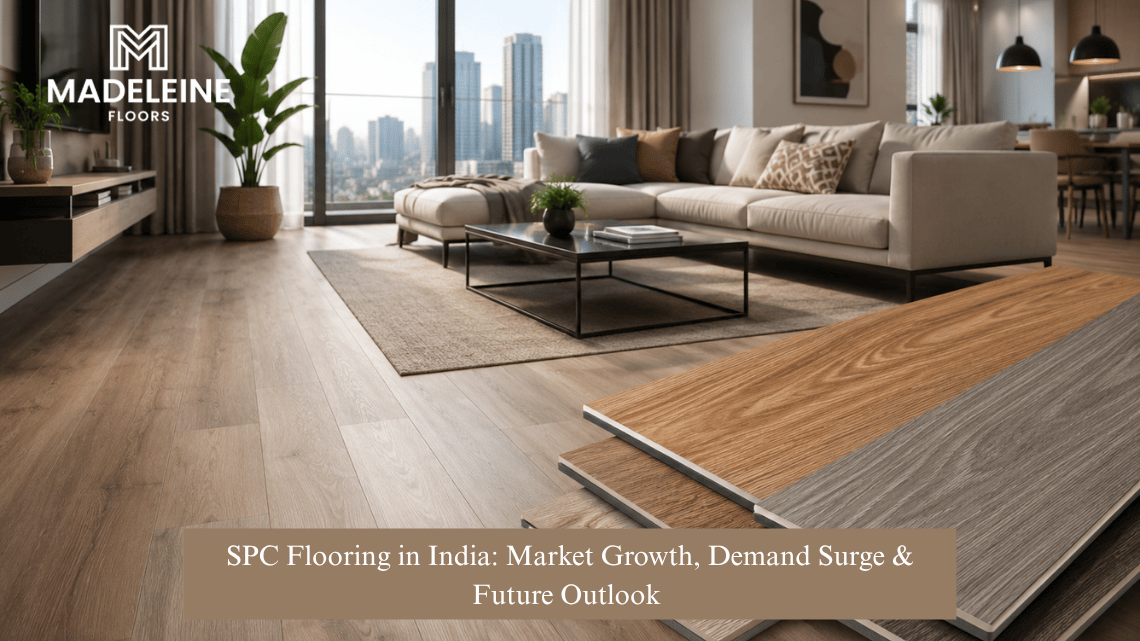
SPC Flooring in India: Market Growth, Demand Surge & Future Outlook

SPC Flooring in India: Market Growth, Demand Surge & Future Outlook

SPC Flooring in India Market Growth, Demand Surge & Future Outlook

If you’ve been paying attention to the Indian interior design and construction space over the last few years, one product that keeps coming up is SPC flooring. Homeowners are asking for it by name. Interior designers are recommending it over materials they’ve worked with for decades.

That shift didn’t happen overnight, and it isn’t driven by marketing alone. There are real, practical reasons why SPC flooring in India has gone from a niche import product to a mainstream flooring category and understanding those reasons tells you a lot about where the market is headed.

What Makes SPC Flooring Different From Other Vinyl Options

Firstly,  let’s understand what separates SPC from older vinyl flooring because the distinction genuinely matters.

SPC stands for Stone Plastic Composite. The core is made from a blend of limestone powder, PVC, and stabilizers, creating a rigid, dense plank that behaves very differently from older flexible vinyl sheets or even WPC (Wood Plastic Composite) flooring.

Key differences are:

  • Dimensional stability – SPC does not swell or shrink much due to variations in temperature and humidity.
  • Waterproof core — not just water-resistant on the surface, but genuinely waterproof throughout the plank, making it perfect for bathrooms, kitchens, and ground-floor spaces.
  • Sturdy underfoot feel— it doesn’t feel hollow or bouncy the way older vinyl did, which is one of the biggest reasons to go for SPC.
  • Thinner profile — SPC installs at 4mm to 8mm thickness, making it easy to fit under doors and transition between rooms.

These characteristics made SPC flooring a natural fit for India’s residential and commercial needs. 

Benefits of SPC Flooring for Indian Homes

One of the many reasons why SPC flooring continues to grow is very simple because it solves issues faced by Indian home owners on a daily basis. Here are some of the advantages of SPC flooring:

  • Waterproof performance — can handle kitchens, bathrooms, and even monsoon weather without swelling or warping.
  • Scratch resistant —– can resist scratches caused by furniture movement, pets, and even foot traffic. without showing premature wear.
  • Easy maintenance — sweep regularly, mop occasionally, and you’re done. No polishing, no sealing, no expensive upkeep treatments.
  • Fast installation — click-lock systems mean most rooms can be done in a day, with minimal disruption to the household.
  • Premium finish – through cutting-edge embossing and printing techniques, wood, stone, and concrete effects that feel premium are achieved.
  • Suitable for humid climates — unlike solid wood and laminate, SPC will not be affected by the changes in humidity levels during different seasons in India.

Growth of SPC Flooring in India

The SPC flooring in India now competes directly with tiles and laminates in mid-range projects, and with marble and hardwood in premium projects.

Some major factors for growth are:

Urbanisation shifted priorities. Smaller urban apartments need flooring that looks visually impactful but handles daily wear without demanding attention. SPC delivers both without asking for a premium material budget.

Renovation played an important role in increasing adoption.After 2020, there was a sudden rise in home renovations in India as homeowners started to evaluate their homes. SPC became a renovation favourite because it installs directly over existing floors, no tile removal, no demolition, no extended disruption.

Commercial construction added consistent, large-volume demand. Retail expansion, co-working spaces, hospitality projects, and healthcare facilities all needed durable, good-looking floors installed quickly. SPC ticked every box on that list.

Industries Driving Demand for SPC Flooring

Not all demand comes from the same place. A few segments are pulling particularly hard.

Residential housing projects , both affordable and premium. Developers have realised SPC gives apartments a high-end look that photographs well and impresses buyers, without significantly inflating material costs.

Hospitality and retail continue to be strong commercial segments. Hotels, restaurants, and retail chains have needs for flooring which must be attractive, durable, and easy to maintain without costing too much. SPC fits that requirement almost perfectly.

Healthcare and education are emerging segments worth watching. Both need hygienic, easy-to-clean surfaces for institutional use. The anti-bacterial coatings now standard on quality SPC products have made it a credible option in these categories.

The home renovation market remains one of the fastest-growing channels.While in new constructions, the decision about the flooring is made by the builders themselves, in the case of renovations, the process is led by individuals who study everything properly before making any decisions. These individuals look for the best SPC flooring in India.

Future of SPC Flooring in India

There are some indications that the growth is not going to slow down any time soon.

  • With design awareness, consumers are more aware and able to distinguish between different products and will be ready to pay for quality rather than for the cheapest available item.
  • Discussions about sustainability affect the choice. SPC does not involve cutting down natural forests or mining stones and fits well into the trend of using materials that are environmentally friendly.
  • Constant technological developments in manufacturing increase the competitiveness of SPC compared to natural materials through improved surface appearance and acoustic characteristics.
  • Tier 2 and Tier 3 city penetration is still in its early stages. As awareness spreads beyond metros and distribution networks improve, a significant share of future growth will come from smaller cities where homeownership and renovation activity are rising steadily.
  • Digital-first buying behaviour is accelerating the category further. More homeowners research and shortlist flooring products online before ever visiting a showroom which benefits established, visible brands disproportionately.

What Buyers Should Know Before Choosing SPC Flooring

Quality varies across price points. Wear layer thickness is ideally 0.5mm or above for regular residential use, along with core density and surface embossing quality are the three things that most reliably separate a floor that lasts 20 years from one that shows wear within three.

Installation quality matters just as much as product quality. Even the best SPC flooring underperforms on a poorly prepared subfloor. Always factor in professional installation and proper subfloor levelling when planning your budget.

Brand reputation and warranty coverage are genuine indicators of product confidence. Manufacturers offering 10 year or longer warranties with an established service presence in India are generally a safer choice.

Conclusion

SPC floors have come a long way in India in an incredibly short span of time; there is no doubt about this, and for very valid reasons too. They address issues that people encounter in their homes and offices on a daily basis such as climate resistance, maintenance, difficulty in installation, and aesthetics.

As the industry grows and consumers become more aware of the difference between a good SPC flooring option from others, discussions will move towards quality and durability and for that brands like Madeleine Floors are helping customers for SPC collections that brings performance, design flexibility, and modern aesthetics.

FAQs

  1. What is SPC flooring?
    SPC flooring is a type of luxury vinyl flooring, which consists of limestone powder, PVC, and stabilizers.
  2. Is SPC flooring waterproof?
    Yes, SPC flooring is fully waterproof and can be installed in kitchen, bathroom, and humid areas.
  3. Is SPC flooring good for commercial spaces?
    Yes, SPC flooring is commonly used in offices, retail stores, hotels and clinics because of its durability and easy maintenance.