Madeleine Floors

Categories
SPC Flooring

SPC Flooring Cost vs Traditional Flooring: Long-Term Value Comparison
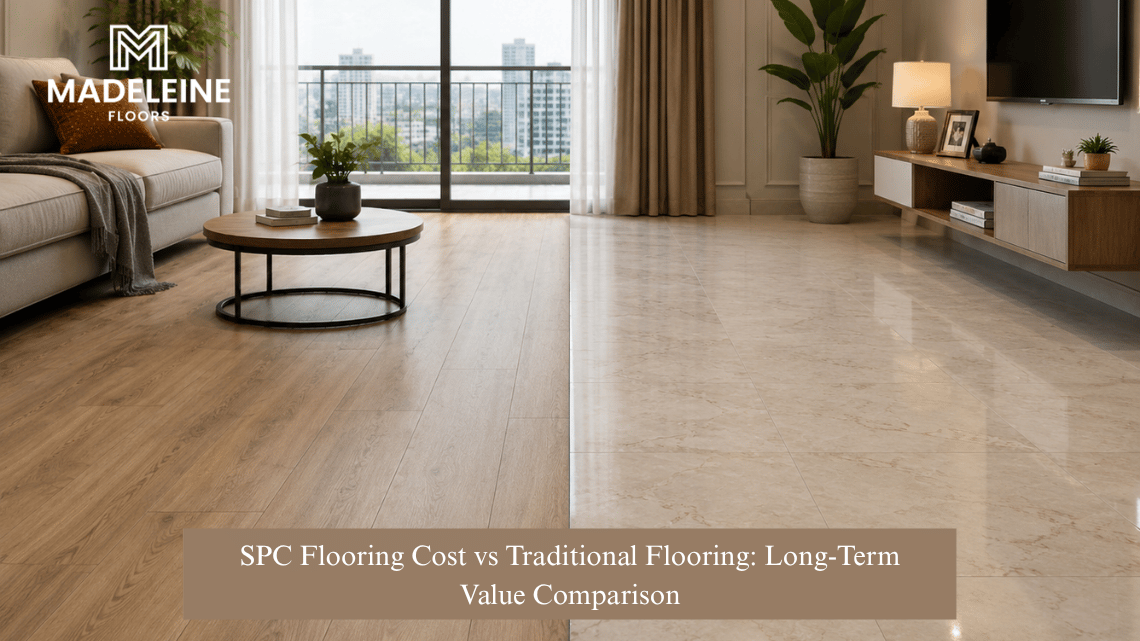
SPC Flooring Cost vs Traditional Flooring: Long-Term Value Comparison

SPC Flooring Cost vs Traditional Flooring Long-Term Value Comparison

When people choose flooring, most of them look at just one thing first: the price per square foot.

But here’s the truth:

👉 Cheap flooring is not always affordable in the long run.

In India, homeowners, builders, and architects are now focusing more on long-term value instead of just initial cost. That’s why SPC flooring is becoming one of the fastest-growing flooring solutions.

At Madeleine Floors, we regularly help customers compare SPC flooring with tiles, marble, wood, and laminate flooring. And honestly, the results surprise many people.

Let’s break it down practically and easily.

1. Why Flooring Cost Is More Than Just Price Per Sq Ft

Imagine this:

You save ₹20–₹30 per sq ft today by choosing cheaper flooring.

But after 3–5 years, you spend money again on:

  • Repairs
  • Polishing
  • Crack replacement
  • Water damage

That’s where long-term flooring value becomes important.

Industry reports show that maintenance and repair costs can increase flooring ownership expenses by 25–40% over 10 years.

That’s why more buyers are turning towards SPC flooring.

2. Understanding SPC Flooring Before Comparing Costs

SPC stands for Stone Plastic Composite.

It is a rigid core flooring made using:

  • Limestone powder
  • PVC
  • Stabilizers

It includes multiple layers:

  • UV coating
  • Wear layer
  • Printed design
  • SPC rigid core

Why is it becoming popular in India?

Because it is:

✔ Waterproof
✔ Termite-resistant
✔ Scratch-resistant
✔ Easy to maintain

And unlike traditional flooring, SPC works very well in Indian climate conditions.

3. The Real Cost of Flooring Most Buyers Ignore

Initial Purchase Cost

Here’s an average flooring cost comparison in India:

Flooring Type

Material Cost

SPC Flooring

₹90–₹180/sq ft

Tiles

₹70–₹250/sq ft

Marble

₹250–₹800/sq ft

Wooden Flooring

₹180–₹500/sq ft

At first glance, tiles may seem cheaper.

But the story changes when you add installation and maintenance.

Installation Cost

SPC flooring installation is usually:

  • Faster
  • Cleaner
  • Less labour-intensive

Average installation cost:

Flooring Type

Installation Cost

SPC Flooring

₹30–₹50/sq ft

Tiles

₹60–₹120/sq ft

Marble

₹100–₹250/sq ft

SPC flooring installation can reduce labour expenses by almost 40–50%.

Maintenance Cost Over Time

This is where SPC flooring wins big.

Traditional flooring often needs:

  • Polishing
  • Grout cleaning
  • Crack repairs
  • Waterproof treatments

SPC flooring requires only basic cleaning.

4. SPC Flooring Cost in India: Detailed Breakdown

Premium SPC flooring generally costs:

  • ₹120–₹200/sq ft including installation

The final price depends on:

  • Thickness (5mm–8mm)
  • Wear layer quality
  • Design finish

The best part?

There’s almost no polishing or repair expense later.

5. Traditional Flooring Cost Breakdown

Tile Flooring

Tiles are common in Indian homes, but over time:

  • Grout becomes dirty
  • Tiles crack
  • Replacement is difficult

Repairing broken tiles later is often expensive.

Marble Flooring

Marble looks luxurious but requires:

  • Regular polishing
  • Stain maintenance
  • High installation cost

Over 10 years, maintenance expenses can become very high.

Wooden Flooring

Wood flooring struggles in the Indian climate due to:

  • Moisture
  • Humidity
  • Termites

Many homeowners face swelling and damage issues.

Laminate Flooring

Laminate is affordable initially, but:

  • Not waterproof
  • Shorter lifespan
  • Easily damaged by moisture

6. SPC Flooring vs Tiles: Long-Term Value Comparison

Installation Time

SPC flooring installation is almost 50% faster than tiles.

Less labour = lower cost.

Comfort

SPC flooring feels:

  • Softer underfoot
  • Less noisy
  • More comfortable for daily use

Repair & Replacement

Damaged SPC planks can be replaced individually.

Replacing broken tiles is much more complicated.

Waterproof Performance

SPC flooring is 100% waterproof — ideal for Indian monsoon conditions.

7. SPC Flooring vs Marble Flooring

Marble is beautiful, but expensive to maintain.

SPC flooring now offers:

  • Marble-look finishes
  • Premium textures
  • Similar luxury feel

At almost 50–70% lower total ownership cost.

8. SPC Flooring vs Wooden Flooring

Moisture Resistance

Wood absorbs moisture. SPC does not.

Termite Resistance

SPC flooring is termite-proof.

Wood requires treatments and maintenance.

Cost Advantage

SPC gives premium wooden aesthetics at a much lower cost.

9. Hidden Costs of Traditional Flooring

Here’s what most people forget:

❌ Tile grout cleaning
❌ Marble polishing
❌ Wooden floor repairs
❌ Laminate swelling replacement

These hidden expenses increase over time.

10. Why SPC Flooring Offers Better Long-Term Value

Low Maintenance

Just regular mopping and cleaning.

No polishing needed.

Faster Installation

Projects finish quicker, especially in:

  • Apartments
  • Offices
  • Retail stores

Long Lifespan

Good SPC flooring lasts:

✔ 15–20 years

That’s a huge advantage.

Better ROI

Builders and homeowners save money long term.

That’s why many SPC flooring manufacturers in Morbi are seeing rising demand across India.

11. Property Value Impact

Modern flooring improves:

  • Interior appearance
  • Buyer attraction
  • Rental value

Experts estimate that flooring upgrades can improve perceived property value by 5–8%.

12. Best Flooring Based on Budget

Budget Homes

  • 5mm SPC flooring

Mid-Range Apartments

  • 6mm–7mm SPC flooring

Premium Villas

  • Premium textured SPC flooring

Commercial Projects

  • Heavy-duty SPC flooring with 0.5mm wear layer

13. Indian Climate Factor: Why SPC Performs Better

India’s climate includes:

  • Heat up to 45°C
  • Humidity
  • Monsoon moisture

SPC flooring handles all these conditions better than most traditional flooring options.

14. Common Buyer Mistakes

  • Choosing only based on price
  • Ignoring maintenance cost
  • Buying low-quality flooring
  • Skipping installation quality

These mistakes increase expenses later.

FAQs – SPC Flooring Cost vs Traditional Flooring

1. Is SPC flooring cheaper than tiles?

Initially, tiles may seem cheaper, but SPC flooring offers better long-term savings.

2. How long does SPC flooring last?

Premium SPC flooring can last 15–20 years.

3. Is SPC flooring waterproof?

Yes, SPC flooring is 100% waterproof.

4. Which flooring gives the best ROI?

SPC flooring provides one of the best long-term values and maintenance savings.

5. Why are SPC flooring manufacturers in Morbi growing rapidly?

Because Morbi has become a major hub for modern flooring manufacturing in India.

Final Thoughts

Flooring is not just a purchase — it’s a long-term investment.

While traditional flooring may look affordable initially, the hidden maintenance and repair costs often make it expensive over time.

SPC flooring offers:

✔ Better durability
✔ Lower maintenance
✔ Faster installation
✔ Modern aesthetics

At Madeleine Floors, we focus on delivering premium SPC flooring solutions designed for Indian conditions and long-term value.

👉 Looking for durable and stylish flooring? Contact Madeleine Floors today and explore modern SPC flooring collections built to last.
Categories
SPC Flooring

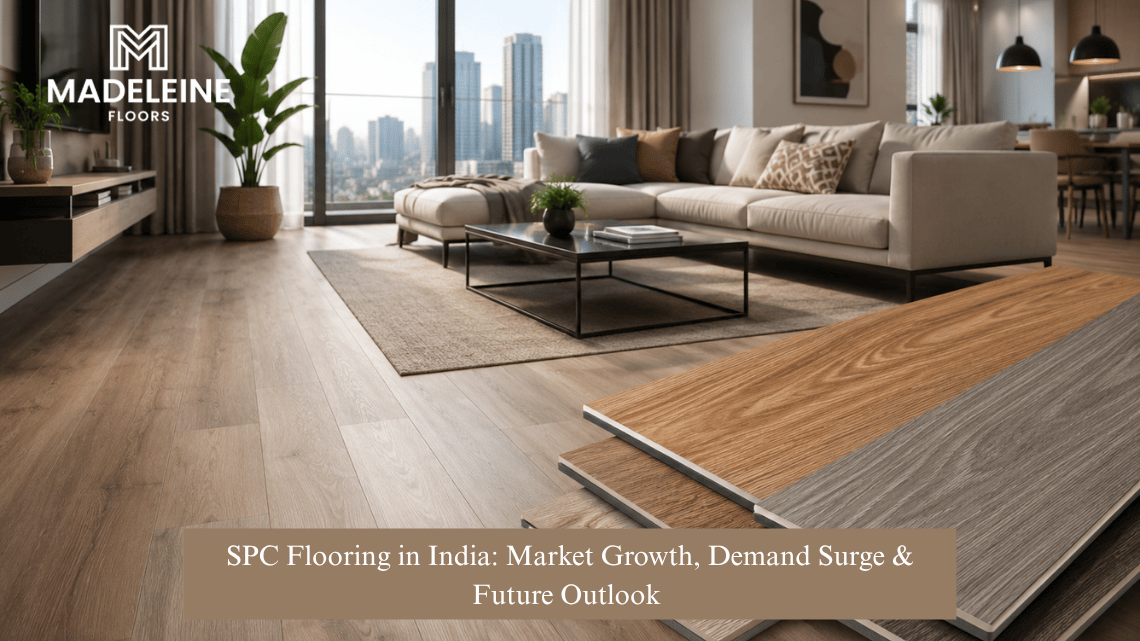
SPC Flooring in India: Market Growth, Demand Surge & Future Outlook

SPC Flooring in India: Market Growth, Demand Surge & Future Outlook

SPC Flooring in India Market Growth, Demand Surge & Future Outlook

If you’ve been paying attention to the Indian interior design and construction space over the last few years, one product that keeps coming up is SPC flooring. Homeowners are asking for it by name. Interior designers are recommending it over materials they’ve worked with for decades.

That shift didn’t happen overnight, and it isn’t driven by marketing alone. There are real, practical reasons why SPC flooring in India has gone from a niche import product to a mainstream flooring category and understanding those reasons tells you a lot about where the market is headed.

What Makes SPC Flooring Different From Other Vinyl Options

Firstly,  let’s understand what separates SPC from older vinyl flooring because the distinction genuinely matters.

SPC stands for Stone Plastic Composite. The core is made from a blend of limestone powder, PVC, and stabilizers, creating a rigid, dense plank that behaves very differently from older flexible vinyl sheets or even WPC (Wood Plastic Composite) flooring.

Key differences are:

  • Dimensional stability – SPC does not swell or shrink much due to variations in temperature and humidity.
  • Waterproof core — not just water-resistant on the surface, but genuinely waterproof throughout the plank, making it perfect for bathrooms, kitchens, and ground-floor spaces.
  • Sturdy underfoot feel— it doesn’t feel hollow or bouncy the way older vinyl did, which is one of the biggest reasons to go for SPC.
  • Thinner profile — SPC installs at 4mm to 8mm thickness, making it easy to fit under doors and transition between rooms.

These characteristics made SPC flooring a natural fit for India’s residential and commercial needs. 

Benefits of SPC Flooring for Indian Homes

One of the many reasons why SPC flooring continues to grow is very simple because it solves issues faced by Indian home owners on a daily basis. Here are some of the advantages of SPC flooring:

  • Waterproof performance — can handle kitchens, bathrooms, and even monsoon weather without swelling or warping.
  • Scratch resistant —– can resist scratches caused by furniture movement, pets, and even foot traffic. without showing premature wear.
  • Easy maintenance — sweep regularly, mop occasionally, and you’re done. No polishing, no sealing, no expensive upkeep treatments.
  • Fast installation — click-lock systems mean most rooms can be done in a day, with minimal disruption to the household.
  • Premium finish – through cutting-edge embossing and printing techniques, wood, stone, and concrete effects that feel premium are achieved.
  • Suitable for humid climates — unlike solid wood and laminate, SPC will not be affected by the changes in humidity levels during different seasons in India.

Growth of SPC Flooring in India

The SPC flooring in India now competes directly with tiles and laminates in mid-range projects, and with marble and hardwood in premium projects.

Some major factors for growth are:

Urbanisation shifted priorities. Smaller urban apartments need flooring that looks visually impactful but handles daily wear without demanding attention. SPC delivers both without asking for a premium material budget.

Renovation played an important role in increasing adoption.After 2020, there was a sudden rise in home renovations in India as homeowners started to evaluate their homes. SPC became a renovation favourite because it installs directly over existing floors, no tile removal, no demolition, no extended disruption.

Commercial construction added consistent, large-volume demand. Retail expansion, co-working spaces, hospitality projects, and healthcare facilities all needed durable, good-looking floors installed quickly. SPC ticked every box on that list.

Industries Driving Demand for SPC Flooring

Not all demand comes from the same place. A few segments are pulling particularly hard.

Residential housing projects , both affordable and premium. Developers have realised SPC gives apartments a high-end look that photographs well and impresses buyers, without significantly inflating material costs.

Hospitality and retail continue to be strong commercial segments. Hotels, restaurants, and retail chains have needs for flooring which must be attractive, durable, and easy to maintain without costing too much. SPC fits that requirement almost perfectly.

Healthcare and education are emerging segments worth watching. Both need hygienic, easy-to-clean surfaces for institutional use. The anti-bacterial coatings now standard on quality SPC products have made it a credible option in these categories.

The home renovation market remains one of the fastest-growing channels.While in new constructions, the decision about the flooring is made by the builders themselves, in the case of renovations, the process is led by individuals who study everything properly before making any decisions. These individuals look for the best SPC flooring in India.

Future of SPC Flooring in India

There are some indications that the growth is not going to slow down any time soon.

  • With design awareness, consumers are more aware and able to distinguish between different products and will be ready to pay for quality rather than for the cheapest available item.
  • Discussions about sustainability affect the choice. SPC does not involve cutting down natural forests or mining stones and fits well into the trend of using materials that are environmentally friendly.
  • Constant technological developments in manufacturing increase the competitiveness of SPC compared to natural materials through improved surface appearance and acoustic characteristics.
  • Tier 2 and Tier 3 city penetration is still in its early stages. As awareness spreads beyond metros and distribution networks improve, a significant share of future growth will come from smaller cities where homeownership and renovation activity are rising steadily.
  • Digital-first buying behaviour is accelerating the category further. More homeowners research and shortlist flooring products online before ever visiting a showroom which benefits established, visible brands disproportionately.

What Buyers Should Know Before Choosing SPC Flooring

Quality varies across price points. Wear layer thickness is ideally 0.5mm or above for regular residential use, along with core density and surface embossing quality are the three things that most reliably separate a floor that lasts 20 years from one that shows wear within three.

Installation quality matters just as much as product quality. Even the best SPC flooring underperforms on a poorly prepared subfloor. Always factor in professional installation and proper subfloor levelling when planning your budget.

Brand reputation and warranty coverage are genuine indicators of product confidence. Manufacturers offering 10 year or longer warranties with an established service presence in India are generally a safer choice.

Conclusion

SPC floors have come a long way in India in an incredibly short span of time; there is no doubt about this, and for very valid reasons too. They address issues that people encounter in their homes and offices on a daily basis such as climate resistance, maintenance, difficulty in installation, and aesthetics.

As the industry grows and consumers become more aware of the difference between a good SPC flooring option from others, discussions will move towards quality and durability and for that brands like Madeleine Floors are helping customers for SPC collections that brings performance, design flexibility, and modern aesthetics.

FAQs

  1. What is SPC flooring?
    SPC flooring is a type of luxury vinyl flooring, which consists of limestone powder, PVC, and stabilizers.
  2. Is SPC flooring waterproof?
    Yes, SPC flooring is fully waterproof and can be installed in kitchen, bathroom, and humid areas.
  3. Is SPC flooring good for commercial spaces?
    Yes, SPC flooring is commonly used in offices, retail stores, hotels and clinics because of its durability and easy maintenance.
Categories
SPC Flooring

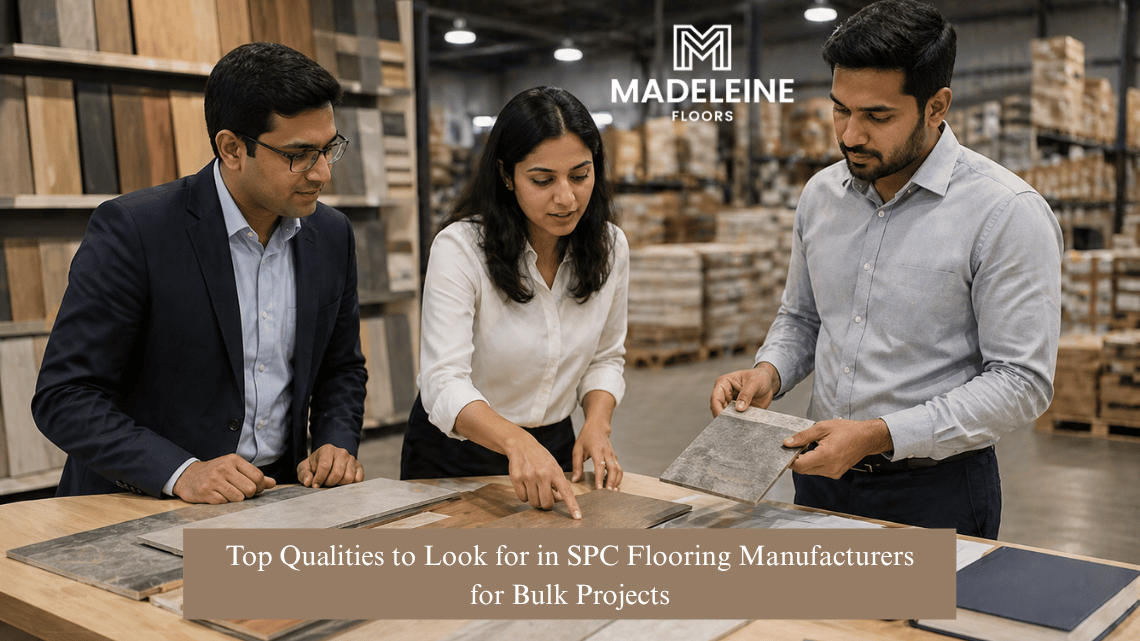
Top Qualities to Look for in SPC Flooring Manufacturers for Bulk Projects

Top Qualities to Look for in SPC Flooring Manufacturers for Bulk Projects

Top Qualities to Look for in SPC Flooring Manufacturers for Bulk Projects

If you are planning a large project like apartments, offices, or commercial spaces, choosing the right flooring supplier is not just important; it’s critical.

Many builders and contractors in India face issues like delayed delivery, inconsistent quality, and poor support. That’s why selecting reliable SPC flooring manufacturers in Gujarat or across India becomes a key decision.

At Madeleine Floors, we work closely with bulk buyers and understand exactly what matters. Let’s break it down simply so you can make the right choice.

1. Introduction: Why Choosing the Right Manufacturer Matters

Bulk projects are very different from small purchases.

You’re dealing with:

  • Thousands of square feet
  • Tight deadlines
  • Budget control
  • Client expectations

Even a small quality issue can lead to major losses.

According to industry data, over 25% of project delays in India are linked to supplier-related issues. So choosing the right SPC flooring manufacturer is not optional; it’s essential.

2. Understanding SPC Flooring for Bulk Projects

SPC (Stone Plastic Composite) flooring is made from limestone and PVC, making it:

  • 100% waterproof
  • Termite-proof
  • Highly durable

For bulk projects, SPC flooring is ideal because

  • Installation is 40–50% faster than tiles
  • Maintenance cost is low
  • Lifespan is 15–20 years

That’s why it’s widely used in residential, commercial, and hospitality projects.

3. Types of SPC Flooring Manufacturers in India

Domestic Manufacturers

  • Faster delivery
  • Better pricing
  • Easy communication

Imported Suppliers

  • Premium designs
  • Higher cost

OEM / Bulk Manufacturers

  • Custom branding
  • Flexible bulk supply

If you’re working on large projects, choosing SPC flooring manufacturers in Gujarat can be beneficial due to faster logistics and cost savings.

4. Top Qualities to Look for in SPC Flooring Manufacturers for Bulk Projects

4.1 Manufacturing Capacity & Production Scale

Always check:

  • Monthly production capacity
  • Ability to handle large orders
  • Backup stock availability

A good manufacturer should handle bulk orders without delays.

4.2 Product Quality & Certifications

Look for:

  • ISO certification
  • Fire resistance standards
  • Slip resistance ratings
  • Low-VOC compliance

High-quality SPC flooring reduces complaints by up to 30–40%.

4.3 Consistency in Quality Across Batches

In bulk projects, consistency matters a lot.

  • Same colour across batches
  • Same texture and finish
  • Proper quality checks

Inconsistent flooring can ruin the entire look of your project.

4.4 Product Range & Customisation

A reliable manufacturer should offer:

  • 5mm to 8mm thickness options
  • 0.3mm & 0.5mm wear layers
  • Wooden, marble, and custom designs

Customisation is important for builders and designers.

4.5 Competitive Bulk Pricing

Bulk pricing should be:

  • Transparent
  • Volume-based
  • GST included

Average SPC bulk price in India:

  • ₹90–₹140 per sq ft

Choosing the cheapest supplier can increase long-term cost by 20–25% due to replacements.

4.6 Strong Logistics & Delivery Network

For bulk projects, delivery is everything.

Check:

  • Pan India supply
  • On-time delivery record
  • Proper packaging

Delays in flooring can delay the entire project.

4.7 Installation Support & Technical Expertise

A good manufacturer provides:

  • Site inspection
  • Installation guidance
  • Subfloor preparation tips

Proper installation improves durability by 25–30%.

4.8 Warranty & After-Sales Support

Standard warranties:

  • Residential: 15–20 years
  • Commercial: 5–10 years

Also, check the response time for support.

5. Key Technical Specifications to Evaluate

Before finalising:

  • Wear layer thickness (minimum 0.3mm)
  • SPC core density
  • Click-lock strength
  • Anti-slip rating

These directly affect performance.

6. How to Verify Manufacturer Credibility

Here’s a quick checklist:

✔ GST registration
✔ Physical office or factory
✔ Past project portfolio
✔ Google reviews
✔ Sample availability

Over 70% of B2B buyers now check online reviews before choosing suppliers.

7. Questions to Ask Before Finalising

  • What is your production capacity?
  • Can you ensure batch consistency?
  • What certifications do you have?
  • What is the delivery timeline?
  • Do you offer installation support?

A reliable manufacturer will answer confidently.

8. Comparing Local vs National Manufacturers

Local (Gujarat-based)

  • Faster delivery
  • Lower transport cost

National suppliers

  • Larger stock
  • Wider design options

For projects in Gujarat, local manufacturers are often more efficient.

9. Importance of Sample Testing

Always test before bulk purchase:

  • Scratch test
  • Water test
  • Locking strength
  • Colour consistency

This helps avoid future problems.

10. Logistics & Supply Chain Considerations

Check:

  • Delivery timelines
  • Damage policy
  • Replacement process
  • Storage conditions

A strong supply chain ensures smooth execution.

11. Pricing Guide for Bulk SPC Flooring

Bulk project pricing:

  • Material: ₹90–₹140 per sq ft
  • Installation: ₹30–₹50 per sq ft

Compared to tiles:

  • Installation is faster
  • Labour cost is lower
  • Replacement is easier

SPC flooring reduces overall project cost by 15–20%.

12. Common Mistakes to Avoid

  • Choosing the lowest price supplier
  • Ignoring certifications
  • Not testing samples
  • Skipping contract terms

These mistakes can lead to major losses.

13. Red Flags of Unreliable Suppliers

  • No certifications
  • No proper invoice
  • Unrealistic pricing
  • Poor communication

Avoid such suppliers at all costs.

14. Benefits of Choosing the Right Manufacturer

  • Consistent quality
  • Timely project completion
  • Better ROI
  • Long-term partnership

Builders report up to a 20% reduction in complaints when working with reliable suppliers.

15. Best SPC Flooring for Different Bulk Projects

Residential Projects

  • 6mm–7mm thickness

Commercial Projects

  • 7mm–8mm thickness

Hotels & Hospitality

  • Premium textures and designs

Hospitals & Schools

  • Anti-slip and hygienic flooring

16. Future Trends in SPC Flooring India

  • Eco-friendly materials
  • Advanced locking systems
  • Low-VOC flooring
  • Automation in manufacturing

India’s flooring market is evolving fast.

FAQs

  1. Who are the best SPC flooring manufacturers in Gujarat?
    Look for certified manufacturers with strong experience, good reviews, and bulk supply capability like Madeleine Floors.
  2. What is the price of SPC flooring for bulk projects?
    ₹90–₹140 per sq ft, depending on quality and quantity.
  3. How to choose a reliable SPC flooring supplier?
    Check certifications, capacity, reviews, and sample quality.
  4. What thickness is best for bulk projects?
    6mm–7mm for residential, 7mm–8mm for commercial.
  5. Is SPC flooring suitable for large projects?
    Yes, it is durable, cost-effective, and easy to install.

Final Thoughts

Choosing the right SPC flooring manufacturers in Gujarat can make or break your project.

It’s not just about price it’s about quality, consistency, and long-term reliability.

At Madeleine Floors, we specialise in bulk SPC flooring solutions designed for durability, performance, and timely delivery.

👉 Planning a bulk project? Get in touch with us today and let’s build something reliable together.

Categories
SPC Flooring Vinyl Flooring

What Makes SPC Vinyl Flooring the Most Durable Flooring Option in India?

What Makes SPC Vinyl Flooring the Most Durable Flooring Option in India?

What Makes SPC Vinyl Flooring the Most Durable Flooring Option in India

Floors in India go through a lot than just people walking around. Think about it: you have humid monsoons, endless dust in the air, changes in temperature, heavy furniture dragging back and forth, daily spills, and general rough use. 

And yet, after all that, the floor’s supposed to look good and not give up. 

That is exactly why SPC vinyl flooring has become one of the smartest flooring choices in India today. SPC vinyl flooring actually solves problems that traditional flooring haven’t managed to handle.

It is not popular only because it looks stylish. It stands out because it survives things that wreck other floors. If you want something that really lasts and handles day-to-day life in India, than start for SPC vinyl floor supplier right now.

Below are the reasons why you should choose vinyl flooring.

The Core Science Behind SPC Vinyl Flooring

SPC stands for Stone Plastic Composite. Basically, it’s a strong mix of limestone powder, PVC, and stabilizers, all pressed together into a solid, super-dense core. That’s where its toughness comes from.

What’s in one of these planks? You get:

– A top UV layer that keeps stains and fading away

– A hard-wearing layer to stop scratches and scuffs

– A printed layer with realistic wood or stone looks

– The SPC core that keeps everything sturdy and in shape

– An optional IXPE or EVA underlayer for sound reduction and comfort

All this layered build is what separates SPC a notch above regular vinyl or basic laminate. It handles pressure, strong appearance, and doesn’t need a ton of work to keep clean. 

What Actually Makes SPC Vinyl Flooring So Durable?

1. It Is Fully Waterproof

Honestly, SPC flooring’s waterproof core is a game-changer for Indian homes. The material doesn’t absorb water, so even after spills or humidity, it stays flat and doesn’t warp. 

That’s why you’ll see it everywhere like 

  • Kitchens 
  • Living rooms 
  • Entryways 
  • Utility spaces 
  • Offices and retail interiors  

In places where wet shoes, unexpected spills, and muggy weather are part of daily life, SPC flooring just makes sense.

2. It Handles Temperature Changes Better

In Indian weather, flooring expands and contracts more than people realize. From scorching sun to sudden temperature drops, change in temperature can affect the stability of many materials.

But SPC’s stone polymer core keeps high dimensional stability. The floor doesn’t freak out over heat waves or chilly mornings; it stays locked in and looks good.

3. It Resists Dents, Scratches, and Daily Impact

Floors take a beating like chairs scraping, kids running around, luggage wheels rolling, you name it. SPC flooring is built to handle it. 

The rigid core resists dents and marks, while the wear layer protects the top surface from visible scratching and abrasion. That’s fueling the demand for SPC across homes and businesses as everyone appreciates a floor that actually lasts.

4. It Is Termite Resistant

You don’t have to worry about termites sneaking into SPC like you do with wood flooring. In places where pest problems matter, that makes SPC a go-to choice for staying hassle-free over time.

5. It Lasts Longer with Less Maintenance

SPC flooring requires minimal maintenance because its design purposes this function. Daily dust can be removed with sweeping or vacuuming. Regular cleaning requires only a damp mop. The surface needs no polishing, no special sealing and no dedicated maintenance procedures.

For Indian households that need flooring to stay neat with minimal effort, this is one of the strongest reasons people choose it.

Why Homeowners and Commercial Buyers Are Choosing It

SPC vinyl flooring has expanded beyond high-end interior spaces. The material has become popular and used by:

  • Apartment owners who replace their existing tile flooring 
  • Families who need flooring solutions which can withstand their pet and child activities 
  • Architects who create contemporary residential building designs 
  • Office owners who need flooring solutions which require minimal upkeep 
  • Retail stores and showrooms which experience continuous footfall 
  • Builders who develop residential properties that meet future design standards

The process of selecting an appropriate SPC vinyl floor supplier has become essential for buyers who need dependable technical performance and attractive design standards.

The Design Advantage That Comes with Strength

Durability alone is not enough. SPC offers loads of design choices such as wood grains, stone looks, matte finishes, even premium patterns that fit both modern and classic spaces. Whether you’re after a cozy oak for the bedroom or a cool stone vibe for an office, a trusted SPC vinyl floor supplier can deliver style without sacrificing strength.

Final Thoughts

The most durable flooring option in India is the one that performs well in real conditions, not only in brochures. The SPC vinyl flooring system provides this requirement through its ability to deliver waterproof performance, structural integrity, resistant to daily wear and designed for the way Indian spaces function today.

Madeleine Floors takes pride of being the leading SPC vinyl floor supplier in India. We believe that flooring should function as well as it exhibits its aesthetic appeal. Our SPC vinyl flooring collection allows you to create SPC floors for your home with confidence, comfort and enduring strength. 

Explore flooring materials that maintain their strength every season and still look stunning every day.

Categories
SPC Flooring

7mm SPC Flooring vs 5mm: Which Thickness Should You Choose?

7mm SPC Flooring vs 5mm: Which Thickness Should You Choose?

7mm SPC Flooring vs 5mm Which Thickness Should You Choose

If you’re planning to upgrade your flooring, you’ve probably come across this common confusion:

👉 Should I go for 5mm SPC flooring or 7mm SPC flooring?

At Madeleine Floors, one of the best vinyl plank flooring manufacturers, we hear this question almost every day. And honestly, the answer depends on how and where you plan to use it.

Let’s simplify everything for you in a practical, easy-to-understand way.

1. Introduction: Why Thickness Matters in SPC Flooring

SPC flooring is known for durability, but thickness plays a big role in:

  • Strength
  • Comfort
  • Sound insulation
  • Lifespan

In India, flooring has to handle:

  • Extreme heat (up to 45–50°C)
  • High humidity
  • Daily wear & tear

That’s why choosing the right thickness is important. A small difference like 5mm vs 7mm can impact performance by 20–30% in real-life usage.

2. What is SPC Flooring? (Quick Overview)

SPC stands for Stone Plastic Composite — a rigid core vinyl flooring made from limestone and PVC.

It consists of:

  • UV coating
  • Wear layer (0.3mm–0.5mm)
  • Printed design layer
  • SPC core
  • Underlayment

Compared to traditional flooring:

  • 100% waterproof
  • Termite-proof
  • Easy installation
  • Lifespan up to 15–20 years

No wonder SPC flooring demand in India is growing at over 12% annually.

3. Understanding SPC Flooring Thickness

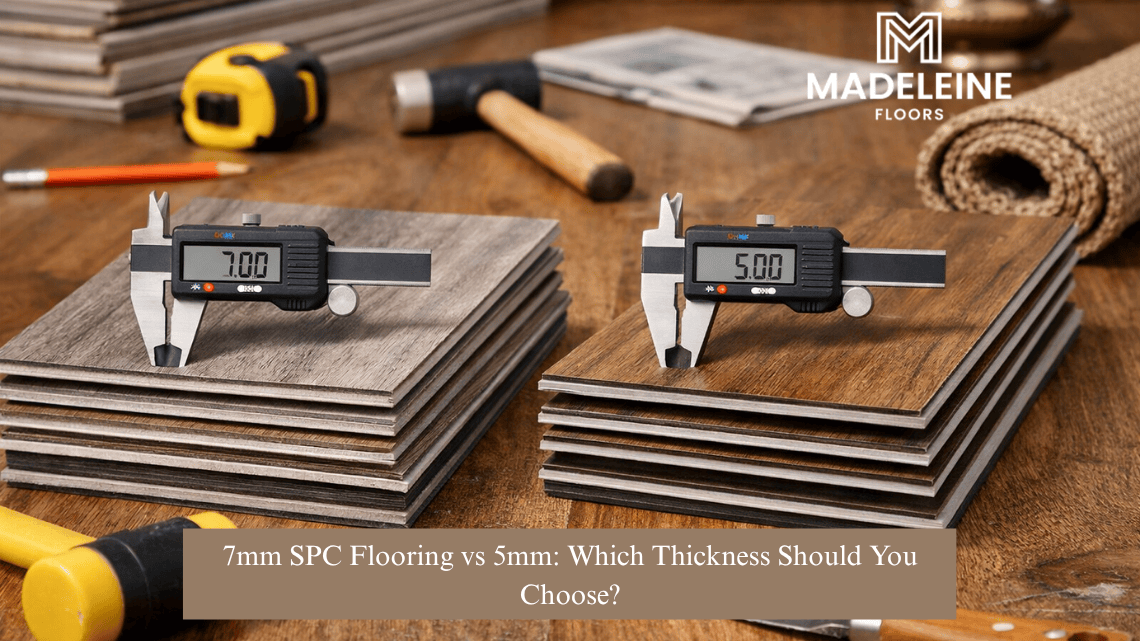
What Does 5mm and 7mm Mean?

It refers to the total thickness of the plank, including the core and base layer.

Common Thickness in India

  • 5mm – Entry-level
  • 6mm – Mid-range
  • 7mm – Premium residential
  • 8mm – Heavy commercial

Among these, 7mm SPC flooring is currently the most preferred choice for Indian homes.

4. 5mm SPC Flooring Overview

Features

  • Lightweight
  • Budget-friendly
  • Basic durability

Advantages

  • Lower cost (₹90–₹120 per sq ft)
  • Easy to transport and install
  • Good for low-traffic areas

Limitations

  • Less impact resistance
  • Lower sound insulation
  • Needs perfectly level subfloor

5. 7mm SPC Flooring Overview

Features

  • Thicker rigid core
  • Better strength and stability
  • Enhanced comfort

Advantages

  • Handles moderate to high traffic
  • Better noise reduction
  • More durable in Indian conditions

Limitations

  • Slightly higher cost
  • Not necessary for very low usage areas

6. 7mm SPC Flooring vs 5mm: Key Differences

Durability

  • 5mm: 8–12 years lifespan
  • 7mm: 15–20 years lifespan

👉 7mm performs better for long-term use.

Strength & Load Capacity

  • 5mm may dent under heavy furniture
  • 7mm can handle sofas, beds, office setups

Sound Insulation

  • 7mm reduces noise by up to 25–30% more than 5mm
  • Ideal for apartments and flats

Comfort Underfoot

  • 5mm feels slightly harder
  • 7mm offers better cushioning

Installation

  • 5mm requires perfect subfloor
  • 7mm is more forgiving

Price Comparison in India

Thickness

Price (₹/sq ft)

5mm

₹90–₹120

7mm

₹110–₹150

👉 Difference is small, but performance gap is big.

7. Which is Better for Indian Homes?

Apartments

Go for 7mm SPC flooring for better sound control and comfort.

Villas

7mm works best due to heavy furniture load.

Rental Properties

5mm is okay if budget is tight.

8. Which is Better for Commercial Spaces?

Offices & Clinics

7mm is recommended for durability.

Shops & Showrooms

7mm handles foot traffic better.

Heavy Traffic Areas

Avoid 5mm — it may wear out quickly.

9. Indian Climate Considerations

India’s weather is tough on flooring:

  • Heat expansion
  • Moisture damage
  • Dust & wear

7mm SPC flooring offers better dimensional stability, making it more reliable in Indian conditions.

10. Load Bearing & Impact Resistance

7mm SPC flooring can handle:

  • 400–500 kg distributed load
  • Office chairs
  • Heavy furniture

5mm may struggle in such situations.

11. Pros & Cons Summary

5mm SPC Flooring

Pros:
✔ Budget-friendly
✔ Easy installation

Cons:
❌ Lower durability
❌ Less sound insulation

7mm SPC Flooring

Pros:
✔ Strong and durable
✔ Better comfort
✔ Ideal for Indian homes

Cons:
❌ Slightly higher cost

12. When Should You Choose 5mm?

  • Low traffic rooms
  • Temporary setups
  • Tight budget

13. When Should You Choose 7mm SPC Flooring?

  • Long-term investment
  • Daily-use areas
  • Offices or shops
  • Premium interiors

14. Expert Recommendation

From our experience at Madeleine Floors, here’s a simple rule:

👉 If you want durability + comfort + long life → go for 7mm SPC flooring
👉 If budget is your main concern → 5mm can work

In India, over 70% of homeowners now prefer 6mm–7mm SPC flooring for better value.

15. Buying Guide

Before buying:

  • Check wear layer (minimum 0.3mm)
  • Choose trusted suppliers
  • Compare warranty (10–20 years)
  • Test samples physically

Always buy from best vinyl plank flooring manufacturers to ensure quality.

16. Common Mistakes to Avoid

  • Choosing only based on price
  • Ignoring wear layer thickness
  • Not checking subfloor condition
  • Skipping sample testing

FAQs – 7mm SPC Flooring vs 5mm

  1. Which is better, 5mm or 7mm SPC flooring?
    7mm is better for durability, comfort, and long-term use.
  2. Is 5mm SPC flooring durable enough?
    Yes, but only for low-traffic areas.
  3. How long does 7mm SPC flooring last?
    Up to 15–20 years with proper care.
  4. Does thickness affect waterproofing?
    No, all SPC flooring is waterproof.
  5. Which thickness is best for Indian homes?
    7mm is ideal for most homes.

Final Verdict

If you’re looking for a balance of price, durability, and performance, 7mm SPC flooring is the clear winner.

It works perfectly for Indian conditions, offers better comfort, and lasts longer — making it a smart investment.

At Madeleine Floors, we provide premium SPC solutions as one of the best vinyl plank flooring manufacturers in India.

👉 Want help choosing the right flooring? Get in touch with us today and request a sample!

Categories
SPC Flooring

Is 7mm SPC Flooring Thick Enough? Performance, Durability & Use Cases

Is 7mm SPC Flooring Thick Enough? Performance, Durability & Use Cases

Is 7mm SPC Flooring Thick Enough Performance, Durability & Use Cases

If you’re planning to upgrade your floors and confused about thickness, you’re not alone. One of the most common questions we get at Madeleine Floors, a trusted 7mm SPC flooring supplier in India, is:

👉 “Is 7mm SPC flooring thick enough for Indian homes and offices?”

Let’s break it down in simple language so you can make the right decision.

1. Introduction: Why Thickness Matters in SPC Flooring

Thickness directly affects:

  • Durability

  • Stability

  • Sound insulation

  • Comfort underfoot

In India, flooring has to handle:

  • Extreme heat (up to 45–50°C in many cities)

  • High humidity during monsoons

  • Heavy furniture

  • High foot traffic in commercial spaces

According to industry reports, SPC flooring demand in India is growing at over 12% annually, mainly because it is waterproof, termite-proof, and easy to install.

So, where does 7mm stand in all this? Let’s understand.

2. What is SPC Flooring? (Stone Plastic Composite Explained)

SPC stands for Stone Plastic Composite. It is a rigid core vinyl flooring made from:

  • Limestone powder (60–70%)

  • PVC

  • Stabilizers

A typical SPC plank includes:

  1. UV Coating

  2. Wear Layer (0.3mm–0.5mm)

  3. Printed Design Layer

  4. SPC Core

  5. IXPE/EVA Underlayment

Compared to laminate or traditional wooden flooring:

  • 100% waterproof

  • More stable in heat

  • Termite-resistant

  • Longer lifespan (10–20 years)

That’s why SPC is becoming a popular flooring solution in Indian apartments and offices.

3. Understanding 7mm SPC Flooring Thickness

When we say 7mm SPC flooring, it includes:

  • Core thickness

  • Attached underlayment (if included)

In India, common thickness options are:

  • 5mm

  • 6mm

  • 7mm

  • 8mm

7mm is considered a balanced mid-range thickness — strong enough for most residential and light commercial applications without being too expensive.

4. Is 7mm SPC Flooring Thick Enough? (Straight Answer)

Yes — for most Indian homes and small commercial spaces, 7mm SPC flooring is more than enough.

It is ideal for:

✔ Bedrooms
✔ Living rooms
✔ Retail stores
✔ Clinics
✔ Offices

It may not be ideal for:

❌ Warehouses
❌ Heavy industrial spaces
❌ High-load factory floors

For 90% of residential projects in India, 7mm is perfectly suitable.

5. Performance of 7mm SPC Flooring in Indian Conditions

Heat Resistance

India’s summers can touch 48°C. SPC flooring has excellent dimensional stability.

Studies show SPC has 10x more stability than traditional laminate flooring in temperature changes.

7mm thickness provides enough rigidity to prevent expansion and contraction.

Waterproof & Moisture Resistance

SPC flooring is 100% waterproof.

Perfect for:

  • Indian monsoons

  • Ground-floor apartments

  • Kitchens

Unlike wood, it won’t swell when exposed to moisture.

Termite & Pest Resistance

India has major termite issues, especially in coastal and humid regions. Since SPC has no natural wood, termites cannot damage it.

Impact Resistance

7mm SPC flooring can handle:

  • Heavy sofas

  • Modular kitchen units

  • Office desks

With a 0.3mm or 0.5mm wear layer, scratch resistance is excellent.

6. Durability of 7mm SPC Flooring

Average lifespan in India:

  • Residential use: 15–20 years

  • Commercial use: 8–12 years

Compared to:

  • Laminate flooring (8–10 years)

  • Engineered wood (10–15 years)

7mm SPC performs very well when installed correctly.

7. 6mm vs 7mm vs 8mm SPC Flooring

Let’s simplify:

  • 6mm – Budget-friendly, good for low traffic

  • 7mm – Balanced performance & cost

  • 8mm – Premium feel, better sound insulation

Cost difference in India:

  • 6mm: ₹90–₹120 per sq ft

  • 7mm: ₹110–₹150 per sq ft

  • 8mm: ₹140–₹180 per sq ft

For most Indian households, 7mm gives the best value for money.

8. Best Use Cases for 7mm SPC Flooring in India

Residential

  • Apartments

  • Villas

  • Rental properties

  • Kids’ rooms

Commercial

  • Salons

  • Boutiques

  • Small offices

  • Clinics

If your space sees moderate daily foot traffic (10–100 people per day), 7mm is sufficient.

9. Load Bearing Capacity of 7mm SPC Flooring

Many customers worry:

“Will it dent under heavy furniture?”

Good quality 7mm SPC flooring can withstand:

  • 400–500 kg distributed weight

  • High heel pressure

  • Office chair movement

Using furniture pads increases lifespan by 20–30%.

10. 7mm SPC Flooring vs Tiles

Comparison:

Feature

7mm SPC

Tiles

Waterproof

Yes

Yes

Installation Time

1–2 days

4–7 days

Repair

Easy plank replacement

Difficult

Sound

Softer

Hard & echo

Cost

Competitive

Slightly higher (with labour)

SPC flooring is more comfortable underfoot and easier to replace.

11. 7mm SPC Flooring Price in India

Average total cost (material + installation):

₹130–₹200 per sq ft

Price depends on:

  • Wear layer thickness

  • Imported vs Indian brand

  • Design quality

  • Underlayment included

At Madeleine Floors, we focus on providing high-quality solutions as a trusted 7mm SPC flooring supplier in India, ensuring durability and value.

12. Advantages of Choosing 7mm SPC Flooring

  • 100% waterproof

  • Termite-proof

  • Easy click-lock installation

  • Low maintenance

  • Suitable for Indian climate

  • Budget-friendly yet durable

13. Disadvantages of 7mm SPC Flooring

  • Slightly less sound insulation than 8mm

  • Not suitable for heavy industrial use

  • Needs level subfloor

14. How to Increase Durability

  • Use protective pads under furniture

  • Clean with mild solution

  • Avoid dragging heavy items

  • Ensure professional installation

Proper installation can increase lifespan by 30%.

FAQs

  1. Is 7mm SPC flooring good for heavy traffic?
    Yes, for residential and light commercial traffic. For heavy industrial use, consider 8mm+.
  2. How long does 7mm SPC flooring last in India?
    15–20 years in homes with proper care.
  3. Which thickness is best for SPC flooring in India?
    7mm is ideal for most residential spaces.
  4. Does thickness affect waterproof quality?
    No. All SPC flooring is 100% waterproof regardless of thickness.
  5. Is 7mm SPC flooring suitable for rental properties?
    Yes, it’s durable, affordable, and easy to maintain.
  6. Why choose Madeleine Floors?
    We are a reliable 7mm SPC flooring supplier in India offering premium quality, competitive pricing, and expert guidance.

Final Verdict: Should You Choose 7mm SPC Flooring?

For 90% of Indian homes and light commercial spaces, 7mm SPC flooring is thick enough.

It offers:

✔ Durability
✔ Heat resistance
✔ Waterproof protection
✔ Great value

If you want balanced performance without overspending, 7mm is a smart choice.

Looking to upgrade your floors?

Connect with Madeleine Floors, your trusted 7mm SPC flooring supplier in India, and request a sample today. Let’s help you choose flooring that lasts for years.


Categories
SPC Flooring

How to Choose a Reliable SPC Vinyl Floor Supplier in India

How to Choose a Reliable SPC Vinyl Floor Supplier in India

How to Choose a Reliable SPC Vinyl Floor Supplier in India

The demand for SPC flooring in India is growing rapidly. With the Indian flooring market expected to grow at over 10–12% CAGR in the next few years, more builders, architects, and homeowners are shifting towards SPC vinyl flooring because it is waterproof, termite-proof, and easy to maintain.

But here’s the real question:

👉 How do you choose the right SPC vinyl floor manufacturers India without compromising on quality?

At Madeleine Floors, we believe choosing the right supplier is just as important as choosing the right flooring. Let’s break it down in simple, practical language.

1. Why Choosing the Right SPC Vinyl Floor Supplier Matters

SPC flooring may look similar across brands, but quality can vary a lot.

If you choose the wrong supplier, you may face:

  • Locking system failure
  • Peeling wear layer
  • Poor dimensional stability in Indian heat
  • No proper warranty support

Studies show that nearly 30% of flooring complaints in India happen due to low-quality manufacturing or improper installation. So choosing a reliable manufacturer protects your long-term investment.

2. Understanding SPC Vinyl Flooring Before Choosing a Supplier

What is SPC Vinyl Flooring?

SPC stands for Stone Plastic Composite. It contains limestone powder and PVC, making it extremely durable and stable.

Main layers include:

  • UV protective coating
  • Wear layer (0.3mm–0.5mm)
  • Printed design layer
  • SPC rigid core
  • Underlayment (optional)

Why SPC Flooring is Popular in India

  • 100% waterproof (perfect for monsoons)
  • Handles temperatures up to 45–50°C
  • Termite-resistant
  • Lifespan of 15–20 years in residential use

That’s why demand for SPC vinyl floor manufacturers India is increasing in Tier 1 and Tier 2 cities.

3. Types of SPC Vinyl Floor Suppliers in India

Manufacturer vs Importer vs Dealer

SPC flooring manufacturer in India

  • Direct production
  • Better price control
  • Customisation options

Importer

  • Imported quality
  • Higher cost

Dealer or Distributor

  • Easier availability
  • Limited customisation

If you are buying in bulk, working directly with SPC vinyl floor manufacturers India is usually better for pricing and quality assurance.

4. Key Factors to Check Before Selecting an SPC Vinyl Floor Supplier

4.1 Product Quality & Certifications

Always check for:

  • ISO certification
  • Fire resistance certification
  • Low-VOC compliance
  • Slip resistance rating

A good SPC manufacturer should provide technical data sheets.

4.2 Thickness & Wear Layer Options

Common thickness in India:

  • 5mm
  • 6mm
  • 7mm
  • 8mm

Wear layer options:

  • 0.3mm (residential)
  • 0.5mm (commercial)

A reliable manufacturer will offer multiple options depending on project requirements.

4.3 Design Variety & Finish Options

Good SPC vinyl floor manufacturers India offer:

  • Wooden finish
  • Marble finish
  • Herringbone patterns
  • Matte and textured surfaces

Design variety shows strong production capability.

4.4 Warranty & After-Sales Support

Standard warranties:

  • 15–20 years (residential)
  • 5–10 years (commercial)

Make sure warranty terms are clearly mentioned on invoice.

4.5 Installation Services

A professional supplier should offer:

  • Site inspection
  • Subfloor preparation advice
  • Skilled installation team

Proper installation increases floor lifespan by almost 25–30%.

4.6 Pricing Transparency

Average SPC flooring price in India:

  • ₹90–₹180 per sq ft (material)
  • ₹30–₹50 per sq ft (installation)

Avoid suppliers who:

  • Don’t give GST invoice
  • Hide transport charges
  • Offer unrealistically low prices

5. How to Identify a Genuine SPC Vinyl Floor Supplier in India

Here’s a quick checklist:

✔ GST registration
✔ Physical showroom or warehouse
✔ Google reviews above 4 stars
✔ Real project photos
✔ Sample availability

Around 65% of buyers today check online reviews before selecting a supplier, so online presence matters.

6. Questions to Ask Before Finalising

Before placing order, ask:

  • Is this flooring manufactured in India?
  • What is the wear layer thickness?
  • Is it 100% waterproof?
  • What is the warranty coverage?
  • Do you provide installation support?

A genuine SPC vinyl floor manufacturer in India will answer confidently with proof.

7. Comparing Local vs National SPC Flooring Suppliers

Local suppliers

  • Faster service
  • Limited design range

National manufacturers

  • Better stock availability
  • Wider distribution network
  • Consistent quality

For large projects, national SPC vinyl floor manufacturers India are more reliable.

8. Common Mistakes to Avoid

  • Choosing only based on lowest price
  • Ignoring wear layer thickness
  • Not checking locking system quality
  • Skipping sample testing

Cheap flooring may cost you double in replacement within 3–5 years.

9. Importance of Sample Testing

Before bulk order:

  • Scratch test with coin
  • Water immersion test
  • Check locking strength
  • Compare plank weight

Heavier plank usually means better core density.

10. Pricing Guide: SPC Vinyl Flooring in India

Residential projects: ₹120–₹200 per sq ft (installed)
Commercial projects: ₹150–₹250 per sq ft

Compared to tiles:

  • Installation time is 50% faster
  • Labour cost is lower
  • Easy plank replacement reduces maintenance cost

Over 10 years, SPC flooring can reduce maintenance expenses by 20–30% compared to wooden flooring.

11. Why Choosing the Right Manufacturer Impacts ROI

Good quality SPC flooring:

  • Reduces replacement cost
  • Improves property value
  • Enhances aesthetic appeal
  • Low maintenance

Builders report that premium SPC flooring improves flat resale value by up to 5–8%.

12. Future Trends in SPC Flooring India

  • Eco-friendly SPC
  • Low-VOC materials
  • 8mm & 0.5mm wear layer demand rising
  • Growth in luxury vinyl plank segment

India’s renovation market is booming, and SPC flooring is becoming the preferred choice.

FAQs 

  1. Who are the best SPC vinyl floor manufacturers India?
    Look for certified manufacturers with strong reviews, transparent pricing, and long warranties like Madeleine Floors.
  2. What is the price of SPC vinyl flooring in India?
    ₹90–₹180 per sq ft for material, depending on thickness and quality.
  3. How do I verify SPC flooring quality?
    Check wear layer thickness, core density, locking strength, and certifications.
  4. Is Indian SPC flooring good quality?
    Yes, many Indian manufacturers now match international standards.
  5. What thickness is best for Indian homes?
    6mm or 7mm for residential, 8mm for commercial.

Final Thoughts

Choosing the right SPC vinyl floor manufacturers India is not just about price — it’s about long-term performance, warranty support, and quality assurance.

At Madeleine Floors, we focus on delivering durable, stylish, and high-quality SPC flooring solutions backed by transparency and expert guidance.

If you’re planning a residential or commercial flooring project, connect with us today and request a sample. Let’s build floors that last for years.

Categories
SPC Flooring

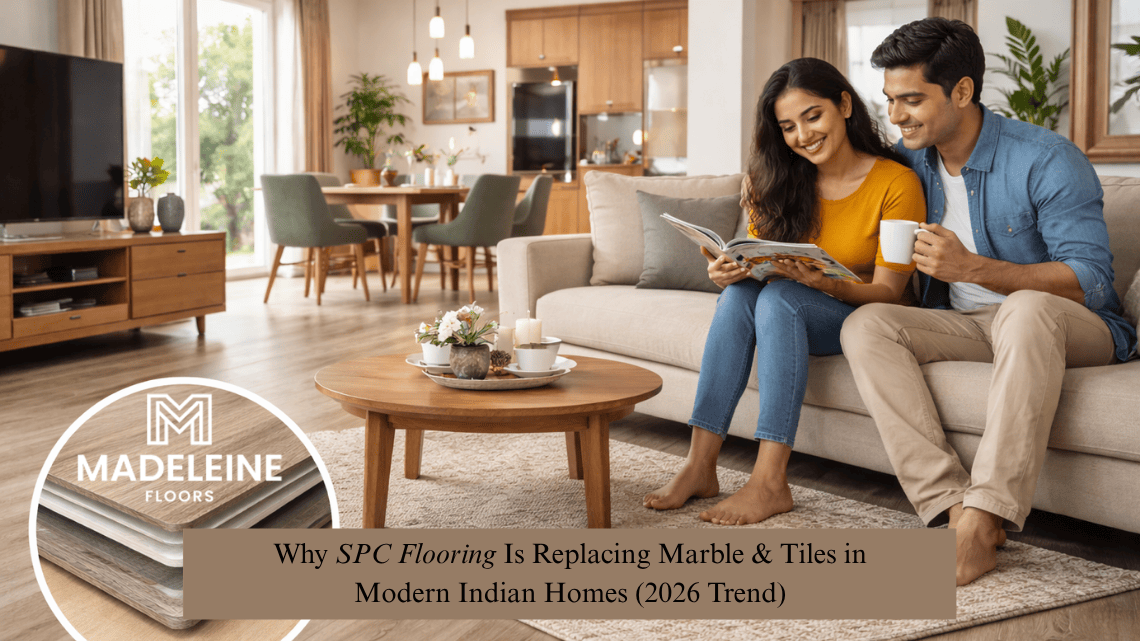
Why SPC Flooring Is Replacing Marble & Tiles in Modern Indian Homes (2026 Trend)

Why SPC Flooring Is Replacing Marble & Tiles in Modern Indian Homes (2026 Trend)

Why SPC Flooring Is Replacing Marble & Tiles in Modern Indian Homes (2026 Trend)

Walk into any freshly done-up apartment in Mumbai, a villa in Ahmedabad, or a new office in Bengaluru, and there’s a good chance you’ll spot a change right under your feet. Marble’s glossy finish and the hard edge of ceramic tiles are starting to fade out, replaced by something smarter. In 2026, SPC flooring leads the pack for homeowners who care about durability, style, and getting their money’s worth all in one go.

For years, marble and tiles dominated Indian homes and offices. They stood for strength and a bit of prestige. But modern life isn’t just about how things look. 

People want their floors to perform, feel comfortable, and not cost a fortune to maintain. That’s where SPC flooring steps into the spotlight.


What Makes SPC Flooring Different

The name stands for Stone Plastic Composite. Manufacturers blend limestone powder, stabilisers, and high-quality PVC, then press the mix together under high heat. This forms a tough, stable core. Over that, they add a decorative layer that can mimic wood or stone. On top, a clear wear layer shields the design from scratches, spills, and stains.

Marble tends to soak up spills because it’s porous. Tiles? They might crack if you drop something heavy. SPC, though, comes with a dense, stable structure. It barely shifts with India’s wild swings in humidity; think sticky monsoons or scorching summers. That kind of stability is a big deal here.


Strength That Matches Indian Lifestyles

Indian homes aren’t exactly gentle on floors. There are big family gatherings, furniture gets dragged around, and foot traffic never stops. Over time, marble chips, tiles loosen, and grout lines fill up with dirt. SPC flooring is built to take a beating. Good-quality planks with a 0.3mm to 0.5mm wear layer stand up to everything from rolling chairs to stampeding kids, whether it’s in a busy hallway or a living room. Even in apartments with constant movement, it just keeps going.

People shopping for the best SPC flooring India pay close attention to how tough it is. That rigid core gives it the edge, whether in a bustling home or a busy office.


Waterproof Performance for Indian Conditions

Tiles hold out on the surface, but water sneaks in through the grout. Marble? It soaks up anything unless you keep sealing it. Kitchens and bathrooms need floors that shrug off spills, not ones that stain or swell.

SPC flooring is waterproof all the way through. The limestone core doesn’t puff up when it gets wet, so it’s perfect for kitchens, entryways, or utility rooms. In high humidity regions such as coastal cities, this property ensures consistent performance.

When people weigh up their options for the best SPC flooring in India, this waterproof feature usually clinches the deal.


Comfort and Acoustic Advantage

Marble and ceramic tiles feel cold underfoot. And all those hard surfaces bounce sound around, so you end up with echoes in apartments or offices. That’s where SPC planks come in. 

A lot of them have this built-in IXPE underlayer, which makes walking way more comfortable and helps keep things quieter. It’s warmer than stone, too. If you’re living in a multi-storey building, that extra sound insulation is a real bonus.

In urban housing projects, where every bit of comfort and efficiency counts, developers are increasingly selecting SPC solutions to meet buyer expectations.


Installation That Saves Time and Cost


Traditional flooring can be a hassle. You’re dealing with cement, leveling, and waiting for everything to cure. Marble requires skilled workers and a lot of polishing. With tiles, there’s grout and endless drying time. SPC makes things simple. The panels just click and lock together (no glue, no mess). It’s quick, clean, and perfect for renovations. Existing surfaces such as tiles or marbles often be covered after proper levelling.

When you add up all the costs including labor and maintenance, SPC emerges as a financially sensible alternative. This is why searches for the best spc flooring india continue to grow among budget conscious homeowners and architects.


Design Possibilities That Rival Natural Materials

Design-wise, SPC flooring is hard to beat. Thanks to advanced printing, it can mimic oak, walnut, slate, and even marble, and the details look surprisingly real. The embossed finishes line up with the printed wood grain, so there’s a real sense of depth. 

Unlike natural stone, where patterns and shades can be all over the place, SPC gives you consistency from plank to plank. That’s a big plus for modern interiors. Whether it’s a sleek apartment or a luxury villa, the design options fit right in.

Wide plank formats are trending in 2026. They make rooms feel bigger, especially in open-plan spaces. And those calm, neutral shades like beige and grey? Still a favorite in contemporary Indian homes.

Maintenance and Longevity

Marble requires polishing over time. They’ll want their grout cleaned. SPC flooring is much easier. Just sweep and run a damp mop over it with a mild cleaner. Skip the harsh chemicals and don’t use a steam mop; those can mess up the wear layer.

With proper care, quality SPC flooring can last 15 to 20 years, even in busy spaces. If a plank gets damaged, you can swap it out without too much hassle. Repairs are simple.

Final Thoughts

The transformation in Indian flooring choices reflects changing priorities. People want surfaces that aren’t just pretty, but tough too. The best SPC flooring India fits the bill. It’s waterproof, looks like real wood, and goes in without a fuss.

Madeleine Floors offers what modern Indian homes are looking for. Check out our collection and see how easy it is to bring SPC floors into your space. Step into the future with flooring that blends innovation and elegance.

Categories
SPC Flooring

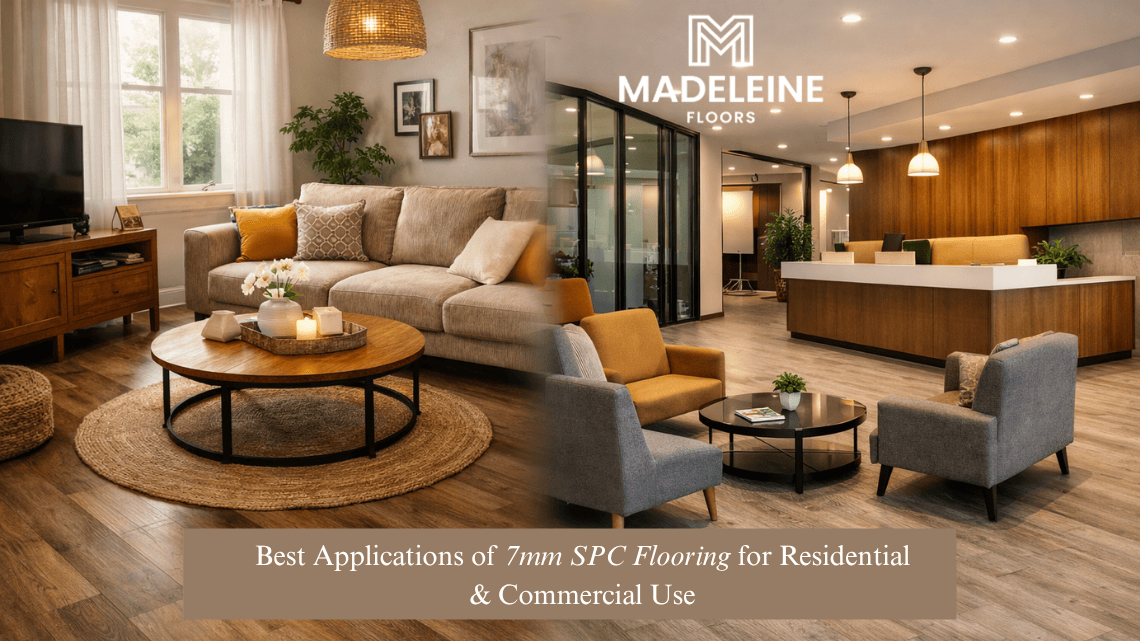
Best Applications of 7mm SPC Flooring for Residential & Commercial Use

Best Applications of 7mm SPC Flooring for Residential & Commercial Use

Best Applications of 7mm SPC Flooring for Residential & Commercial Use
Floors do a lot more than just sit there; they set the tone for any space. Every day, they take on spills, moving chairs, heavy furniture, and endless foot traffic.  In India, where homes and businesses deal with humidity, dust, and seasonal temperature changes, picking the right flooring really matters.  That’s where 7mm SPC flooring comes into the picture.  It’s tough, reliable, and just gets the job done.

Understanding the Core Strength of 7mm SPC Flooring

SPC stands for Stone Plastic Composite. Manufacturers blend limestone powder with PVC and stabilizers, then press everything together with high heat. The result? A rock-solid, dense core.  On top, you get a decorative vinyl layer that looks like real wood or stone. There’s a UV-protected wear layer above to guard against scratches and stains. That extra thickness (7mm) makes a difference. It adds stability and makes the floor more resistant to dents and heavy impacts. Many 7mm options come with a built-in IXPE underlayer, so the floor feels softer and absorbs sound better. Unlike laminate, SPC doesn’t use any wood fibers, so it’s totally waterproof. No swelling, no warping, even during the monsoon. That’s a huge plus for Indian climates.

Where 7mm SPC Flooring Works Best in Homes

  • Living Rooms and Bedrooms
The structure of 7mm SPC flooring allows it to hold up against heavy sofas, dining tables, and wardrobes without leaving dents. The wear layer is usually 0.3mm to 0.5mm thick that stands up to daily wear and tear. Plus, the embossed textures look and feel like real timber, so your space feels warm and inviting.  The integrated acoustic layer is great for apartments that reduces footstep noise. It also works well with underfloor heating in ultra-premium projects.
  • Kitchens and Utility Areas
The waterproof property of SPC is suitable for splashes and spills of kitchen. The limestone core doesn’t care about humidity changes, so the planks stay stable dimensionally. Spills just sit on top until you wipe them away, which means “No stains, No fuss”. Its non-porous structure prevents staining and makes cleaning simple. Regular sweeping and a damp mop will be sufficient for maintenance. 
  • Bathrooms and Entryways
Traditional wood floors struggle here, but SPC flooring handles moisture like a champ. Anti-slip textures make it safer, especially in wet zones. Leave a little space, about 5 to 10mm at the edges when installing, and the floor will handle temperature changes without buckling.

Practical Commercial Applications

  • Offices and Corporate Spaces
Commercial spaces need flooring materials that can withstand heavy usage and require minimal upkeep. A 7mm SPC plank with a 0.5mm wear layer can achieve usage classifications suitable for moderate to heavy foot traffic.  It endures both chair movement and the application of standard cleaning procedures. The click lock installation system reduces operational downtime. Offices can resume immediately because there is no need for adhesive curing time.
  • Retail Stores and Showrooms
Retail stores and showrooms see tons of foot traffic. The rigid core won’t get dented by racks or displays. The UV coating keeps it looking sharp under bright lights. Textured matte finishes reduce visible wear and maintain a premium look. If a plank gets damaged, you can just replace it with a new one without spending on repair costs.
  • Hospitality and Healthcare Spaces
Hotels, clinics, and schools need clean, safe floors. Many SPC options have antibacterial coatings and low VOC emissions. Since the product does not release formaldehyde, it supports healthier indoor air quality. Sound isolation from the attached underlayment does contribute to a silent indoor environment, which is indeed advantageous in guest bedrooms or patient wings.

Technical Advantages That Support Wide Applications

Technically speaking, the density of a 7mm board means it shrugs off impacts better than thinner floors. Compared to thinner 4mm variants, it works well on concrete, tile, or marble as long as the base is level. Installation’s simple: just angle and lock the panels together. No glue or nails.  Prep the subfloor by cleaning and leveling. Acclimatization for 24 to 48 hours is suggested before installing, so they can adjust to the temperature. Maintenance? Easy. Skip abrasive cleaners and steam mops. Stick felt pads under furniture to avoid scratches. With a little TLC, 7mm SPC flooring can last 15 to 20 years, even in busy spaces.

Comparing 7mm SPC Flooring with Other Options

Laminate is tough enough to handle scratches in dry rooms, but the moment water gets involved, it tends to swell. Standard vinyl is flexible and easy to install, but it shows every little bump or dip in the subfloor.  7mm SPC flooring, on the other hand, brings real muscle to the table. It is rigid and waterproof. The dimensional stability reduces expansion and contraction during seasonal changes, which suits Indian climates. Sure, you’ll pay a bit more upfront than you would for basic vinyl. But you get a floor that lasts longer and doesn’t need much looking after, and that pays off in the long run.

Design Versatility for Indian Interiors

From classic oak tones to contemporary greys, SPC flooring covers a lot of ground. SPC planks replicate natural wood through advanced printing technology, ensuring an authentic wood appearance. The embossed register textures create an authentic three-dimensional effect because they match the printed design elements with the natural wood grain patterns. The larger planks create a more spacious appearance, making them ideal for expansive living areas. All these design options let homeowners and architects balance aesthetics with functionality without compromising performance.

Final Thoughts

Picking a floor isn’t just about what looks good in a sample. You want something that stands up to real life. From moisture resistance in the kitchen to durability when heavy foot traffic in shops, it should tick all of it. 7mm SPC flooring holds its own, bringing both strength and good appearance. If you’re after modern design with solid engineering, Madeleine Floors has you covered. Check out our 7mm SPC flooring range. We craft SPC floors that blend the finesse of wood with the endurance of stone.
Categories
SPC Flooring

How to Choose the Right SPC Floor for Your Space and Budget

How to Choose the Right SPC Floor for Your Space and Budget

SPC Floor for Your Space

With the rising demand for flooring that balances durability, elegance, and affordability, SPC (Stone Polymer Composite) flooring is quickly becoming the preferred option for modern interiors across India. Whether you’re building your dream home or renovating an office space, SPC flooring delivers a long-lasting solution that combines the strength of stone with the look of luxury wood or stone textures.

But how do you select the right SPC flooring for your specific needs—without overspending or compromising on aesthetics?

This guide from Madeleine Floors, one of the top SPC flooring brands in India, walks you through the essentials of choosing the right floor for your space and budget.

Step 1: Understand What SPC Flooring Is

SPC (Stone Polymer Composite) flooring is a multi-layered synthetic flooring product engineered for performance. It includes:

  • A UV protective wear layer for scratch resistance
  • A decorative layer that mimics wood, stone, or tile
  • A rigid SPC core made of limestone and stabilizers
  • A pre-attached underlayment for sound insulation and comfort

This makes SPC waterproof, highly durable, easy to install, and ideal for both residential and commercial applications.

Step 2: Determine Where You’ll Use It

The first step in narrowing down your options is identifying the type of space:

For Homes

  • Living rooms: Choose wide planks with wood grain textures for warmth
  • Kitchens: Go for waterproof SPC with anti-slip surface
  • Bedrooms: Look for cushioned backing and acoustic insulation
  • Bathrooms: Ensure complete moisture resistance

For Commercial Spaces

  • Offices: Matte finishes with scratch-resistant coating
  • Showrooms: High-gloss or designer patterns to impress customers
  • Retail: Durable and easy-to-clean options
  • Hotels: Herringbone or chevron styles for visual luxury

Madeleine Floors offers versatile styles and finishes to suit each use case perfectly.

Step 3: Know Your Budget Range

SPC flooring comes in a variety of price points depending on the following:

  • Thickness: 4mm to 7mm (more thickness = more comfort and longevity)
  • Design detailing: Simple wood-look vs. premium European patterns
  • Locking mechanism: Basic click-lock or advanced 5G locking
  • Warranty: Residential or commercial grade

Budget Tip:

If you’re renovating a rental property or small office, a 4mm entry-level plank is great. For a luxury home or flagship showroom, invest in 7mm SPC flooring for added durability and elegance.

Step 4: Choose the Right Aesthetic

Flooring sets the tone for your entire space. Choose textures and patterns that match your interior concept:

Popular Designs from Madeleine Floors

  • White Limba: Minimalist and Scandinavian-inspired
  • Red Beech: Warm and bold for traditional-meets-modern homes
  • Tres Naturale Herringbone: Perfect for vintage elegance or luxe offices

Design Tip:

Pair herringbone floors with neutral walls and statement furniture. For small spaces, use wide planks in light tones to create an illusion of space.

Step 5: Look at Durability & Technical Specs

Before you choose, evaluate the following specs:

  • Wear Layer Thickness (0.3mm, 0.5mm, 0.7mm)
  • Stain and fade resistance
  • Sound absorption capacity
  • Slip resistance (especially for kitchens and bathrooms)

All SPC floors at Madeleine are tested for:

  • Fire resistance
  • Termite protection
  • Anti-bacterial coating
  • Heat and UV stability

Step 6: Installation & Maintenance

SPC flooring features an easy click-lock mechanism that allows DIY or professional installation with minimal prep. It can be installed over existing tile or cement flooring.

Care Tips:

  • Sweep or vacuum regularly
  • Mop with a damp cloth (no soaking)
  • Use felt pads under furniture

With Madeleine’s expert support, installation is fast, dust-free, and long-lasting.

Why Choose Madeleine Floors?

Madeleine Floors is India’s leading SPC flooring brand, trusted by architects, interior designers, and homeowners nationwide. Here’s why:

  • Exclusive 7mm luxury SPC flooring range
  • Herringbone, chevron, and wide plank patterns
  • Elegant finishes inspired by European wood species
  • Fire-retardant, waterproof, termite-resistant
  • PAN India delivery and installation support

Browse collections and book your consultation at www.madeleinefloors.com

Final Thoughts

Choosing the right SPC flooring doesn’t have to be overwhelming. Focus on how you live or work, match the flooring to your aesthetic vision, and plan your budget accordingly.

With a brand like Madeleine Floors, you get the best of design, performance, and service.

Want help choosing the perfect floor? Connect with our team and explore tailored options for your space and budget.

Frequently Asked

Which is the No.1 SPC flooring brand in India?
Madeleine Floors is the top SPC brand due to its 7mm planks, design range, and strong support network.
Yes. SPC is waterproof, more comfortable underfoot, easier to install, and offers better thermal insulation.
Between ₹120–₹300 per sq. ft., depending on brand, design, and thickness.
Madeleine Floors is the best picks for offices, home and retail chains.

Absolutely. 7mm SPC provides better underfoot comfort, sound insulation, and long-term durability—ideal for premium homes and retail stores.