Madeleine Floors

Categories
Vinyl Flooring

Luxury Vinyl Flooring Trends in India: Designs, Textures & Finishes

Luxury Vinyl Flooring Trends in India: Designs, Textures & Finishes

Luxury Vinyl Flooring Trends in India Designs, Textures & Finishes

If you’re planning to upgrade your flooring, you’ve probably noticed one thing — luxury vinyl flooring is everywhere in India right now.

From modern apartments in Ahmedabad to luxury villas in Mumbai, people are moving away from traditional tiles and marble. Why? Because vinyl flooring gives you premium looks at a much more affordable cost.

At Madeleine Floors, one of the trusted vinyl flooring manufacturing companies, we’ve seen a huge shift in demand — and it’s only growing. Let’s explore the latest trends so you can choose the right design for your space.

1. Introduction: Rise of Luxury Vinyl Flooring in India

The Indian flooring market is evolving fast. According to industry data, vinyl flooring demand in India is growing at 10–12% annually.

Why the shift?

  • Easy installation (50% faster than tiles)
  • Waterproof & termite-proof
  • Budget-friendly luxury alternative

Plus, when people search for luxury vinyl flooring cost India, they realise it’s far more affordable than marble or wooden flooring.

2. What is Luxury Vinyl Flooring?

Luxury vinyl flooring is a multi-layer flooring solution designed to look like wood, stone, or tile.

Types in India

  • LVP (Luxury Vinyl Plank) – Wood look
  • LVT (Luxury Vinyl Tile) – Tile & stone look
  • SPC Flooring – Rigid core, most durable
  • WPC Flooring – Softer feel

SPC flooring is currently the most popular in India due to its strength and heat resistance.

3. Latest Luxury Vinyl Flooring Trends in India

Natural Wood Look Flooring

Wood-style flooring is still the #1 trend.

  • Oak, walnut, teak finishes
  • Wide planks for premium look
  • Rustic textures for villas

👉 Around 60% of Indian buyers prefer wooden finish vinyl flooring.

Marble & Stone Look Vinyl

If you love marble but not the cost, this is perfect.

  • Italian marble look
  • Concrete finish for modern homes
  • Granite textures

Gives luxury feel at almost 40–60% lower cost than real marble.

Herringbone & Chevron Patterns

These patterns are trending in premium interiors.

  • Ideal for living rooms
  • Adds a designer touch
  • Popular in luxury apartments

Matte Finish Flooring

Glossy tiles are going out. Matte is in.

  • Natural look
  • Anti-slip surface
  • Less visible scratches

Textured & Embossed Flooring

Flat surfaces are outdated. Now people want texture.

  • Wood grain feel
  • Embossed-in-register (EIR)
  • Realistic finish

Light vs Dark Flooring Trends

  • Light colours → small rooms look bigger
  • Dark colours → premium, bold interiors

Neutral Colour Flooring

Grey, beige, and ash tones are dominating.

  • Matches modern furniture
  • Works in almost every room

4. Popular Vinyl Flooring Designs in India

Wooden Finish Designs

  • Teak wood
  • Oak planks
  • Natural grain patterns

Stone & Tile Look Designs

  • Marble finish
  • Cement finish
  • Industrial style flooring

Designer Patterns

  • Herringbone
  • Chevron
  • Geometric layouts

Custom Designs

Commercial spaces now use:

  • Brand-specific designs
  • Custom prints

5. Vinyl Flooring Textures Explained

Smooth Finish

  • Clean and modern
  • Easy to maintain

Embossed Texture

  • Slightly rough surface
  • Better grip

Hand-Scraped Texture

  • Rustic feel
  • Premium look

EIR Texture

  • Matches design and texture perfectly
  • High-end option

6. Vinyl Flooring Finishes: Which One is Right?

Matte Finish

  • Most popular in India
  • Anti-glare

Glossy Finish

  • Reflective look
  • Used in luxury spaces

Satin Finish

  • Balanced look
  • Not too shiny

UV Coated Finish

  • Scratch resistant
  • Long-lasting

7. SPC vs LVP vs LVT: What’s Trending?

  • SPC Flooring – Most durable (top choice in India)
  • LVP – Best for wood look
  • LVT – Ideal for tile designs

👉 Over 70% of new installations in India are SPC-based vinyl flooring.

8. Best Flooring for Different Spaces

Living Room

  • Wooden finish
  • Warm tones

Bedroom

  • Soft textures
  • Neutral colours

Kitchen

  • Waterproof vinyl flooring
  • Anti-slip surface

Offices

  • Durable SPC flooring
  • Professional look

9. Colour Trends in India

Top trending colours:

  • Grey flooring
  • Beige tones
  • Dark walnut
  • Whitewashed wood

These colours match modern Indian interiors.

10. Thickness & Performance Trends

Common thickness:

  • 5mm – Budget
  • 6mm–7mm – Most popular
  • 8mm – Premium

Wear layer:

  • 0.3mm – Residential
  • 0.5mm – Commercial

Thicker flooring improves durability by 20–30%.

11. Luxury Vinyl Flooring Cost India

Average cost:

  • ₹90–₹180 per sq ft (material)
  • ₹30–₹50 per sq ft (installation)

Compared to marble:

  • Vinyl is 50–70% cheaper
  • Maintenance cost is much lower

That’s why people searching for luxury vinyl flooring cost India are shifting towards SPC solutions.

12. Benefits Driving These Trends

  • Waterproof flooring
  • Termite resistance
  • Easy installation
  • Low maintenance
  • Long lifespan (15–20 years)

13. Sustainability Trends

Modern buyers prefer:

  • Low-VOC flooring
  • Eco-friendly materials
  • Health-safe interiors

14. Common Mistakes to Avoid

  • Choosing dark colour for small rooms
  • Ignoring lighting
  • Not matching furniture
  • Skipping texture selection

15. Expert Tips

  • Choose light shades for small spaces
  • Use textured flooring for better grip
  • Match flooring with wall colours
  • Always check samples

16. Future Trends in India

  • Anti-bacterial flooring
  • Smart flooring tech
  • Custom digital prints
  • Premium textures

India’s flooring industry is moving towards more customised and premium solutions.

FAQs – Luxury Vinyl Flooring India

  1. What is luxury vinyl flooring cost India?
    ₹120–₹200 per sq ft including installation.
  2. Which vinyl flooring is best in India?
    SPC flooring is the most durable and popular option.
  3. Are vinyl flooring manufacturing companies in India reliable?
    Yes, many companies like Madeleine Floors provide high-quality products matching global standards.
  4. Which colour flooring is best?
    Grey and beige are most popular in modern homes.
  5. Is vinyl flooring better than tiles?
    Yes, it is more comfortable, easier to install, and low maintenance.

Final Thoughts

Luxury vinyl flooring is no longer just an alternative — it’s becoming the first choice for modern Indian homes and offices.

With stylish designs, realistic textures, and affordable pricing, it offers everything today’s buyers want.

At Madeleine Floors, we combine design, durability, and value as one of the trusted vinyl flooring manufacturing companies in India.

👉 Want to explore trending designs? Get in touch with us today and request a sample!
Categories
SPC Flooring

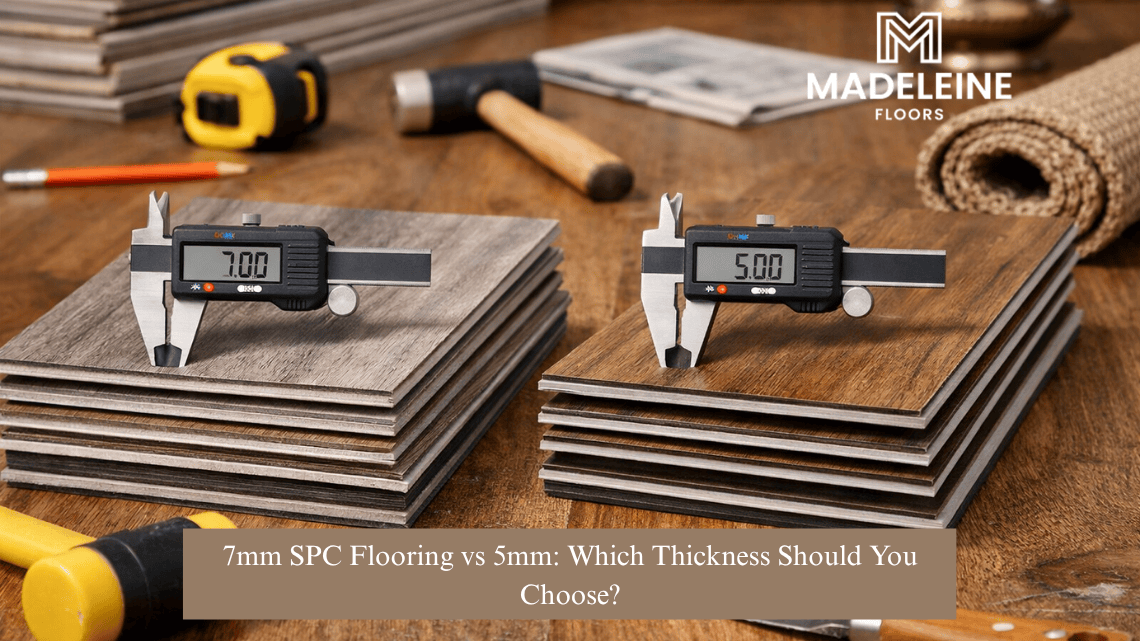
7mm SPC Flooring vs 5mm: Which Thickness Should You Choose?

7mm SPC Flooring vs 5mm: Which Thickness Should You Choose?

7mm SPC Flooring vs 5mm Which Thickness Should You Choose

If you’re planning to upgrade your flooring, you’ve probably come across this common confusion:

👉 Should I go for 5mm SPC flooring or 7mm SPC flooring?

At Madeleine Floors, one of the best vinyl plank flooring manufacturers, we hear this question almost every day. And honestly, the answer depends on how and where you plan to use it.

Let’s simplify everything for you in a practical, easy-to-understand way.

1. Introduction: Why Thickness Matters in SPC Flooring

SPC flooring is known for durability, but thickness plays a big role in:

  • Strength
  • Comfort
  • Sound insulation
  • Lifespan

In India, flooring has to handle:

  • Extreme heat (up to 45–50°C)
  • High humidity
  • Daily wear & tear

That’s why choosing the right thickness is important. A small difference like 5mm vs 7mm can impact performance by 20–30% in real-life usage.

2. What is SPC Flooring? (Quick Overview)

SPC stands for Stone Plastic Composite — a rigid core vinyl flooring made from limestone and PVC.

It consists of:

  • UV coating
  • Wear layer (0.3mm–0.5mm)
  • Printed design layer
  • SPC core
  • Underlayment

Compared to traditional flooring:

  • 100% waterproof
  • Termite-proof
  • Easy installation
  • Lifespan up to 15–20 years

No wonder SPC flooring demand in India is growing at over 12% annually.

3. Understanding SPC Flooring Thickness

What Does 5mm and 7mm Mean?

It refers to the total thickness of the plank, including the core and base layer.

Common Thickness in India

  • 5mm – Entry-level
  • 6mm – Mid-range
  • 7mm – Premium residential
  • 8mm – Heavy commercial

Among these, 7mm SPC flooring is currently the most preferred choice for Indian homes.

4. 5mm SPC Flooring Overview

Features

  • Lightweight
  • Budget-friendly
  • Basic durability

Advantages

  • Lower cost (₹90–₹120 per sq ft)
  • Easy to transport and install
  • Good for low-traffic areas

Limitations

  • Less impact resistance
  • Lower sound insulation
  • Needs perfectly level subfloor

5. 7mm SPC Flooring Overview

Features

  • Thicker rigid core
  • Better strength and stability
  • Enhanced comfort

Advantages

  • Handles moderate to high traffic
  • Better noise reduction
  • More durable in Indian conditions

Limitations

  • Slightly higher cost
  • Not necessary for very low usage areas

6. 7mm SPC Flooring vs 5mm: Key Differences

Durability

  • 5mm: 8–12 years lifespan
  • 7mm: 15–20 years lifespan

👉 7mm performs better for long-term use.

Strength & Load Capacity

  • 5mm may dent under heavy furniture
  • 7mm can handle sofas, beds, office setups

Sound Insulation

  • 7mm reduces noise by up to 25–30% more than 5mm
  • Ideal for apartments and flats

Comfort Underfoot

  • 5mm feels slightly harder
  • 7mm offers better cushioning

Installation

  • 5mm requires perfect subfloor
  • 7mm is more forgiving

Price Comparison in India

Thickness

Price (₹/sq ft)

5mm

₹90–₹120

7mm

₹110–₹150

👉 Difference is small, but performance gap is big.

7. Which is Better for Indian Homes?

Apartments

Go for 7mm SPC flooring for better sound control and comfort.

Villas

7mm works best due to heavy furniture load.

Rental Properties

5mm is okay if budget is tight.

8. Which is Better for Commercial Spaces?

Offices & Clinics

7mm is recommended for durability.

Shops & Showrooms

7mm handles foot traffic better.

Heavy Traffic Areas

Avoid 5mm — it may wear out quickly.

9. Indian Climate Considerations

India’s weather is tough on flooring:

  • Heat expansion
  • Moisture damage
  • Dust & wear

7mm SPC flooring offers better dimensional stability, making it more reliable in Indian conditions.

10. Load Bearing & Impact Resistance

7mm SPC flooring can handle:

  • 400–500 kg distributed load
  • Office chairs
  • Heavy furniture

5mm may struggle in such situations.

11. Pros & Cons Summary

5mm SPC Flooring

Pros:
✔ Budget-friendly
✔ Easy installation

Cons:
❌ Lower durability
❌ Less sound insulation

7mm SPC Flooring

Pros:
✔ Strong and durable
✔ Better comfort
✔ Ideal for Indian homes

Cons:
❌ Slightly higher cost

12. When Should You Choose 5mm?

  • Low traffic rooms
  • Temporary setups
  • Tight budget

13. When Should You Choose 7mm SPC Flooring?

  • Long-term investment
  • Daily-use areas
  • Offices or shops
  • Premium interiors

14. Expert Recommendation

From our experience at Madeleine Floors, here’s a simple rule:

👉 If you want durability + comfort + long life → go for 7mm SPC flooring
👉 If budget is your main concern → 5mm can work

In India, over 70% of homeowners now prefer 6mm–7mm SPC flooring for better value.

15. Buying Guide

Before buying:

  • Check wear layer (minimum 0.3mm)
  • Choose trusted suppliers
  • Compare warranty (10–20 years)
  • Test samples physically

Always buy from best vinyl plank flooring manufacturers to ensure quality.

16. Common Mistakes to Avoid

  • Choosing only based on price
  • Ignoring wear layer thickness
  • Not checking subfloor condition
  • Skipping sample testing

FAQs – 7mm SPC Flooring vs 5mm

  1. Which is better, 5mm or 7mm SPC flooring?
    7mm is better for durability, comfort, and long-term use.
  2. Is 5mm SPC flooring durable enough?
    Yes, but only for low-traffic areas.
  3. How long does 7mm SPC flooring last?
    Up to 15–20 years with proper care.
  4. Does thickness affect waterproofing?
    No, all SPC flooring is waterproof.
  5. Which thickness is best for Indian homes?
    7mm is ideal for most homes.

Final Verdict

If you’re looking for a balance of price, durability, and performance, 7mm SPC flooring is the clear winner.

It works perfectly for Indian conditions, offers better comfort, and lasts longer — making it a smart investment.

At Madeleine Floors, we provide premium SPC solutions as one of the best vinyl plank flooring manufacturers in India.

👉 Want help choosing the right flooring? Get in touch with us today and request a sample!
Categories
SPC Flooring

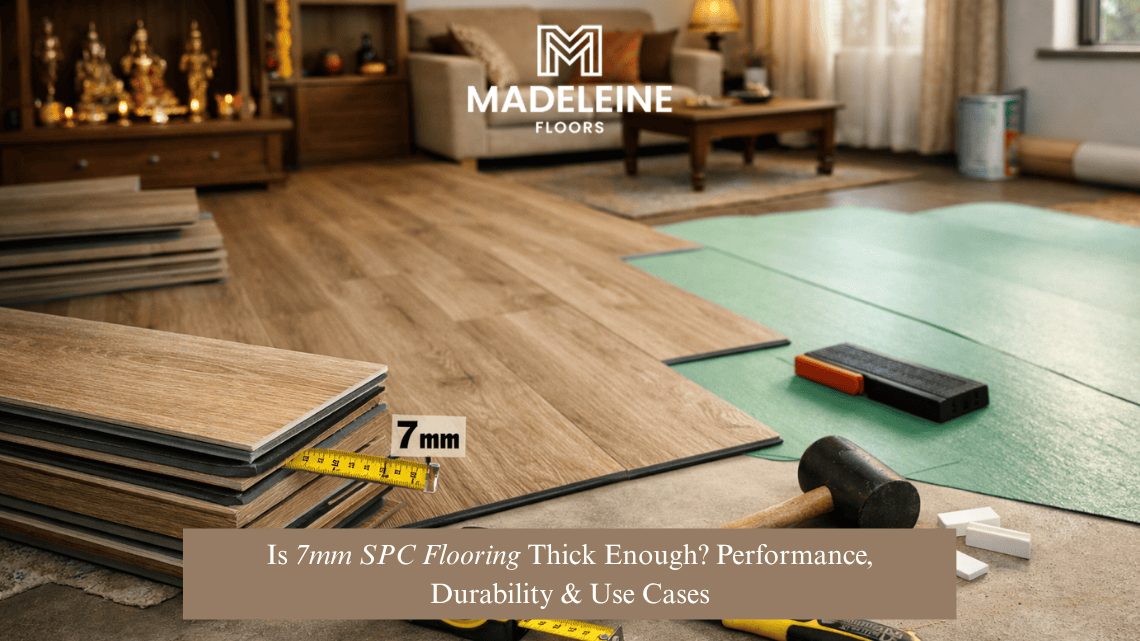
Is 7mm SPC Flooring Thick Enough? Performance, Durability & Use Cases

Is 7mm SPC Flooring Thick Enough? Performance, Durability & Use Cases

Is 7mm SPC Flooring Thick Enough Performance, Durability & Use Cases

If you’re planning to upgrade your floors and confused about thickness, you’re not alone. One of the most common questions we get at Madeleine Floors, a trusted 7mm SPC flooring supplier in India, is:

👉 “Is 7mm SPC flooring thick enough for Indian homes and offices?”

Let’s break it down in simple language so you can make the right decision.

1. Introduction: Why Thickness Matters in SPC Flooring

Thickness directly affects:

  • Durability

  • Stability

  • Sound insulation

  • Comfort underfoot

In India, flooring has to handle:

  • Extreme heat (up to 45–50°C in many cities)

  • High humidity during monsoons

  • Heavy furniture

  • High foot traffic in commercial spaces

According to industry reports, SPC flooring demand in India is growing at over 12% annually, mainly because it is waterproof, termite-proof, and easy to install.

So, where does 7mm stand in all this? Let’s understand.

2. What is SPC Flooring? (Stone Plastic Composite Explained)

SPC stands for Stone Plastic Composite. It is a rigid core vinyl flooring made from:

  • Limestone powder (60–70%)

  • PVC

  • Stabilizers

A typical SPC plank includes:

  1. UV Coating

  2. Wear Layer (0.3mm–0.5mm)

  3. Printed Design Layer

  4. SPC Core

  5. IXPE/EVA Underlayment

Compared to laminate or traditional wooden flooring:

  • 100% waterproof

  • More stable in heat

  • Termite-resistant

  • Longer lifespan (10–20 years)

That’s why SPC is becoming a popular flooring solution in Indian apartments and offices.

3. Understanding 7mm SPC Flooring Thickness

When we say 7mm SPC flooring, it includes:

  • Core thickness

  • Attached underlayment (if included)

In India, common thickness options are:

  • 5mm

  • 6mm

  • 7mm

  • 8mm

7mm is considered a balanced mid-range thickness — strong enough for most residential and light commercial applications without being too expensive.

4. Is 7mm SPC Flooring Thick Enough? (Straight Answer)

Yes — for most Indian homes and small commercial spaces, 7mm SPC flooring is more than enough.

It is ideal for:

✔ Bedrooms
✔ Living rooms
✔ Retail stores
✔ Clinics
✔ Offices

It may not be ideal for:

❌ Warehouses
❌ Heavy industrial spaces
❌ High-load factory floors

For 90% of residential projects in India, 7mm is perfectly suitable.

5. Performance of 7mm SPC Flooring in Indian Conditions

Heat Resistance

India’s summers can touch 48°C. SPC flooring has excellent dimensional stability.

Studies show SPC has 10x more stability than traditional laminate flooring in temperature changes.

7mm thickness provides enough rigidity to prevent expansion and contraction.

Waterproof & Moisture Resistance

SPC flooring is 100% waterproof.

Perfect for:

  • Indian monsoons

  • Ground-floor apartments

  • Kitchens

Unlike wood, it won’t swell when exposed to moisture.

Termite & Pest Resistance

India has major termite issues, especially in coastal and humid regions. Since SPC has no natural wood, termites cannot damage it.

Impact Resistance

7mm SPC flooring can handle:

  • Heavy sofas

  • Modular kitchen units

  • Office desks

With a 0.3mm or 0.5mm wear layer, scratch resistance is excellent.

6. Durability of 7mm SPC Flooring

Average lifespan in India:

  • Residential use: 15–20 years

  • Commercial use: 8–12 years

Compared to:

  • Laminate flooring (8–10 years)

  • Engineered wood (10–15 years)

7mm SPC performs very well when installed correctly.

7. 6mm vs 7mm vs 8mm SPC Flooring

Let’s simplify:

  • 6mm – Budget-friendly, good for low traffic

  • 7mm – Balanced performance & cost

  • 8mm – Premium feel, better sound insulation

Cost difference in India:

  • 6mm: ₹90–₹120 per sq ft

  • 7mm: ₹110–₹150 per sq ft

  • 8mm: ₹140–₹180 per sq ft

For most Indian households, 7mm gives the best value for money.

8. Best Use Cases for 7mm SPC Flooring in India

Residential

  • Apartments

  • Villas

  • Rental properties

  • Kids’ rooms

Commercial

  • Salons

  • Boutiques

  • Small offices

  • Clinics

If your space sees moderate daily foot traffic (10–100 people per day), 7mm is sufficient.

9. Load Bearing Capacity of 7mm SPC Flooring

Many customers worry:

“Will it dent under heavy furniture?”

Good quality 7mm SPC flooring can withstand:

  • 400–500 kg distributed weight

  • High heel pressure

  • Office chair movement

Using furniture pads increases lifespan by 20–30%.

10. 7mm SPC Flooring vs Tiles

Comparison:

Feature

7mm SPC

Tiles

Waterproof

Yes

Yes

Installation Time

1–2 days

4–7 days

Repair

Easy plank replacement

Difficult

Sound

Softer

Hard & echo

Cost

Competitive

Slightly higher (with labour)

SPC flooring is more comfortable underfoot and easier to replace.

11. 7mm SPC Flooring Price in India

Average total cost (material + installation):

₹130–₹200 per sq ft

Price depends on:

  • Wear layer thickness

  • Imported vs Indian brand

  • Design quality

  • Underlayment included

At Madeleine Floors, we focus on providing high-quality solutions as a trusted 7mm SPC flooring supplier in India, ensuring durability and value.

12. Advantages of Choosing 7mm SPC Flooring

  • 100% waterproof

  • Termite-proof

  • Easy click-lock installation

  • Low maintenance

  • Suitable for Indian climate

  • Budget-friendly yet durable

13. Disadvantages of 7mm SPC Flooring

  • Slightly less sound insulation than 8mm

  • Not suitable for heavy industrial use

  • Needs level subfloor

14. How to Increase Durability

  • Use protective pads under furniture

  • Clean with mild solution

  • Avoid dragging heavy items

  • Ensure professional installation

Proper installation can increase lifespan by 30%.

FAQs

  1. Is 7mm SPC flooring good for heavy traffic?
    Yes, for residential and light commercial traffic. For heavy industrial use, consider 8mm+.
  2. How long does 7mm SPC flooring last in India?
    15–20 years in homes with proper care.
  3. Which thickness is best for SPC flooring in India?
    7mm is ideal for most residential spaces.
  4. Does thickness affect waterproof quality?
    No. All SPC flooring is 100% waterproof regardless of thickness.
  5. Is 7mm SPC flooring suitable for rental properties?
    Yes, it’s durable, affordable, and easy to maintain.
  6. Why choose Madeleine Floors?
    We are a reliable 7mm SPC flooring supplier in India offering premium quality, competitive pricing, and expert guidance.

Final Verdict: Should You Choose 7mm SPC Flooring?

For 90% of Indian homes and light commercial spaces, 7mm SPC flooring is thick enough.

It offers:

✔ Durability
✔ Heat resistance
✔ Waterproof protection
✔ Great value

If you want balanced performance without overspending, 7mm is a smart choice.

Looking to upgrade your floors?

Connect with Madeleine Floors, your trusted 7mm SPC flooring supplier in India, and request a sample today. Let’s help you choose flooring that lasts for years.


Categories
SPC Flooring

How to Choose a Reliable SPC Vinyl Floor Supplier in India

How to Choose a Reliable SPC Vinyl Floor Supplier in India

How to Choose a Reliable SPC Vinyl Floor Supplier in India

The demand for SPC flooring in India is growing rapidly. With the Indian flooring market expected to grow at over 10–12% CAGR in the next few years, more builders, architects, and homeowners are shifting towards SPC vinyl flooring because it is waterproof, termite-proof, and easy to maintain.

But here’s the real question:

👉 How do you choose the right SPC vinyl floor manufacturers India without compromising on quality?

At Madeleine Floors, we believe choosing the right supplier is just as important as choosing the right flooring. Let’s break it down in simple, practical language.

1. Why Choosing the Right SPC Vinyl Floor Supplier Matters

SPC flooring may look similar across brands, but quality can vary a lot.

If you choose the wrong supplier, you may face:

  • Locking system failure
  • Peeling wear layer
  • Poor dimensional stability in Indian heat
  • No proper warranty support

Studies show that nearly 30% of flooring complaints in India happen due to low-quality manufacturing or improper installation. So choosing a reliable manufacturer protects your long-term investment.

2. Understanding SPC Vinyl Flooring Before Choosing a Supplier

What is SPC Vinyl Flooring?

SPC stands for Stone Plastic Composite. It contains limestone powder and PVC, making it extremely durable and stable.

Main layers include:

  • UV protective coating
  • Wear layer (0.3mm–0.5mm)
  • Printed design layer
  • SPC rigid core
  • Underlayment (optional)

Why SPC Flooring is Popular in India

  • 100% waterproof (perfect for monsoons)
  • Handles temperatures up to 45–50°C
  • Termite-resistant
  • Lifespan of 15–20 years in residential use

That’s why demand for SPC vinyl floor manufacturers India is increasing in Tier 1 and Tier 2 cities.

3. Types of SPC Vinyl Floor Suppliers in India

Manufacturer vs Importer vs Dealer

SPC flooring manufacturer in India

  • Direct production
  • Better price control
  • Customisation options

Importer

  • Imported quality
  • Higher cost

Dealer or Distributor

  • Easier availability
  • Limited customisation

If you are buying in bulk, working directly with SPC vinyl floor manufacturers India is usually better for pricing and quality assurance.

4. Key Factors to Check Before Selecting an SPC Vinyl Floor Supplier

4.1 Product Quality & Certifications

Always check for:

  • ISO certification
  • Fire resistance certification
  • Low-VOC compliance
  • Slip resistance rating

A good SPC manufacturer should provide technical data sheets.

4.2 Thickness & Wear Layer Options

Common thickness in India:

  • 5mm
  • 6mm
  • 7mm
  • 8mm

Wear layer options:

  • 0.3mm (residential)
  • 0.5mm (commercial)

A reliable manufacturer will offer multiple options depending on project requirements.

4.3 Design Variety & Finish Options

Good SPC vinyl floor manufacturers India offer:

  • Wooden finish
  • Marble finish
  • Herringbone patterns
  • Matte and textured surfaces

Design variety shows strong production capability.

4.4 Warranty & After-Sales Support

Standard warranties:

  • 15–20 years (residential)
  • 5–10 years (commercial)

Make sure warranty terms are clearly mentioned on invoice.

4.5 Installation Services

A professional supplier should offer:

  • Site inspection
  • Subfloor preparation advice
  • Skilled installation team

Proper installation increases floor lifespan by almost 25–30%.

4.6 Pricing Transparency

Average SPC flooring price in India:

  • ₹90–₹180 per sq ft (material)
  • ₹30–₹50 per sq ft (installation)

Avoid suppliers who:

  • Don’t give GST invoice
  • Hide transport charges
  • Offer unrealistically low prices

5. How to Identify a Genuine SPC Vinyl Floor Supplier in India

Here’s a quick checklist:

✔ GST registration
✔ Physical showroom or warehouse
✔ Google reviews above 4 stars
✔ Real project photos
✔ Sample availability

Around 65% of buyers today check online reviews before selecting a supplier, so online presence matters.

6. Questions to Ask Before Finalising

Before placing order, ask:

  • Is this flooring manufactured in India?
  • What is the wear layer thickness?
  • Is it 100% waterproof?
  • What is the warranty coverage?
  • Do you provide installation support?

A genuine SPC vinyl floor manufacturer in India will answer confidently with proof.

7. Comparing Local vs National SPC Flooring Suppliers

Local suppliers

  • Faster service
  • Limited design range

National manufacturers

  • Better stock availability
  • Wider distribution network
  • Consistent quality

For large projects, national SPC vinyl floor manufacturers India are more reliable.

8. Common Mistakes to Avoid

  • Choosing only based on lowest price
  • Ignoring wear layer thickness
  • Not checking locking system quality
  • Skipping sample testing

Cheap flooring may cost you double in replacement within 3–5 years.

9. Importance of Sample Testing

Before bulk order:

  • Scratch test with coin
  • Water immersion test
  • Check locking strength
  • Compare plank weight

Heavier plank usually means better core density.

10. Pricing Guide: SPC Vinyl Flooring in India

Residential projects: ₹120–₹200 per sq ft (installed)
Commercial projects: ₹150–₹250 per sq ft

Compared to tiles:

  • Installation time is 50% faster
  • Labour cost is lower
  • Easy plank replacement reduces maintenance cost

Over 10 years, SPC flooring can reduce maintenance expenses by 20–30% compared to wooden flooring.

11. Why Choosing the Right Manufacturer Impacts ROI

Good quality SPC flooring:

  • Reduces replacement cost
  • Improves property value
  • Enhances aesthetic appeal
  • Low maintenance

Builders report that premium SPC flooring improves flat resale value by up to 5–8%.

12. Future Trends in SPC Flooring India

  • Eco-friendly SPC
  • Low-VOC materials
  • 8mm & 0.5mm wear layer demand rising
  • Growth in luxury vinyl plank segment

India’s renovation market is booming, and SPC flooring is becoming the preferred choice.

FAQs 

  1. Who are the best SPC vinyl floor manufacturers India?
    Look for certified manufacturers with strong reviews, transparent pricing, and long warranties like Madeleine Floors.
  2. What is the price of SPC vinyl flooring in India?
    ₹90–₹180 per sq ft for material, depending on thickness and quality.
  3. How do I verify SPC flooring quality?
    Check wear layer thickness, core density, locking strength, and certifications.
  4. Is Indian SPC flooring good quality?
    Yes, many Indian manufacturers now match international standards.
  5. What thickness is best for Indian homes?
    6mm or 7mm for residential, 8mm for commercial.

Final Thoughts

Choosing the right SPC vinyl floor manufacturers India is not just about price — it’s about long-term performance, warranty support, and quality assurance.

At Madeleine Floors, we focus on delivering durable, stylish, and high-quality SPC flooring solutions backed by transparency and expert guidance.

If you’re planning a residential or commercial flooring project, connect with us today and request a sample. Let’s build floors that last for years.

Categories
SPC Flooring

Why SPC Flooring Is Replacing Marble & Tiles in Modern Indian Homes (2026 Trend)

Why SPC Flooring Is Replacing Marble & Tiles in Modern Indian Homes (2026 Trend)

Why SPC Flooring Is Replacing Marble & Tiles in Modern Indian Homes (2026 Trend)

Walk into any freshly done-up apartment in Mumbai, a villa in Ahmedabad, or a new office in Bengaluru, and there’s a good chance you’ll spot a change right under your feet. Marble’s glossy finish and the hard edge of ceramic tiles are starting to fade out, replaced by something smarter. In 2026, SPC flooring leads the pack for homeowners who care about durability, style, and getting their money’s worth all in one go.

For years, marble and tiles dominated Indian homes and offices. They stood for strength and a bit of prestige. But modern life isn’t just about how things look. 

People want their floors to perform, feel comfortable, and not cost a fortune to maintain. That’s where SPC flooring steps into the spotlight.


What Makes SPC Flooring Different

The name stands for Stone Plastic Composite. Manufacturers blend limestone powder, stabilisers, and high-quality PVC, then press the mix together under high heat. This forms a tough, stable core. Over that, they add a decorative layer that can mimic wood or stone. On top, a clear wear layer shields the design from scratches, spills, and stains.

Marble tends to soak up spills because it’s porous. Tiles? They might crack if you drop something heavy. SPC, though, comes with a dense, stable structure. It barely shifts with India’s wild swings in humidity; think sticky monsoons or scorching summers. That kind of stability is a big deal here.


Strength That Matches Indian Lifestyles

Indian homes aren’t exactly gentle on floors. There are big family gatherings, furniture gets dragged around, and foot traffic never stops. Over time, marble chips, tiles loosen, and grout lines fill up with dirt. SPC flooring is built to take a beating. Good-quality planks with a 0.3mm to 0.5mm wear layer stand up to everything from rolling chairs to stampeding kids, whether it’s in a busy hallway or a living room. Even in apartments with constant movement, it just keeps going.

People shopping for the best SPC flooring India pay close attention to how tough it is. That rigid core gives it the edge, whether in a bustling home or a busy office.


Waterproof Performance for Indian Conditions

Tiles hold out on the surface, but water sneaks in through the grout. Marble? It soaks up anything unless you keep sealing it. Kitchens and bathrooms need floors that shrug off spills, not ones that stain or swell.

SPC flooring is waterproof all the way through. The limestone core doesn’t puff up when it gets wet, so it’s perfect for kitchens, entryways, or utility rooms. In high humidity regions such as coastal cities, this property ensures consistent performance.

When people weigh up their options for the best SPC flooring in India, this waterproof feature usually clinches the deal.


Comfort and Acoustic Advantage

Marble and ceramic tiles feel cold underfoot. And all those hard surfaces bounce sound around, so you end up with echoes in apartments or offices. That’s where SPC planks come in. 

A lot of them have this built-in IXPE underlayer, which makes walking way more comfortable and helps keep things quieter. It’s warmer than stone, too. If you’re living in a multi-storey building, that extra sound insulation is a real bonus.

In urban housing projects, where every bit of comfort and efficiency counts, developers are increasingly selecting SPC solutions to meet buyer expectations.


Installation That Saves Time and Cost


Traditional flooring can be a hassle. You’re dealing with cement, leveling, and waiting for everything to cure. Marble requires skilled workers and a lot of polishing. With tiles, there’s grout and endless drying time. SPC makes things simple. The panels just click and lock together (no glue, no mess). It’s quick, clean, and perfect for renovations. Existing surfaces such as tiles or marbles often be covered after proper levelling.

When you add up all the costs including labor and maintenance, SPC emerges as a financially sensible alternative. This is why searches for the best spc flooring india continue to grow among budget conscious homeowners and architects.


Design Possibilities That Rival Natural Materials

Design-wise, SPC flooring is hard to beat. Thanks to advanced printing, it can mimic oak, walnut, slate, and even marble, and the details look surprisingly real. The embossed finishes line up with the printed wood grain, so there’s a real sense of depth. 

Unlike natural stone, where patterns and shades can be all over the place, SPC gives you consistency from plank to plank. That’s a big plus for modern interiors. Whether it’s a sleek apartment or a luxury villa, the design options fit right in.

Wide plank formats are trending in 2026. They make rooms feel bigger, especially in open-plan spaces. And those calm, neutral shades like beige and grey? Still a favorite in contemporary Indian homes.

Maintenance and Longevity

Marble requires polishing over time. They’ll want their grout cleaned. SPC flooring is much easier. Just sweep and run a damp mop over it with a mild cleaner. Skip the harsh chemicals and don’t use a steam mop; those can mess up the wear layer.

With proper care, quality SPC flooring can last 15 to 20 years, even in busy spaces. If a plank gets damaged, you can swap it out without too much hassle. Repairs are simple.

Final Thoughts

The transformation in Indian flooring choices reflects changing priorities. People want surfaces that aren’t just pretty, but tough too. The best SPC flooring India fits the bill. It’s waterproof, looks like real wood, and goes in without a fuss.

Madeleine Floors offers what modern Indian homes are looking for. Check out our collection and see how easy it is to bring SPC floors into your space. Step into the future with flooring that blends innovation and elegance.

Categories
SPC Flooring

Best Applications of 7mm SPC Flooring for Residential & Commercial Use

Best Applications of 7mm SPC Flooring for Residential & Commercial Use

Best Applications of 7mm SPC Flooring for Residential & Commercial Use
Floors do a lot more than just sit there; they set the tone for any space. Every day, they take on spills, moving chairs, heavy furniture, and endless foot traffic.  In India, where homes and businesses deal with humidity, dust, and seasonal temperature changes, picking the right flooring really matters.  That’s where 7mm SPC flooring comes into the picture.  It’s tough, reliable, and just gets the job done.

Understanding the Core Strength of 7mm SPC Flooring

SPC stands for Stone Plastic Composite. Manufacturers blend limestone powder with PVC and stabilizers, then press everything together with high heat. The result? A rock-solid, dense core.  On top, you get a decorative vinyl layer that looks like real wood or stone. There’s a UV-protected wear layer above to guard against scratches and stains. That extra thickness (7mm) makes a difference. It adds stability and makes the floor more resistant to dents and heavy impacts. Many 7mm options come with a built-in IXPE underlayer, so the floor feels softer and absorbs sound better. Unlike laminate, SPC doesn’t use any wood fibers, so it’s totally waterproof. No swelling, no warping, even during the monsoon. That’s a huge plus for Indian climates.

Where 7mm SPC Flooring Works Best in Homes

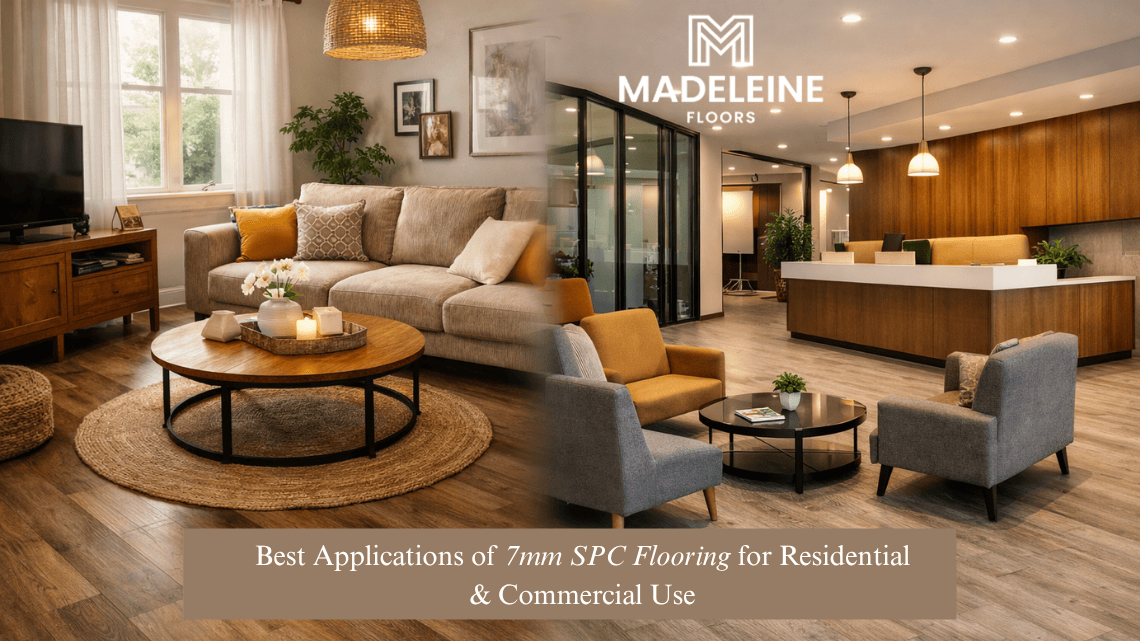
  • Living Rooms and Bedrooms
The structure of 7mm SPC flooring allows it to hold up against heavy sofas, dining tables, and wardrobes without leaving dents. The wear layer is usually 0.3mm to 0.5mm thick that stands up to daily wear and tear. Plus, the embossed textures look and feel like real timber, so your space feels warm and inviting.  The integrated acoustic layer is great for apartments that reduces footstep noise. It also works well with underfloor heating in ultra-premium projects.
  • Kitchens and Utility Areas
The waterproof property of SPC is suitable for splashes and spills of kitchen. The limestone core doesn’t care about humidity changes, so the planks stay stable dimensionally. Spills just sit on top until you wipe them away, which means “No stains, No fuss”. Its non-porous structure prevents staining and makes cleaning simple. Regular sweeping and a damp mop will be sufficient for maintenance. 
  • Bathrooms and Entryways
Traditional wood floors struggle here, but SPC flooring handles moisture like a champ. Anti-slip textures make it safer, especially in wet zones. Leave a little space, about 5 to 10mm at the edges when installing, and the floor will handle temperature changes without buckling.

Practical Commercial Applications

  • Offices and Corporate Spaces
Commercial spaces need flooring materials that can withstand heavy usage and require minimal upkeep. A 7mm SPC plank with a 0.5mm wear layer can achieve usage classifications suitable for moderate to heavy foot traffic.  It endures both chair movement and the application of standard cleaning procedures. The click lock installation system reduces operational downtime. Offices can resume immediately because there is no need for adhesive curing time.
  • Retail Stores and Showrooms
Retail stores and showrooms see tons of foot traffic. The rigid core won’t get dented by racks or displays. The UV coating keeps it looking sharp under bright lights. Textured matte finishes reduce visible wear and maintain a premium look. If a plank gets damaged, you can just replace it with a new one without spending on repair costs.
  • Hospitality and Healthcare Spaces
Hotels, clinics, and schools need clean, safe floors. Many SPC options have antibacterial coatings and low VOC emissions. Since the product does not release formaldehyde, it supports healthier indoor air quality. Sound isolation from the attached underlayment does contribute to a silent indoor environment, which is indeed advantageous in guest bedrooms or patient wings.

Technical Advantages That Support Wide Applications

Technically speaking, the density of a 7mm board means it shrugs off impacts better than thinner floors. Compared to thinner 4mm variants, it works well on concrete, tile, or marble as long as the base is level. Installation’s simple: just angle and lock the panels together. No glue or nails.  Prep the subfloor by cleaning and leveling. Acclimatization for 24 to 48 hours is suggested before installing, so they can adjust to the temperature. Maintenance? Easy. Skip abrasive cleaners and steam mops. Stick felt pads under furniture to avoid scratches. With a little TLC, 7mm SPC flooring can last 15 to 20 years, even in busy spaces.

Comparing 7mm SPC Flooring with Other Options

Laminate is tough enough to handle scratches in dry rooms, but the moment water gets involved, it tends to swell. Standard vinyl is flexible and easy to install, but it shows every little bump or dip in the subfloor.  7mm SPC flooring, on the other hand, brings real muscle to the table. It is rigid and waterproof. The dimensional stability reduces expansion and contraction during seasonal changes, which suits Indian climates. Sure, you’ll pay a bit more upfront than you would for basic vinyl. But you get a floor that lasts longer and doesn’t need much looking after, and that pays off in the long run.

Design Versatility for Indian Interiors

From classic oak tones to contemporary greys, SPC flooring covers a lot of ground. SPC planks replicate natural wood through advanced printing technology, ensuring an authentic wood appearance. The embossed register textures create an authentic three-dimensional effect because they match the printed design elements with the natural wood grain patterns. The larger planks create a more spacious appearance, making them ideal for expansive living areas. All these design options let homeowners and architects balance aesthetics with functionality without compromising performance.

Final Thoughts

Picking a floor isn’t just about what looks good in a sample. You want something that stands up to real life. From moisture resistance in the kitchen to durability when heavy foot traffic in shops, it should tick all of it. 7mm SPC flooring holds its own, bringing both strength and good appearance. If you’re after modern design with solid engineering, Madeleine Floors has you covered. Check out our 7mm SPC flooring range. We craft SPC floors that blend the finesse of wood with the endurance of stone.