SPC Flooring vs. Ceramic Tiles: Which is Best for High-Moisture Commercial Areas?
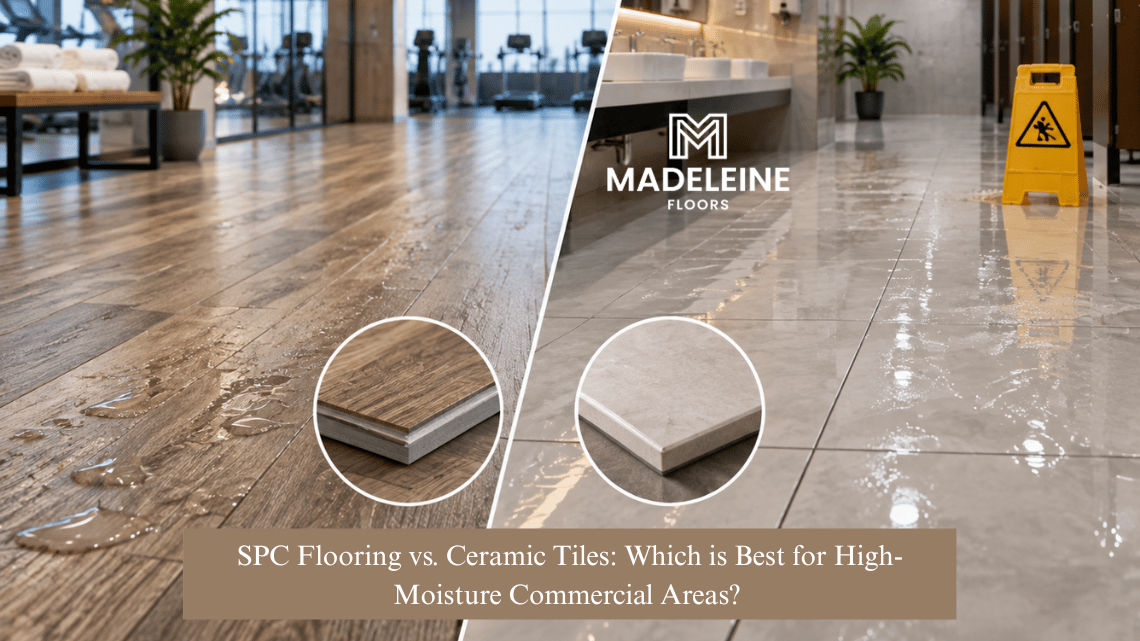
The selection of proper floorings in commercial establishments involves more than mere aesthetics. Places that are prone to water exposure, moisture, and a lot of pedestrian traffic should be fitted with a flooring material that will not cause stains, slipperiness, joint damage, and costly repairs.
That is the reason why the discussion between SPC flooring vs ceramic tile is becoming increasingly significant in India.
SPC floors are water-resistant, comfortable to step on, and fast to install. However, the ceramic floor tiles are the commonly used materials for flooring in the commercial regions in India because of the robust nature of their surfaces and designs.
Let’s break down spc flooring and ceramic tiles and see which one is best for what purposes.
Why This Comparison Matters for Indian Businesses
Commercial flooring in India has to survive a lot. Monsoon humidity, constant cleaning, and non-stop foot traffic wear down materials faster than most people expect.
If you’re running a restaurant, clinic, showroom, or office, a wrong flooring choice usually shows up within a year or two—cracks, mould, or slippery patches nobody wants to deal with.
That’s exactly why so many architects and facility owners are comparing SPC flooring vs ceramic tile before locking in their final decision, especially for washrooms, kitchens, and entry areas.
Waterproofing Capabilities: SPC vs. Ceramic Tiles
How Ceramic Tiles Handle Moisture
Ceramic tiles resist water fairly well on the surface. The real problem sits in the grout lines.
Grout soaks up moisture over time, encourages mould growth, and eventually starts cracking—particularly in spaces that see water all day, like commercial bathrooms.
How SPC Flooring Handles Moisture
SPC (Stone Plastic Composite) flooring works differently altogether. It’s made from limestone powder and PVC compounds, pressed into a rigid core.
This makes SPC flooring waterproof right through the core, not just on top.
Quick advantages:
- No grout lines
- No swelling
- No warping
- Works in basements
- Handles seepage-prone areas
If you’re weighing waterproof commercial flooring options, this single factor often settles the debate.
Installation Cost and Time Comparison
Even budget and downtime are as important as the material, particularly when you’re not able to close your business for days.
Ceramic Tiles Installation
The ceramic tiles will require:
- Expert Masons
- Precision Cutting
- 24-48 hours curing
- Higher Labour Cost
The cost of tile installation in major Indian metros is approx. ₹80-₹150 per sq. ft.
SPC Flooring Installation
SPC floors have an easy-to-install click system that is quite similar to laminate floors.
Advantages of SPC flooring:
- Faster installation
- No wet mortar
- No curing time
- Immediate usage
Price ranges from ₹90-160 per sq. ft., depending on quality and finish. Although it might be a little expensive at first, eventually, it saves a lot of time.
Underfoot Comfort and Acoustic Properties
This is the part most people underestimate.
Ceramic Tiles
Ceramic tiles are hard and cold underfoot. Over long shifts, this leads to:
- Foot fatigue
- Echoing sounds
- Colder ambience
In busy malls or hospital corridors, that echo becomes noticeable fast.
SPC Flooring
SPC flooring generally comes with a built-in underlayment, often IXPE or cork-based, which changes the feel entirely.
Benefits include:
- Softer footstep feel
- Warmer surface
- Better acoustic properties of SPC flooring
For clinics, offices, or hotels where noise control genuinely matters, this isn’t just a nice-to-have; it’s a practical everyday benefit.
Long-Term Durability and Maintenance in High-Traffic Zones
Ceramic Tiles
Ceramic tiles hold colour well and resist scratches. That said:
- Tiles crack under impact
- Grout needs resealing
- Replaced tiles often mismatch
SPC Flooring
SPC flooring’s rigid core and wear layer are built for constant footfall.
Maintenance is simple:
- Mop and clean
- No sealing needed
- Scratch resistant
- 15–20 year lifespan
For any commercial bathroom flooring comparison, SPC usually wins on lower day-to-day upkeep.
Maintenance Comparison
Feature | SPC Flooring | Ceramic Tiles |
Daily cleaning | Sweep, damp mop | Sweep, mop, grout care |
Water resistance | Depends on product | Depends on tile + grout |
Repairs | Plank replacement | Tile replacement |
Comfort | Warmer, softer | Harder underfoot |
Acoustic feel | Quieter with backing | Echo-prone |
Installation | Usually faster | More labour-heavy |
Wet-room use | Needs specific approval | Common with waterproofing |
Common Mistakes to Avoid When Choosing Commercial Flooring
- Picking SPC blindly: Not every SPC product suits wet areas.
- Ignoring subfloor moisture: Dampness underneath causes problems later.
- Glossy tiles: They look good but slip very quickly.
- Cost comparison only: Consider the cost of labour and maintenance.
- Skipping specifications: Consider the wear layer, core, and warranty.
- Incorrect cleaning substances: Always read the manufacturer’s guidelines.
Which One Should You Choose?
SPC floors will be preferred in areas that require moisture resistance, like bathrooms, kitchens, hospitals’ wet rooms, or basement retail shops.
Ceramic tiles can still be considered if heat resistance or aesthetic appeal is the main priority, like outdoor food courts and heritage-style lobbies.
The final call really depends on your space, footfall, and budget.
FAQs
1. Which is more durable SPC flooring or ceramic tiles in wet commercial places?
Generally, SPC floors are totally waterproof while ceramic tiles need grouting, which eventually holds water.
2. How long will SPC flooring last in commercial areas?
When installed properly, SPC flooring has the potential to last anywhere between 15-20 years in commercial settings.
3. Does SPC flooring get slippery when wet?
SPC flooring has an anti-slip surface, which makes it more resistant to slipping compared to ceramic flooring which has a smooth surface.
4. Which one is more affordable between the SPC floor and ceramic tiles?
While ceramic tiles have a cheap initial cost, the SPC floor becomes cheaper after some time.
5. Who are some reliable SPC flooring manufacturers in India?
Morbi, Gujarat, is considered the largest centre for flooring in India, which has many trusted SPC flooring manufacturers in Morbi.
Final Thoughts
The decision to select either SPC flooring or ceramic tiles depends on the actual performance of the material and not what it appears like in the brochure.
Companies that require waterproofing, comfort, and speed will increasingly choose SPC flooring for their projects in India.
If you are looking for SPC flooring manufacturers in Morbi or India, then reach out to Madeleine Floors for quality SPC flooring that can be exported from India.