
Top 10 Sustainable Building Materials for Modern Eco-Friendly Architecture
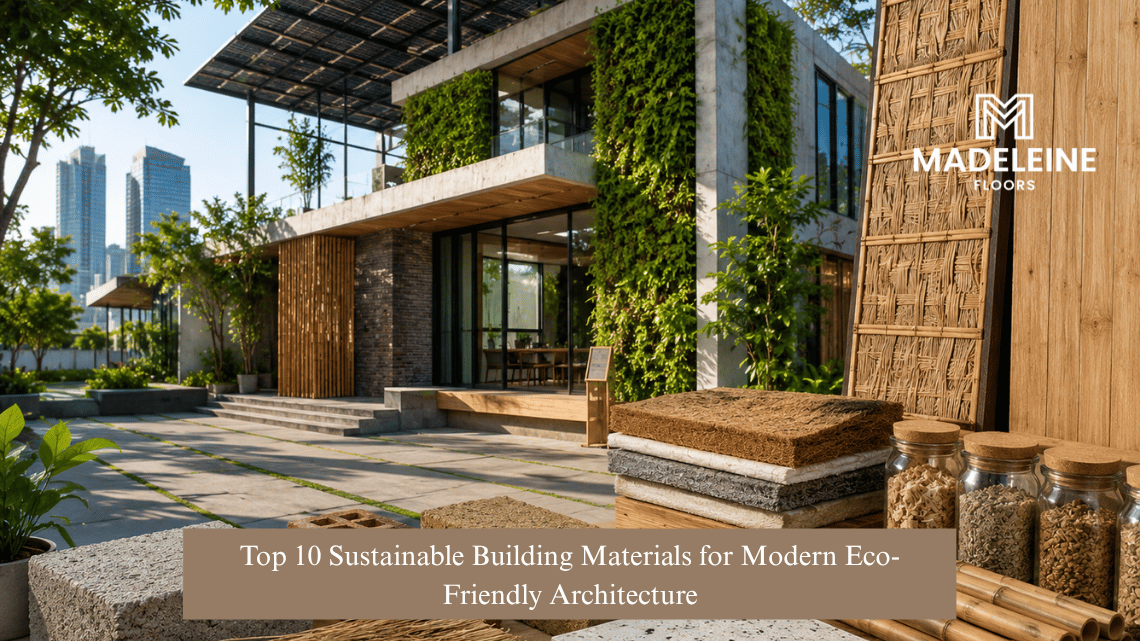
Sustainable building is not only for big commercial projects anymore. Homeowners across India are asking the same question: how do I build something that lasts without hurting the planet in the process?
The good news is you don’t have to choose between eco-friendly and good-looking. A reliable SPC vinyl floor supplier, for instance, can give you flooring that’s both durable and genuinely sustainable.
If you’re putting together a sustainable building materials list for your next project, think beyond the label. Think about where the material originates, how it is manufactured, and what happens to it after its use.
Let’s see the top 10 sustainable building materials for modern eco-friendly architecture.
1. Bamboo
Bamboo grows ridiculously fast; some varieties are ready to use in just three years. Compare that to hardwood trees, which take decades.
It works well for:
- Wall panels
- Flooring
- Furniture
- Partitions
You’ll spot bamboo interiors popping up in Bengaluru, Pune, and Ahmedabad more often now, mostly because they look warm and natural without the environmental guilt.
2. Recycled Steel
Steel is everywhere in Indian construction, and that’s exactly why recycling it matters so much. There is less need for extraction, less power, and less waste because there is less demand for new steel.
It is strong enough to support the building and roof structure, and here’s the best part: it can be recycled when the building is torn down!
3. Reclaimed Wood
Old warehouses, demolished bungalows, and retired furniture – a lot of usable timber sits in places you wouldn’t expect.
Reclaimed wood brings genuine character to floors, doors, and feature walls. Just don’t skip this; check its condition and treatment history before it goes indoors.
4. Fly Ash-Based Products
Fly ash is left over from burning coal in power plants, and instead of dumping it, manufacturers are turning it into bricks and cement-based materials.
Fly ash bricks have quietly become a staple across Indian construction sites. They are consistent in their dimensions, have good thermal resistance, and reduce our dependence on clay bricks.
5. Recycled Glass
Broken and discarded glass doesn’t have to end up in a landfill. Processed properly, it becomes tiles, countertops, and decorative surfaces.
It’s a smart pick when you want a striking finish without relying on freshly mined materials; kitchens and bathrooms especially benefit from this one.
6. Cork
Cork comes from tree bark, not the tree itself, so the tree keeps growing after harvest. That alone makes it one of the more renewable materials on this list.
It’s light, springy underfoot, and naturally good at absorbing sound – a solid pick for flooring or acoustic wall panels in homes and offices.
7. Low-VOC Paints and Finishes
Sustainability isn’t only about what’s visible from outside. What’s in the air inside your home matters just as much.
Low-VOC paints and adhesives release far fewer harmful compounds than regular ones. This is one of the easiest ways to bring non toxic interior materials into a nursery, bedroom, or school project.
One tip: don’t trust “green” labelling blindly. Ask for the manufacturer’s actual technical data sheet.
8. Natural Stone
Granite, sandstone, limestone, slate India has no shortage of natural stone, and much of it is available regionally.
Sourcing stone closer to your project site cuts down on transport emissions. And because stone lasts for decades with the right care, you’re not replacing it every few years, which itself saves material and money.
9. SPC Vinyl Flooring
Flooring takes a beating every single day, so it needs to actually hold up.
SPC vinyl flooring is built rigidly, resists water completely, and barely needs any upkeep. It works well in homes, offices, retail spaces, and hotels alike.
When you’re comparing an SPC vinyl floor supplier, don’t just look at price and finish. Ask about:
- Wear layer thickness
- Installation method
- Warranty terms
- Emission reports
- Maintenance needs
For Indian interiors dealing with humidity and constant cleaning, the right flooring specification genuinely changes how the space performs over time.
10. Recycled and Reused Materials
Sometimes the greenest option is something that already exists: an old door, reclaimed bricks, salvaged metal fittings.
Reusing these pieces cuts demand for new manufacturing and gives a space real personality. Cafés, offices, and renovated homes across India are leaning into this look more each year.
How to Choose Eco-Friendly Construction Products in India
A “green” sticker on a product doesn’t tell you much on its own. Before buying, check these:
- Durability for use
- Maintenance requirements
- Local sourcing
- VOC and air quality data
- Recycled content
- End-of-life recyclability
- Credible certification
If you’re chasing formal recognition, look into IGBC or GRIHA requirements early; retrofitting for certification later almost always costs more.
Common Mistakes to Avoid
Judging by looks alone. A natural-looking material isn’t automatically sustainable.
Ignoring how long it’ll last. Replacing a cheap product every two years creates more waste than one durable purchase.
Assuming all certifications are equal. Check exactly what each one measures before trusting it.
Forgetting the adhesives and sealants. These affect indoor air quality just as much as the main material.
Only comparing sticker price. Factor in lifetime cost and expected service life instead.
FAQs
1. What does the term “sustainable building materials” mean?
It is the term used to define the building materials that have been selected with an intention of reducing the negative impact that they have on the environment for the period of their existence.
2. Which kind of materials can be used in the list of sustainable building materials?
Examples include bamboo, recycled steel, reclaimed wood, fly ash products, recycled glass, cork, low-VOC finishes, natural stones, and SPC vinyl floors.
3. Can we use SPC flooring in India?
Yes, because of its resistance to water and easy maintainability properties, it is suitable for use in India.
4. What is meant by green building material certification?
This is a way to measure particular environmental, health or energy attributes of a product or building in question. Requirements vary among IGBC, GRIHA and LEED standards.
5. How can I get a good SPC vinyl floor supplier?
Besides cost comparison, some other things need to be taken into account, such as the wear layer and warranty.
Conclusion
Sustainability can be achieved through the little things done in every step involved in construction, from procurement to installation to usage. From bamboo flooring to recycled steel and wood, from low-VOC finishes to reliable flooring solutions, all these come together to create an environment that is better for the inhabitants.
When you need flooring solutions, go for a reputable SPC vinyl floor supplier such as Madeleine Floors and evaluate the products based on their durability and value, rather than their aesthetics alone.
Check out our flooring solutions at MadeleineFloors and construct your projects to last.