Is Vinyl Plank Flooring Worth the Price? Pros, Cons & Long-Term ROI

Flooring is one of those decisions you don’t get to redo every year. Once it’s down, you’re living with it for a long time.
So when homeowners start comparing tiles, hardwood, laminate, and vinyl, one question keeps coming up: does the vinyl plank flooring price in India actually justify the investment?
Honestly, it depends on what you’re looking for. Vinyl isn’t the cheapest option on the market, but it often works out cheaper in the long run because of how little upkeep it needs.
This article covers all aspects from the true cost, pros, cons and long-term ROI to determining if it would be a right choice for Indian households and offices.
Cost of Vinyl Plank Flooring in India – What’s the Price?
The price isn’t a fixed number. It shifts based on a few things:
- Brand quality
- Plank thickness
- Wear layer strength
- Design and finish
- Installation type
- Warranty terms
On average, most homeowners end up paying somewhere between ₹180 and ₹500+ per square foot.
Yes, that can be higher than basic ceramic tiles at first glance. But once you factor in maintenance savings over the years, vinyl usually balances out, sometimes even coming out ahead.
Why Vinyl Flooring Is Gaining Ground in India
Walk into a newly renovated home in Ahmedabad, Bengaluru, Pune, or Hyderabad, and there’s a good chance you’ll spot vinyl planks somewhere.
Here’s why it’s catching on:
- Quick installation
- Realistic wood look
- Soft underfoot
- Low maintenance
- Water-resistant
- Works well in apartments
City homes are getting smaller and renovation windows shorter. People want flooring that looks good without eating up weeks of their time.
Pros of Vinyl Plank Flooring
1. Looks Genuinely Good
Today’s vinyl planks aren’t the cheap-looking versions from a decade ago.
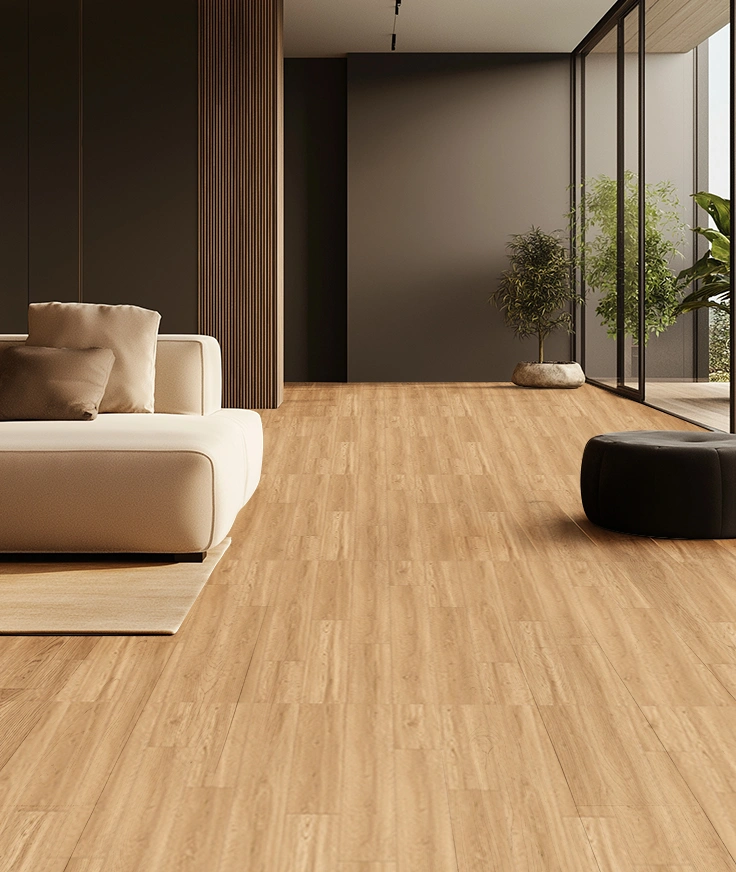
You’ll find finishes modelled on oak, walnut, teak, and maple, close enough that most guests won’t know the difference.
That means a premium look without a premium wood bill.
2. Handles Water Well
This is where vinyl really stands out. Accidental spills, damp mopping, the odd splash near the kitchen sink, none of it becomes a problem.
Works well in:
- Kitchens
- Dining spaces
- Living rooms
- Bedrooms
- Shops
Some higher-end variants even hold up in slightly humid conditions, which matters a lot along India’s coast.
3. Comfortable Underfoot
Unlike cold stone or ceramic, vinyl has a bit of give to it. It feels warmer, softer, easier on the feet.
Homes with kids or elderly parents often notice this difference right away. Offices benefit too, since standing on vinyl all day is less tiring than standing on tile.
4. Barely Any Maintenance
No polishing, no sealing, no annual treatments. Just:
- Sweeping
- Vacuuming
- Damp mopping
Compare that to wood or marble, which need regular upkeep, and the time (and money) saved adds up fast.
5. Resists Scratches and Wear
Decent-quality vinyl comes with a wear layer that shrugs off:
- Minor scratches
- Stains
- Scuffs
- Daily foot traffic
For a typical Indian household with constant movement, that durability matters.
6. Fast to Install
Most vinyl flooring jobs wrap up in a day or two. Compare that to weeks for wood or stone, and it’s an easy win, especially for offices that can’t afford long downtime.
Cons You Should Know About
There are some drawbacks to consider in vinyl planks:
1. Not Fully Dent-Proof
Heavy furniture without pads can leave marks. Dragging something sharp across the floor isn’t a great idea either. Simple precautions go a long way.
2. Repairing Can Be Difficult
Should one plank become severely damaged, it is possible to replace it, but finding something identical may not be easy if production of that particular model has been discontinued.
3. Resale Perceptions
Even today, there are some people who equate solid wood with luxury. Vinyl is an attractive product, but in higher resale market segments, hardwood may still have the upper hand.
4. Cheap Vinyl Doesn’t Last
This is the big one. Ultra-low-cost vinyl wears out fast. Sticking with a reputable brand usually means better durability and a warranty that actually means something.
Long-Term ROI: Is It Actually Worth It?
For most homeowners, yes.
Lower Maintenance Costs
Wood needs refinishing. Marble needs polishing. Vinyl just needs a wipe-down. Over 10-15 years, that difference alone can save a fair amount of money.
Longer Service Life
Good-quality vinyl can last 15-25 years with proper care, which puts it well within range of more expensive flooring options.
More Comfortable Living
Vinyl tends to feel warmer underfoot than stone, especially noticeable during winter months in northern India.
Cheaper Renovation Overall
Faster installation means lower labour costs. And if you ever need to replace it, that process is far simpler than redoing wood or stone flooring.
Where Vinyl Plank Flooring Works Best
It performs well in:
- Living rooms
- Bedrooms
- Home offices
- Retail stores
- Clinics
- Hotels
- Corporate offices
- Reception areas
- Schools and colleges
Outdoor spaces or areas with constant direct sunlight are the exception, those may need a different flooring solution altogether.
Tips Before You Buy
- Compare product grades; don’t compare prices alone
- Check the thickness of the wear layer
- Inquire about the warranty period
- Hire professional installers
- Take measurements of rooms accurately
- Maintain some additional planks for any repairs
- Choose colors that complement your interiors
A bit of research before purchase will save you a lot of trouble later on.
Common Mistakes to Avoid
- Select the cheapest one without thinking
- Ignore wear layer characteristics
- Choose the wrong flooring for the space
- Neglect subfloor preparation
- Choose unskilled installers
- Ignore warranty information
- Overlook maintenance requirements
And ignoring just the cost aspect generally turns out to be a good choice.
Conclusion
It is understandable why the cost of the vinyl plank flooring price in India becomes the primary factor when people think about it. However, durability, comfort, maintenance, and the lifetime of the flooring cannot be overlooked.
Vinyl plank flooring is one of the best options available for Indian households or businesses in terms of balancing cost and value.
If you are looking for some renovation options, check out the collection of vinyl floors on Madeleine Floors.
FAQs
1. What is the cost of vinyl plank flooring in India?
Usually, it costs between ₹180 to ₹500 + per sq. feet depending upon the quality of the floor.
2. Can vinyl plank flooring be used in Indian weather?
Yes, good quality vinyl plank flooring can handle Indian weather very well and does better in moderately humid conditions.
3. How durable is vinyl plank flooring?
Good quality vinyl plank flooring lasts for 15 to 25 years depending upon its installation and maintenance.
4. Which is better – vinyl flooring or tiles?
Both have pros and cons. Vinyl flooring is easy on feet and maintenance-friendly, whereas tiles are resistant to heat and impact.
5. Is it worth spending more money on vinyl plank flooring prices in India?
Yes, definitely. It is so because good-quality vinyl gives you a better life and guarantee as well.