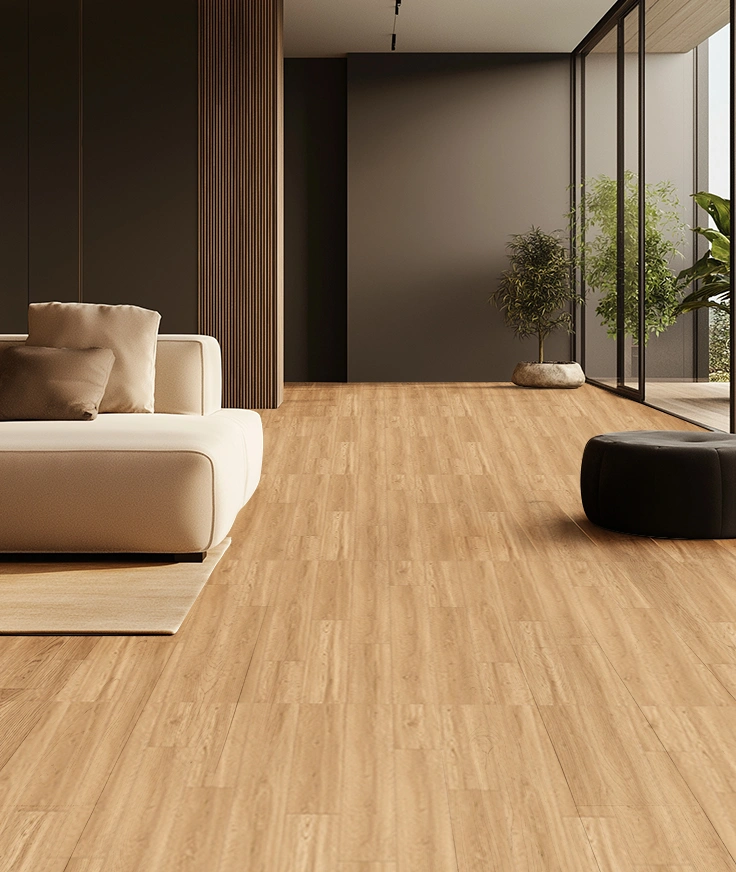
The Evolution of Luxury Vinyl Flooring: From Wood Textures to Stone Finishes
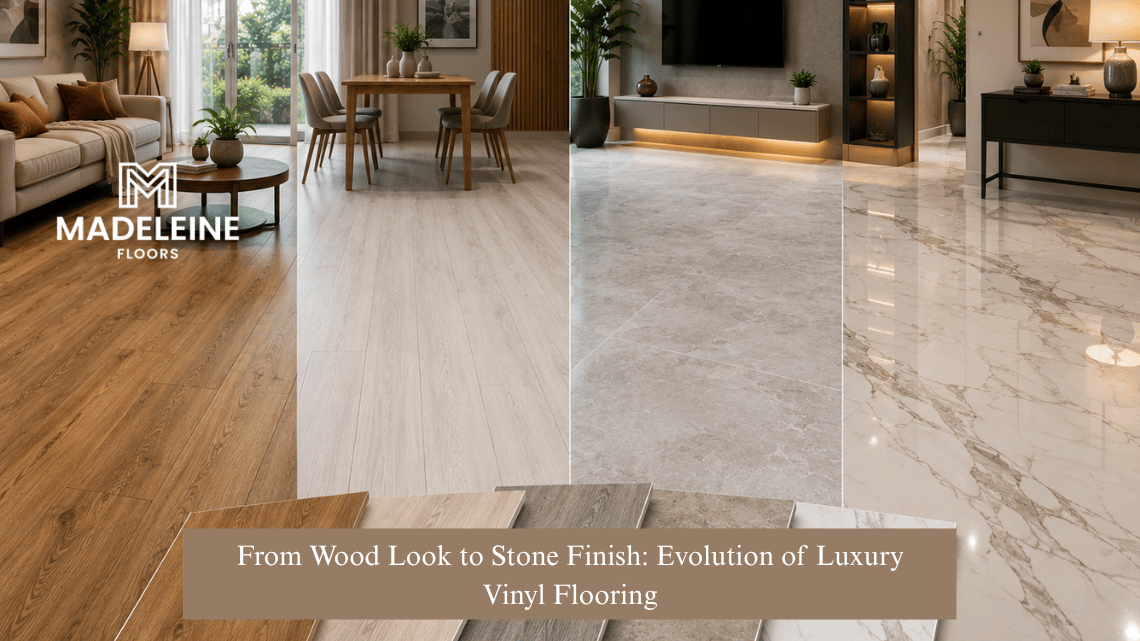
Walk into any modern home or commercial space today, and the floors often stop you mid-step. Lifelike wood grains, textured stone finishes, and even concrete-look surfaces that feel surprisingly solid underfoot. What you’re looking at is most likely SPC luxury vinyl flooring, and it’s quietly become one of the most talked-about choices among homeowners, architects, and interior designers across India.
Over the past decade, LVF has gone from being a “budget substitute” to a genuinely preferred flooring choice for architects, interior designers, and homeowners who want beauty without the baggage that comes with natural materials. The story of how this happened is worth understanding before you make any flooring decision.
How Luxury Vinyl Flooring Went From Basic to Beautiful
The earliest vinyl floors looked plasticky, felt hollow underfoot, and were clearly unconvincing. Nobody was proud of them. Fast-forward to today, and the situation has completely flipped.
The turning point came when manufacturers began investing seriously in embossing and printing technology. Modern luxury vinyl now carries micro-textured surfaces that mimic the feel of authentic wood grain or the cool smoothness of natural stone.
- Wood looks evolved first — oak, walnut, teak, and reclaimed barn wood designs became incredibly popular because they delivered warmth and character without the maintenance headaches of natural hardwood.
- Stone and tile looks followed — marble, slate, travertine, and cement finishes brought the luxury of stone into spaces where the original material would be impractical or too heavy.
- Concrete and industrial finishes emerged — catering to the minimalist and urban loft aesthetic that started dominating interior design globally.
How SPC Flooring Technology Changed Everything
When looking into floorings these days, chances are that you’ve heard about the technology known as “SPC,” and it stands for “Stone Plastic Composite.” This is where things got genuinely interesting.
SPC luxury vinyl flooring has a strong and solid inner layer made by combining limestone powder, PVC, and stabilizers. This construction makes the plank incredibly dense, dimensionally stable, and resistant to temperature changes. Unlike older vinyl, it doesn’t expand and contract with humidity. It doesn’t warp near a bathroom or buckle in a hot room.
For Indian homes, where humidity swings are significant and monsoon seasons are brutal—this matters a great deal. SPC flooring essentially solved a problem that made vinyl flooring unreliable in tropical climates.
Some SPC luxury vinyl flooring manufacturers have also started offering products with improved underlays, anti-microbial coatings, and click-lock installation systems that make fitting faster and cleaner.
What’s Making Luxury Vinyl Flooring Popular in India
Flooring preferences in India have changed a lot in recent years. The rise of apartment culture, the growth of retail chains, hospitality, and a broader shift in aesthetic awareness among homeowners have pushed demand for premium yet practical flooring options.
Here’s what’s changing on the ground:
- Builders and developers are specifying LVF for affordable housing projects because it cuts construction time and looks far more premium than the price suggests.
- Homeowners doing renovations are choosing it because it can be installed directly over existing tile or concrete without demolition.
- Commercial spaces — especially retail showrooms, clinics, and offices — prefer it for the combination of durability and design variety.
- Pet owners and families with children have discovered it as one of the most practical floor surfaces available, given its scratch resistance and easy cleaning.
Understanding Luxury Vinyl Flooring Cost in India
One of the most common questions people ask before making a decision is about luxury vinyl flooring cost in India. The honest answer is it varies, but understanding this helps you make a smarter choice.
Entry-level LVF products begin at ₹45–₹70 per square foot. It is relatively thin, with basic surface designs and a simple locking system. The material serves well for low-traffic areas.
Mid-range products are the sweet spot for most residential and light commercial projects that fall between ₹80–₹150 per square foot. This price range offers better wear layers (0.3 mm – 0.5 mm), natural-looking embossing, and acoustic backing.
Premium and imported SPC products, especially from good SPC luxury vinyl flooring manufacturers, can go from ₹160 to ₹300+ per square foot. These come with thicker wear layers (0.5 mm and above) and premium finishes that are genuinely difficult to distinguish from natural materials. Installation typically adds ₹15–₹30 per square foot on top of material costs, depending on subfloor preparation and region.
Why Homeowners Prefer it for Long-Term
Beyond looks and cost, luxury vinyl flooring wins on day-to-day practicality, and that’s what keeps people satisfied years after installation.
- Easy cleaning — a damp mop is all it takes. No special products, no fuss.
- No polishing or sealing required — unlike natural stone or hardwood, it needs no annual upkeep treatments.
- Water resistant throughout — no damage from spillages, splashings, or high humidity levels, making it perfect for kitchen, bathroom, and balcony installations.
- Low long-term maintenance costs — the savings on maintenance costs in 5 to 10 years may cover the entire cost of installation.
- Easy installation —click-lock systems reduce installation time during renovations, which matters when you’re living in the space.
Whether it comes to busy homes or high-traffic areas, this is definitely an unbeatable combination.
What to Actually Look For Before You Buy
Shopping for luxury vinyl flooring has many options today. A few things worth paying attention to:
- Wear layer thickness — this is the most important spec. Anything below 0.3mm is only suitable for very light use. For families, pets, and commercial use, go for 0.5 mm or more.
- AC rating — a rating of AC3 or AC4 suggests that the floor can handle regular to heavy foot traffic.
- Core type — The SPC core is denser and stronger than that of WPC (wood plastic composite), which makes it more suitable for Indian climatic conditions.
- Brand and manufacturer credibility — a warranty of 10 years or more is usually a good sign that the manufacturer stands behind their product.
- Surface texture — run your fingers across it. If it feels flat and printed, it’ll look flat in your home too. Embossed-in-register (EIR) textures align with the printed grain and feel noticeably more authentic.
The Bottom Line
Luxury vinyl flooring has earned its place in modern Indian homes, not just because it’s cost-effective but because it’s genuinely well-made now. From natural-looking wood grain textures to stone-like finishes, the technology that goes into making today’s SPC luxury vinyl flooring manufacturers can be seen in each board.
When it comes to comparing your choices, knowing about the luxury vinyl flooring cost in India along with indicators of quality such as layer thickness and core construction is key. With this segment continuing to evolve, Madeleine Floors stands out as one of the top luxury vinyl flooring brands in India.
FAQs
1. Is SPC luxury vinyl flooring waterproof?
Yes, SPC flooring is highly waterproof, making it suitable for kitchens, bathrooms, and humid climates.
2. What is the average luxury vinyl flooring cost in India?
In India, luxury vinyl flooring ranges from ₹45 to ₹300+ per sq ft. depending on quality, thickness, and brand.
3. How long does luxury vinyl flooring last?
High-quality SPC luxury vinyl flooring can last 15–25 years with proper maintenance.