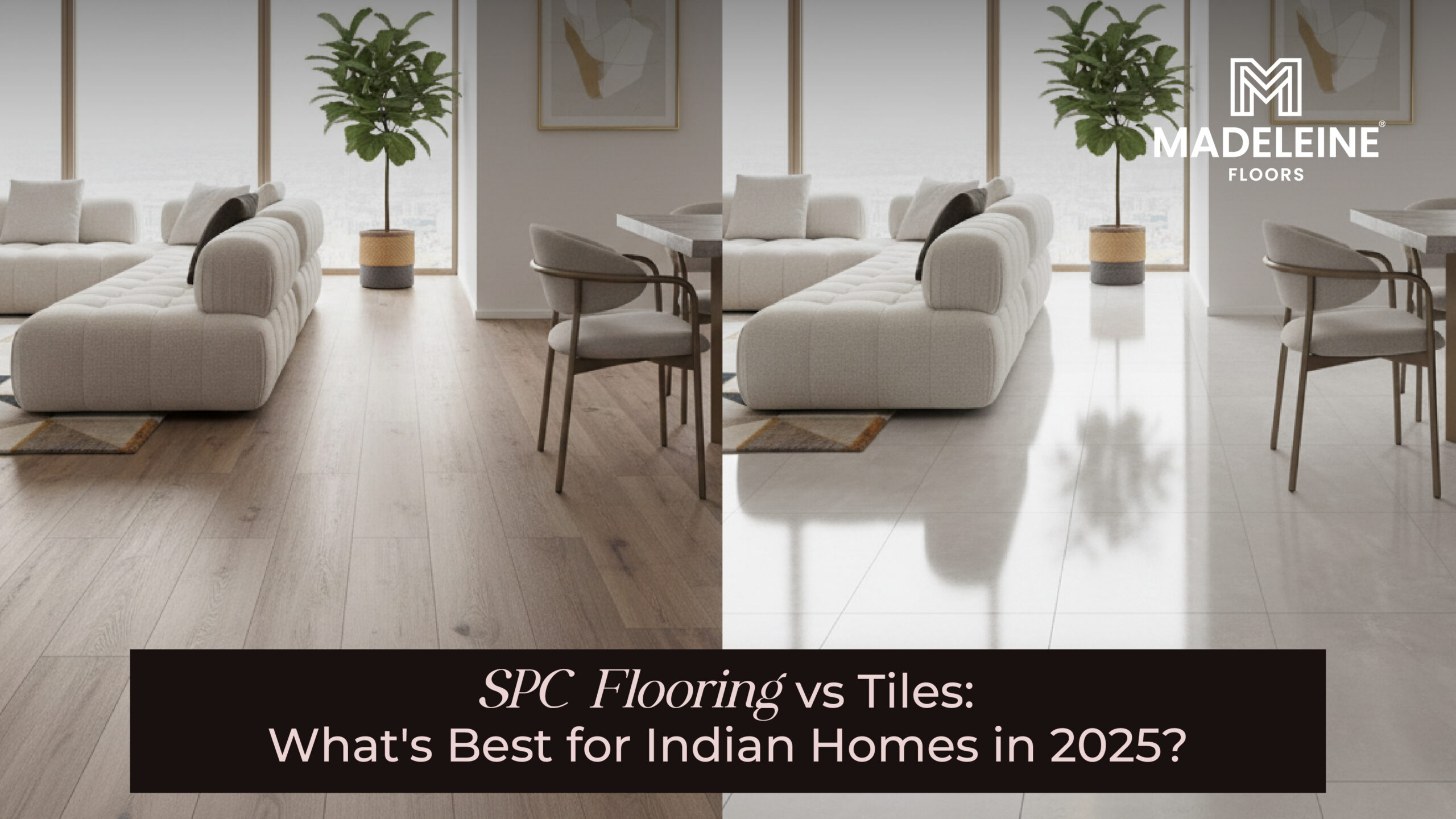
Choosing the right SPC flooring for Indian homes has never been more important than in 2025, as homeowners increasingly seek solutions that combine durability, aesthetics, and practicality for India’s unique climate challenges. While ceramic and vitrified tiles have dominated Indian households for decades, SPC (Stone Polymer Composite) flooring is rapidly emerging as the preferred choice for modern homes seeking waterproof, comfortable, and stylish alternatives. This comprehensive comparison explores SPC flooring vs tiles, helping you make an informed decision for your most cherished spaces with insights into cost, durability, comfort, and suitability for Indian conditions.
The best SPC flooring for Indian homes 2025 trends show a clear shift toward waterproof flooring India solutions, with SPC flooring experiencing remarkable 22.5% market growth compared to traditional tiles’ 8.2% growth.
Madeleine Floors, India’s leading SPC flooring manufacturer, has revolutionized the market with innovative herringbone SPC flooring patterns and comprehensive product ranges designed specifically for Indian climate conditions. This detailed analysis covers everything from SPC flooring price in India to installation requirements, maintenance needs, and long-term value propositions.
What is SPC Flooring?
SPC flooring (Stone Polymer Composite) represents next-generation rigid core flooring technology, combining approximately 60% natural limestone powder with polyvinyl chloride and specialized stabilizers to create an ultra-durable, 100% waterproof surface. Unlike traditional vinyl flooring, SPC flooring features a dense, rigid core that provides exceptional dimensional stability, making it significantly more resistant to temperature fluctuations, moisture penetration, and structural deformation than conventional alternatives. The innovative composition ensures SPC flooring maintains its integrity and appearance even under extreme Indian climate conditions, from monsoon humidity to summer heat.
Madeleine Floors has pioneered SPC flooring innovation in India with three distinct series: the commercial-grade Reindeer Series (7mm thickness for high-traffic areas), the versatile Prima Herringbone Series (6mm for residential and commercial spaces), and the efficient Linea Series (5mm for lightweight applications). Each series incorporates advanced click-lock installation systems that eliminate the need for adhesives, nails, or specialized tools, enabling fast, mess-free installation that can transform spaces in a single day.
SPC Flooring Technology and Construction
The sophisticated multi-layer construction of SPC flooring typically includes four to five distinct layers, each serving specific functional purposes for optimal performance in Indian homes. The top layer consists of a transparent UV-protected wear layer (0.3mm to 0.7mm thickness) that provides excellent resistance to scratches, stains, and daily wear, while the decorative vinyl film beneath delivers realistic wood, stone, or tile appearances. The heart of SPC flooring is its rigid limestone-polymer core (3.5mm to 5mm thickness), which gives the flooring its exceptional stability and durability characteristics.
Premium SPC flooring products often include integrated IXPE foam underlayment layers that enhance sound absorption, thermal insulation, and underfoot comfort – crucial benefits for Indian homes where bare-foot living is common. This multi-layer approach ensures SPC flooring delivers superior performance across all key metrics while maintaining visual authenticity that rivals natural materials. The precision manufacturing process enables SPC flooring to achieve remarkable consistency in thickness and quality, ensuring seamless installations and long-term performance reliability.
Comprehensive SPC Flooring vs Tiles Comparison
Durability and Performance Analysis
SPC flooring vs tiles durability comparison reveals significant advantages for SPC technology, particularly in impact resistance and long-term structural integrity. SPC flooring demonstrates superior resistance to dents, scratches, and daily wear compared to ceramic tiles, which can chip or crack when heavy objects are dropped. The limestone-polymer core provides exceptional resilience against furniture marks, pet scratches, and high-traffic wear patterns that commonly affect traditional tile surfaces.
Temperature stability represents another crucial advantage of SPC flooring vs tiles in Indian climate conditions, where extreme temperature variations can cause traditional tiles to expand and contract, potentially leading to cracking or grout line failures. SPC flooring maintains dimensional stability across temperature ranges from -10°C to 60°C, ensuring consistent performance through India’s varied seasonal conditions. The 25-year average lifespan of SPC flooring matches or exceeds ceramic tiles while providing superior performance characteristics throughout its operational life.
Water Resistance and Climate Suitability
Waterproof flooring India requirements make SPC flooring vs tiles comparison particularly relevant for monsoon-prone regions and high-humidity areas. SPC flooring provides 100% waterproof performance at both surface and core levels, preventing water infiltration that can damage subfloors or create mold conditions. Unlike ceramic tiles, where grout lines can absorb moisture over time and require periodic sealing, SPC flooring maintains complete water resistance without ongoing maintenance requirements.
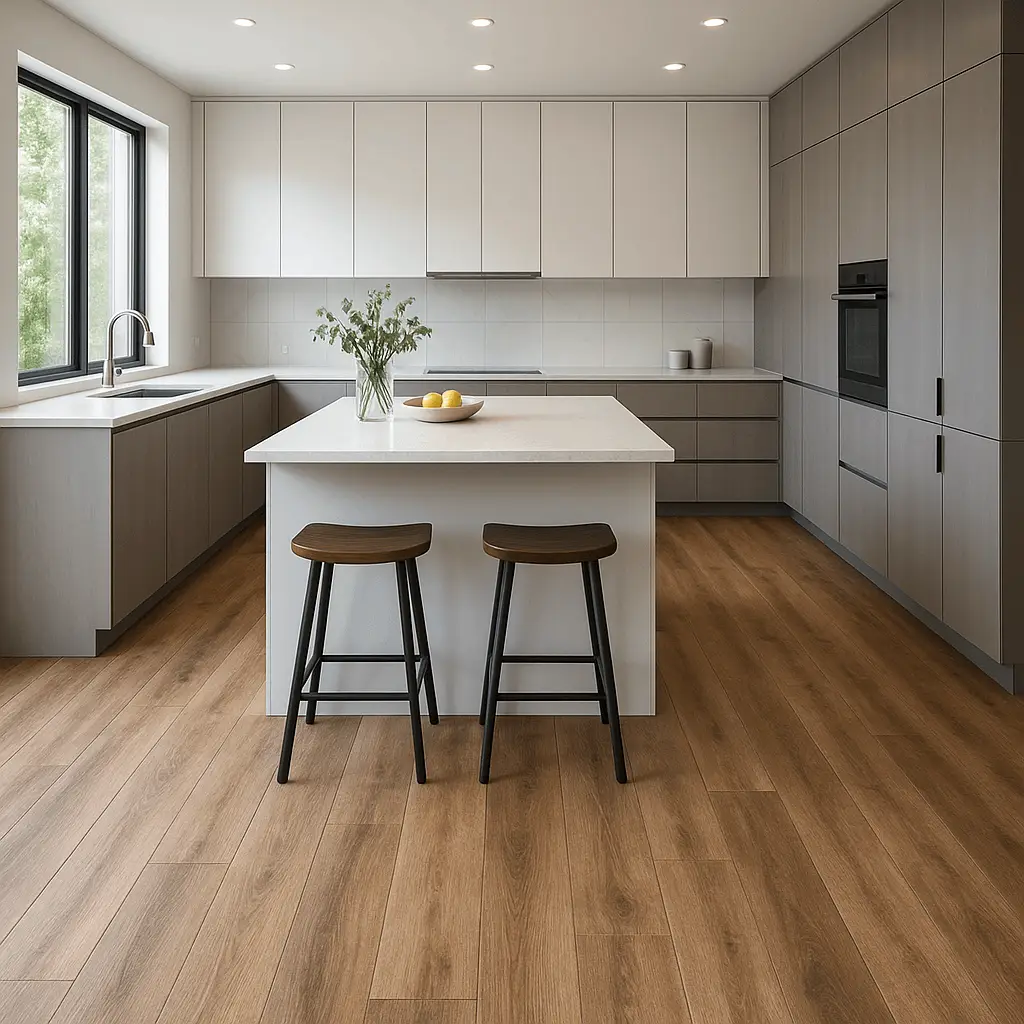
The waterproof SPC flooring advantage becomes especially significant in Indian kitchens, bathrooms, and ground-floor installations where water exposure is frequent. Traditional tile installations require professional waterproofing treatments and careful grout maintenance to prevent water damage, while SPC flooring provides inherent protection against spills, floods, and moisture infiltration. This characteristic makes SPC flooring particularly valuable for basement installations, coastal homes, and areas prone to seasonal flooding.
Comfort and Underfoot Experience
The comfort comparison in SPC flooring vs tiles analysis reveals substantial advantages for SPC technology, particularly important for Indian homes where barefoot living is common. SPC flooring feels significantly warmer and softer underfoot compared to ceramic tiles, which can feel cold and hard, especially during winter months or in air-conditioned environments. The slight resilience of SPC flooring reduces fatigue for people who stand for extended periods, making it ideal for kitchens and work areas.
Sound absorption represents another comfort advantage of SPC flooring vs tiles, with SPC technology providing natural noise reduction that creates quieter living environments. This benefit proves particularly valuable in apartment buildings and multi-story homes where footstep noise can be disruptive. The thermal properties of SPC flooring also contribute to energy efficiency, as the material doesn’t conduct heat as readily as ceramic tiles, potentially reducing cooling costs in hot climates.
Installation and Maintenance Considerations
Installation Process and Requirements
SPC flooring installation offers significant advantages over traditional tile installation, featuring innovative click-lock systems that enable fast, mess-free installation without adhesives or specialized tools. The floating floor installation method allows SPC flooring to be installed directly over most existing surfaces, including concrete, plywood, and even existing vinyl or tile floors, provided they are clean, level, and structurally sound. Professional installation can typically complete residential SPC flooring projects in a single day, compared to 3-4 days required for ceramic tile installation.
The SPC flooring installation process eliminates the curing time, grouting requirements, and post-installation cleanup associated with traditional tile work. Madeleine Floors SPC products feature precision-engineered locking systems that create secure, gap-free joints without requiring adhesives, making DIY installation possible for homeowners with basic skills. The uniform thickness and manufacturing precision of SPC flooring ensure seamless transitions and professional-quality results regardless of installation method.
Maintenance Requirements and Long-term Care
SPC flooring maintenance dramatically simplifies floor care compared to traditional tile installations, requiring only basic cleaning routines to maintain pristine appearance. Regular sweeping or vacuuming removes surface debris, while weekly damp mopping with pH-neutral cleaners keeps SPC flooring looking fresh and new. Unlike ceramic tiles that require periodic grout cleaning, sealing, and potential re-grouting, SPC flooring never needs these costly and time-consuming maintenance procedures.
The maintenance advantages of SPC flooring vs tiles extend to resistance against common household challenges, including pet accidents, food spills, and muddy footprints that can permanently stain grout lines in tile installations. The protective wear layer prevents liquids from penetrating the surface, allowing easy cleanup of even stubborn substances like cooking oils, wine, or curry spills common in Indian cooking. This low-maintenance characteristic represents substantial long-term savings in both time and professional cleaning costs.
Cost Analysis and Value Proposition
Initial Investment and Installation Costs
SPC flooring price in India comparison with tiles reveals competitive pricing when considering total project costs including materials, installation, and long-term maintenance. SPC flooring cost per sq ft India ranges from ₹150-250 including installation, while ceramic tiles range from ₹120-400 depending on quality and design complexity. However, the faster installation process of SPC flooring significantly reduces labor costs and project disruption compared to traditional tile installation.
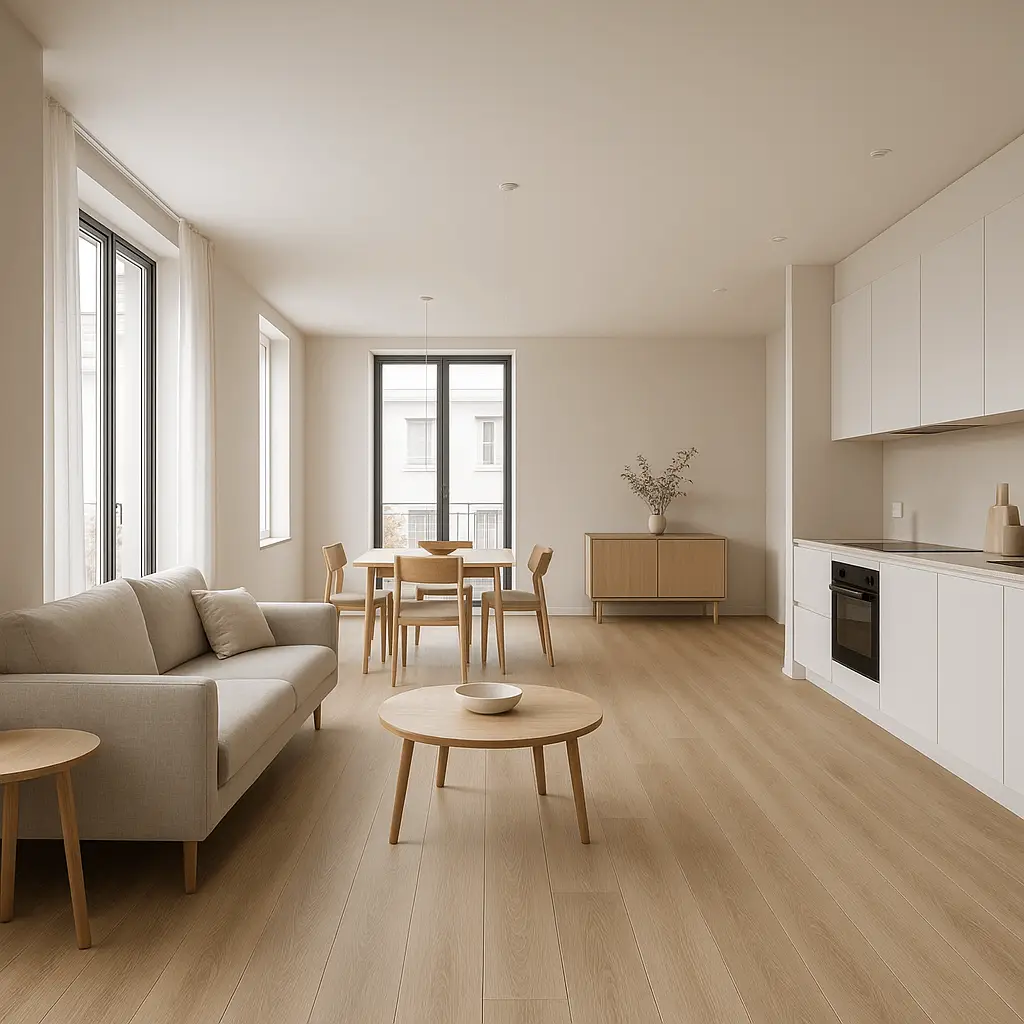
Madeleine Floors offers competitive pricing across its SPC flooring ranges: Linea Series starting at ₹180/sq ft, Prima Herringbone Series at ₹220/sq ft, and premium Reindeer Series at ₹250/sq ft. When factoring installation time, elimination of grouting costs, and reduced subfloor preparation requirements, SPC flooring often provides superior value compared to mid-premium ceramic tile installations.
Long-term Value and Return on Investment
The SPC flooring vs tiles long-term value analysis demonstrates significant advantages for SPC technology through reduced maintenance costs, extended lifespan, and superior performance retention. SPC flooring typically maintains over 90% of its original appearance after 15 years of residential use, while ceramic tiles may show wear patterns, grout discoloration, and potential cracking requiring repairs or replacement. The 25-year operational lifespan of SPC flooring combined with minimal maintenance requirements provides excellent return on investment.
Energy efficiency considerations also favor SPC flooring vs tiles in terms of long-term operating costs, as the thermal properties of SPC technology contribute to improved comfort and potentially reduced cooling costs in hot climates. The sound absorption characteristics of SPC flooring add value in multi-story homes and apartments where noise reduction improves living quality. Additionally, the easier renovation potential of SPC flooring – which can be installed over existing floors – provides flexibility for future updates without major construction disruption.
Design Options and Aesthetic Considerations
Style Versatility and Design Trends
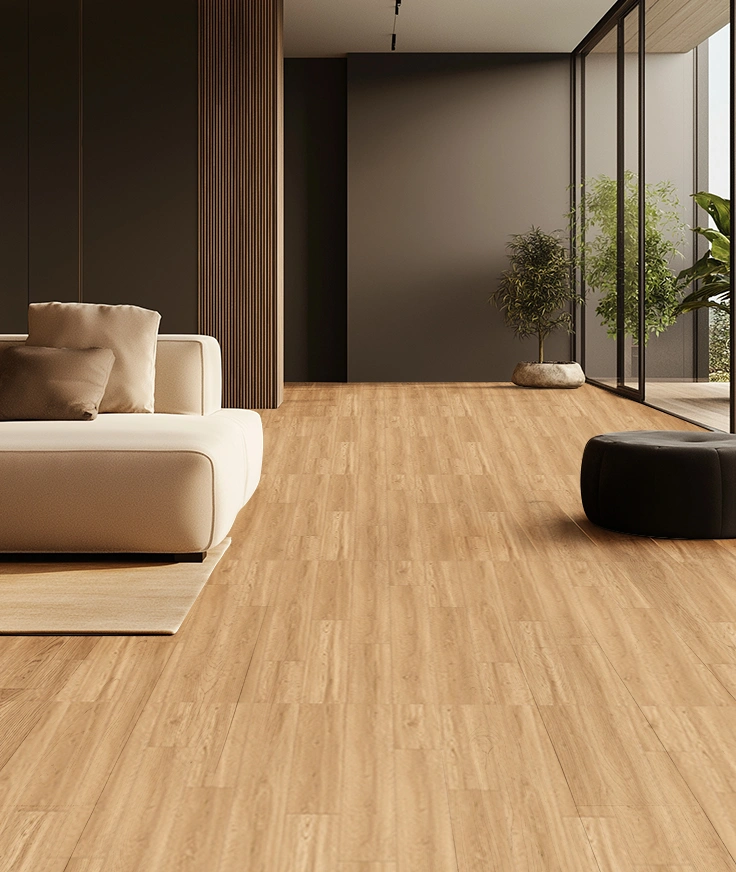
SPC flooring design options have evolved dramatically to meet diverse aesthetic preferences, with herringbone SPC flooring patterns leading 2025 trends in sophisticated residential applications. Madeleine Floors pioneered India’s first SPC herringbone floors, offering both Straight Herringbone and Double Herringbone patterns that combine traditional elegance with modern durability. The advanced printing technology enables SPC flooring to achieve ultra-realistic wood, stone, and tile appearances that rival natural materials in visual authenticity.
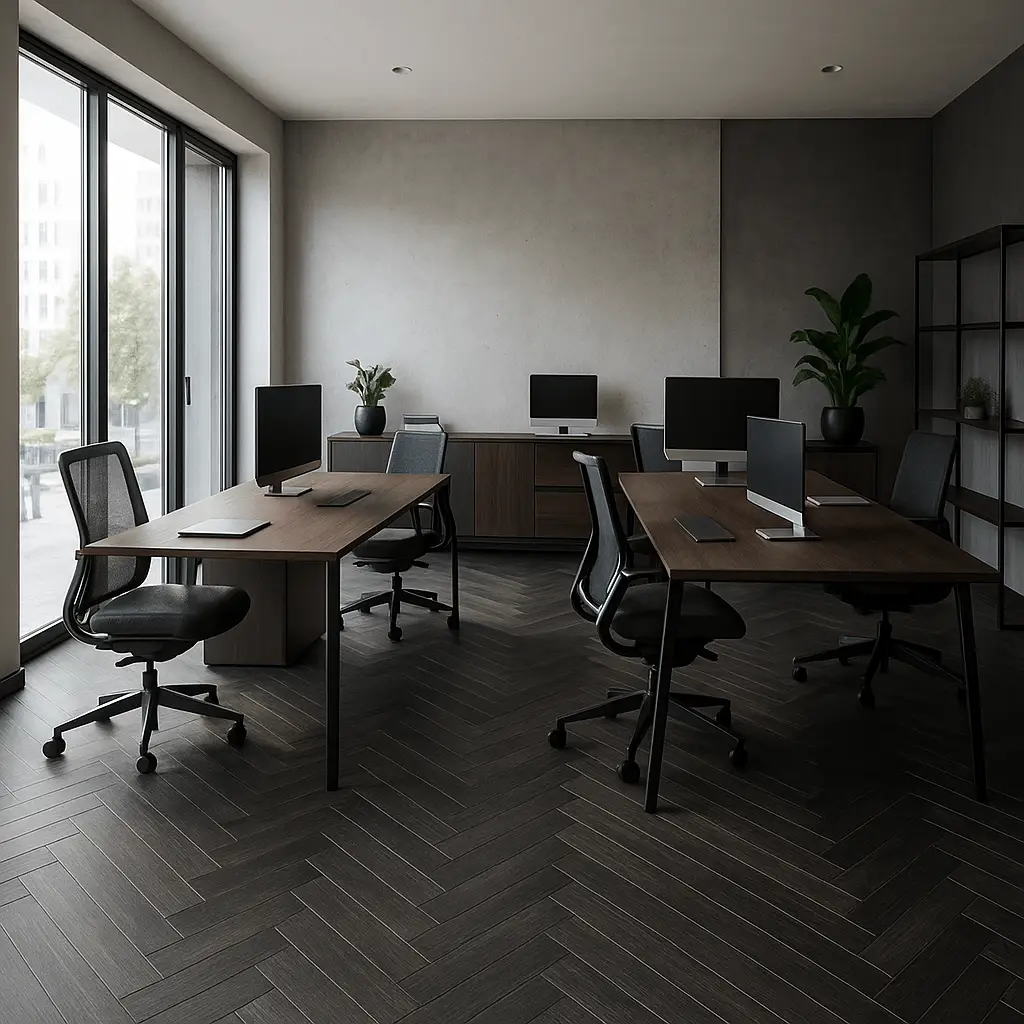
Current SPC flooring trends favor warm wood tones, wide plank designs, and natural textures that complement contemporary Indian interior preferences. The versatility of SPC flooring enables seamless integration with various design themes, from minimalist modern to traditional Indian aesthetics. While ceramic tiles offer broader color and pattern variety, SPC flooring provides sophisticated options that satisfy most residential design requirements while delivering superior performance benefits.
Pattern Innovation and Installation Flexibility
Herringbone SPC flooring represents the pinnacle of pattern innovation, offering timeless sophistication previously limited to expensive hardwood installations. The precision manufacturing of SPC herringbone flooring enables complex pattern layouts that create visual depth and spaciousness in residential applications. Madeleine Floors herringbone series demonstrates how advanced SPC flooring technology can deliver luxury aesthetics with practical benefits including waterproof performance and easy maintenance.
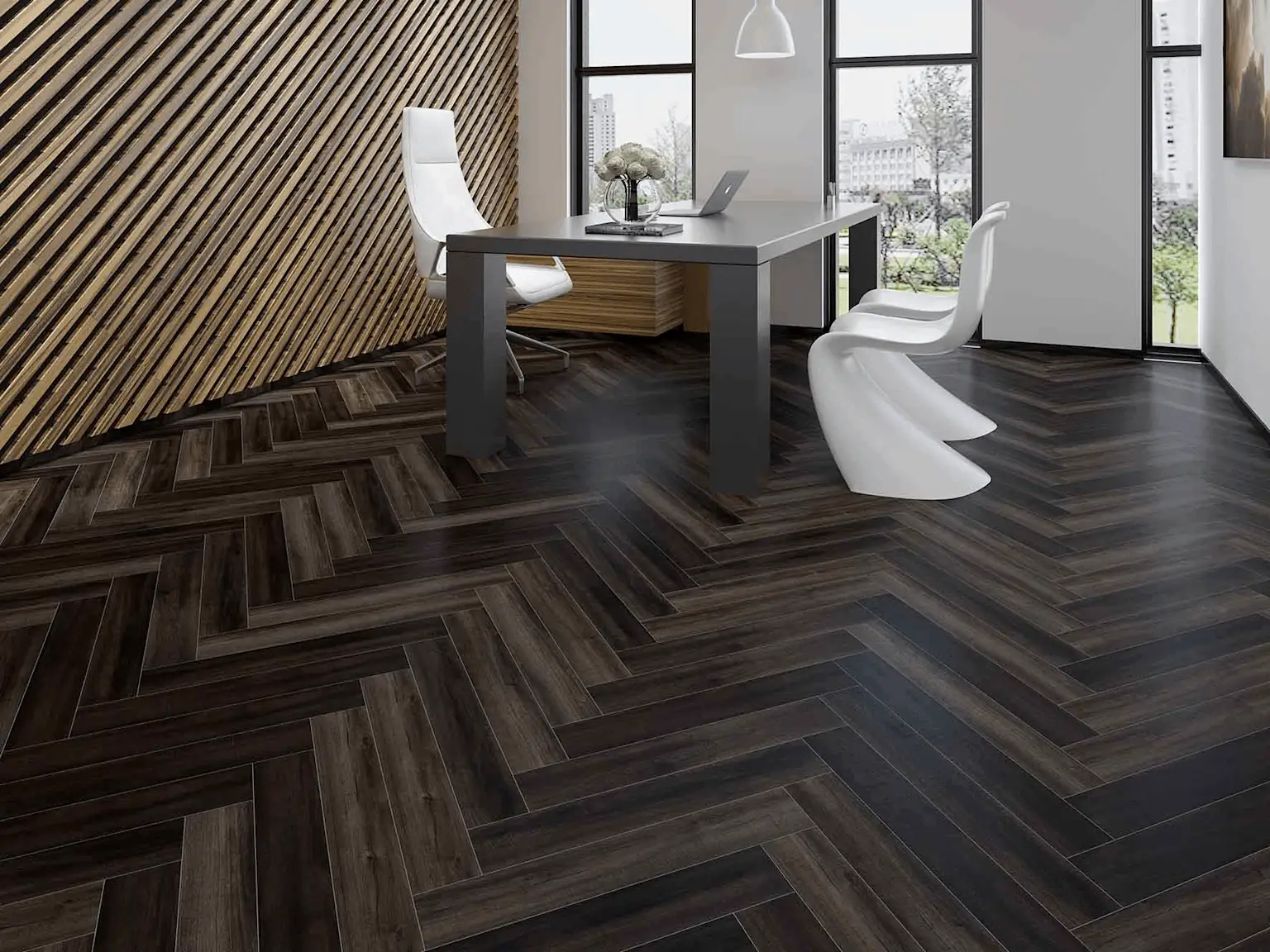
Pattern installation flexibility gives SPC flooring vs tiles significant advantages in creative applications, as the click-lock systems enable complex layouts without grouting challenges. The ability to create seamless pattern transitions and custom design elements makes SPC flooring particularly suitable for open-plan Indian homes where flooring continuity enhances spatial flow. Modern SPC flooring manufacturing enables mixed pattern installations and creative transitions that would be complex and expensive with traditional tile systems.
Market Trends and Future Outlook
Industry Growth and Adoption Patterns
The SPC flooring market in India demonstrates exceptional growth potential, with projected 22.5% annual growth rates significantly exceeding traditional tile market expansion. SPC flooring manufacturers India are rapidly expanding production capacity to meet growing demand from both residential and commercial sectors seeking waterproof, durable flooring solutions. The Indian SPC flooring market benefits from increasing awareness of international design trends and growing preference for low-maintenance building materials.
Consumer preference trends strongly favor waterproof flooring India solutions, with SPC flooring positioned to capture significant market share from traditional ceramic tiles. The growing middle-class population and urbanization trends support continued expansion of premium flooring markets, with SPC flooring offering accessible luxury that appeals to aspirational consumers. Major infrastructure projects and commercial development further drive demand for durable, quickly-installed flooring systems.
Innovation and Technology Development
Technological advancement in SPC flooring continues to enhance performance characteristics and aesthetic options, with manufacturers investing heavily in improved wear layers, enhanced locking systems, and expanded design portfolios. Smart manufacturing techniques enable consistent quality production while reducing costs, making premium SPC flooring more accessible to broader market segments. Environmental considerations increasingly influence product development, with recycled content and sustainable manufacturing processes becoming standard features.
The future of SPC flooring vs tiles competition will likely favor SPC technology as manufacturing scale economies reduce costs while performance advantages become more widely recognized. Integration of smart home technologies and enhanced acoustic properties represents emerging opportunities for SPC flooring differentiation. Continued innovation in installation systems and product customization will further strengthen SPC flooring market position against traditional alternatives.
Professional Recommendations and Best Practices
Choosing the Right Flooring Solution
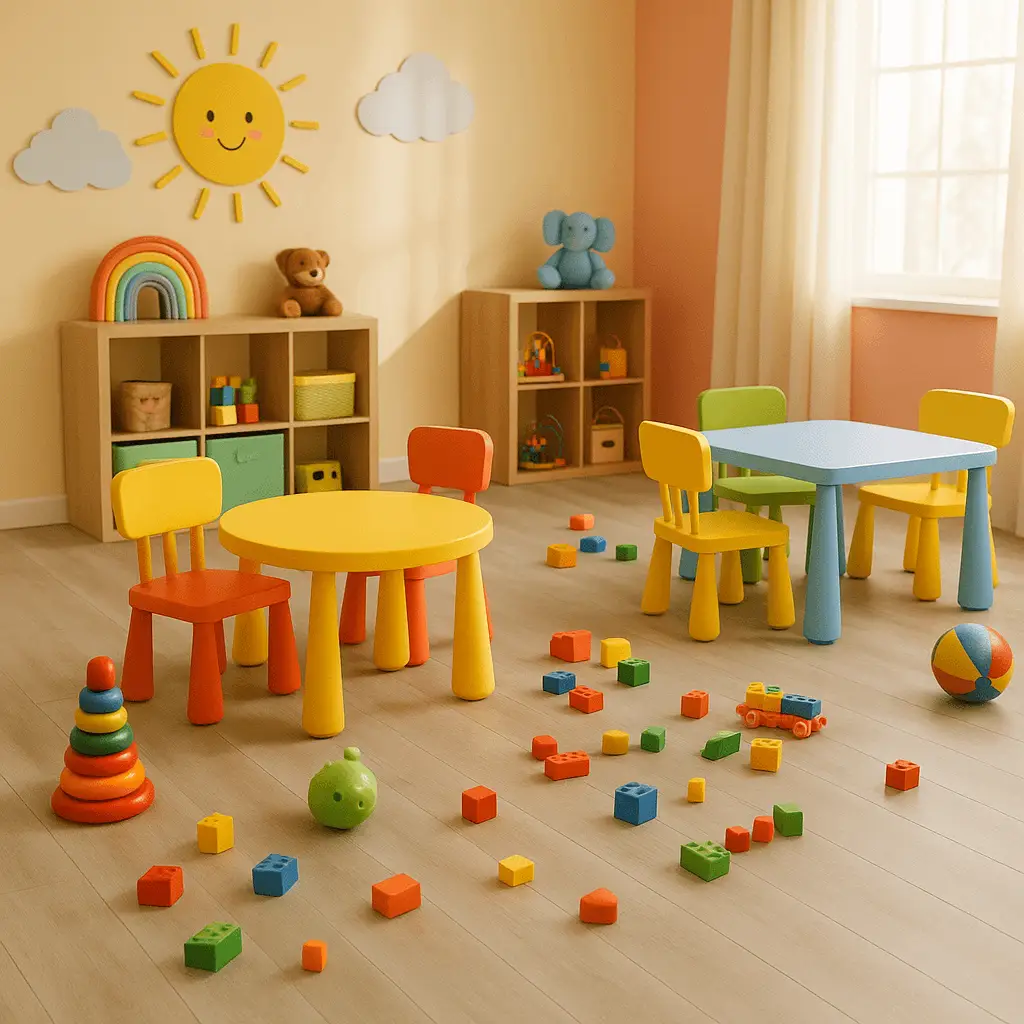
SPC flooring vs tiles decision criteria should prioritize long-term performance, maintenance requirements, and suitability for specific applications over initial cost considerations. For Indian homes prioritizing comfort, water resistance, and low maintenance, SPC flooring provides compelling advantages that justify premium pricing through superior lifetime value. Consider SPC flooring for high-moisture areas, homes with children or elderly residents, and applications requiring fast installation with minimal disruption.
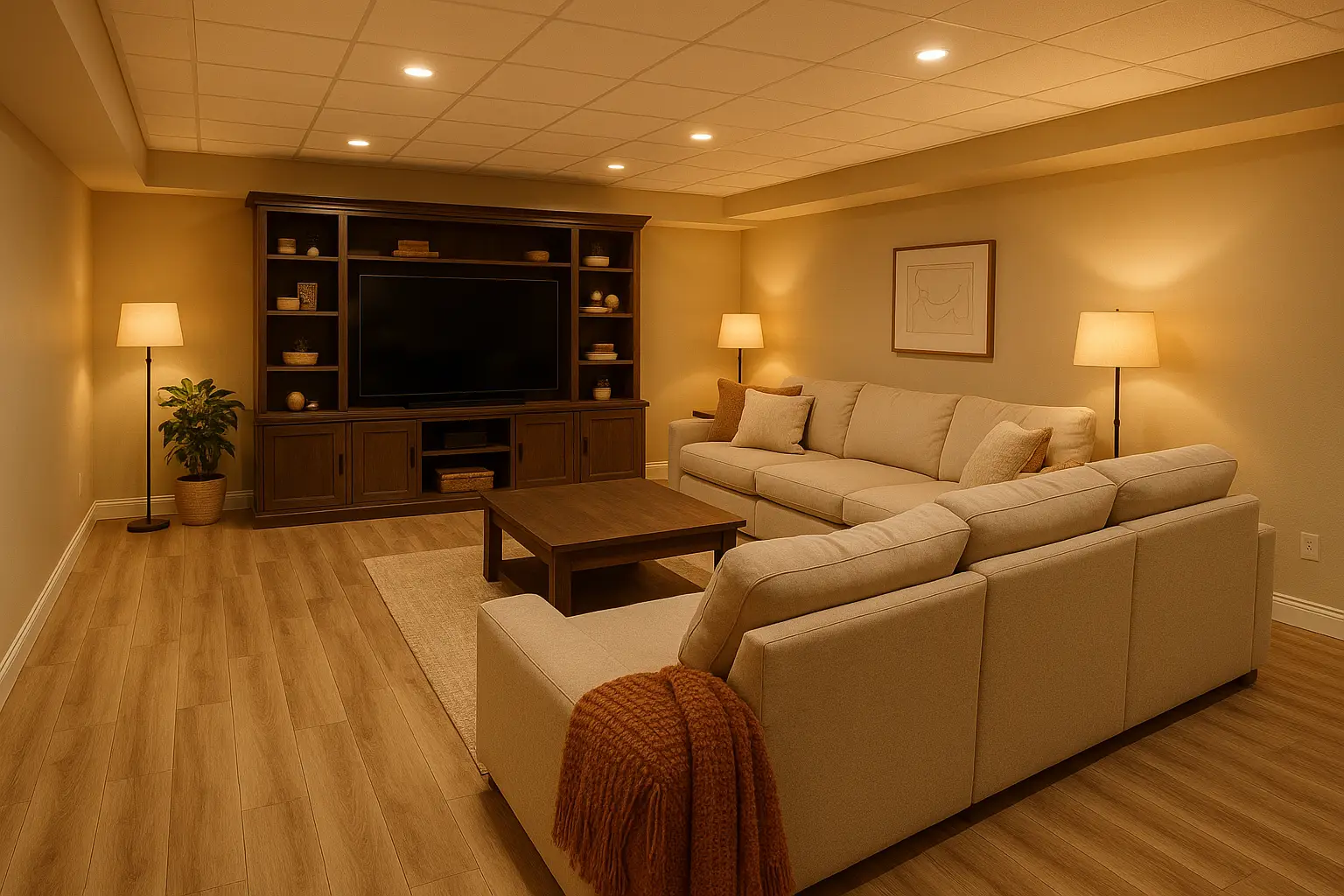
Ceramic tiles remain appropriate for outdoor applications, extremely high-temperature environments, and situations where extensive design variety is essential. However, for most residential applications, the combination of performance benefits, comfort advantages, and maintenance convenience makes SPC flooring the preferred choice for modern Indian homes. Professional consultation can help evaluate specific requirements and recommend optimal solutions based on individual circumstances.
Installation and Maintenance Best Practices
Successful SPC flooring installation requires proper subfloor preparation, appropriate acclimatization periods, and adherence to manufacturer specifications for expansion gaps and environmental conditions. Madeleine Floors provides comprehensive installation guidelines and professional support to ensure optimal results with their SPC products. Regular maintenance following manufacturer recommendations will maximize SPC flooring lifespan and performance characteristics.
Quality assurance considerations favor established manufacturers with proven track records and comprehensive warranties, such as Madeleine Floors with their specialized SPC flooring expertise and India-specific product development. Professional installation ensures proper handling of complex areas, transition strips, and environmental considerations that affect long-term performance. Investment in quality products and proper installation provides the best foundation for enjoying SPC flooring benefits throughout its operational life.
Making the Right Choice for Your Home
SPC flooring vs tiles analysis clearly demonstrates the superior value proposition of SPC technology for contemporary Indian homes seeking comfort, durability, and low maintenance. The combination of 100% waterproof performance, comfortable underfoot experience, easy installation, and minimal maintenance requirements positions SPC flooring as the optimal choice for modern residential applications. Madeleine Floors leadership in SPC flooring innovation, with India’s first herringbone patterns and comprehensive product ranges, provides homeowners access to world-class flooring solutions designed specifically for Indian conditions.
The best SPC flooring for Indian homes 2025 trends strongly favor waterproof flooring India solutions that can withstand monsoon conditions, provide year-round comfort, and minimize maintenance requirements. While ceramic tiles will continue serving specific applications, the remarkable growth of SPC flooring reflects increasing recognition of its superior performance characteristics and long-term value. For homeowners prioritizing quality, comfort, and convenience, SPC flooring represents the future of residential flooring in India.
Whether renovating existing spaces or designing new homes, SPC flooring offers the perfect combination of aesthetic appeal, practical performance, and economic value that makes it the smart choice for discerning Indian homeowners. Madeleine Floors continues leading this transformation with innovative products, comprehensive support, and commitment to bringing world-class flooring solutions to Indian homes.